20061129

$28,928: Now that's whisky!


A bottle of Glenavon, widely acclaimed as the world's oldest bottle of whisky, sold for £14,000 -- or $28,928.72 in U.S. currency -- at auction in London yesterday.

The green glass bottle went to an anonymous telephone bidder from Scotland bidding on behalf of a private Russian collector, at the end of a frenetic auction at Bonham's in London.

The Glenavon is believed to have been bottled between 1851 and 1858. The Speyside distillery, which produced it, closed in 1858.

Is it still drinkable? Charles MacLean, a consultant to the auctioneers, said that whisky once bottled in glass should not spoil.

“I can tell this bottle is well sealed because the whisky goes right up to the neck," he told media reporters. "It is safe to assume that it will taste as good as the day it was bottled.”

The bottle was put up for sale by a woman living in Northern Ireland, who said that it had been in her family for generations.

Little is known about the Glenavon distillery, thought to have been located near the present-day Glenlivet distillery whose 19th-century owners are thought to have taken it over.

A spokesman for the Scotch Whisky Association said last night that any buyer of such a bottle would be well advised to check its provenance thoroughly. “What is not known is the actual age of the whisky; the years of maturing in the barrel are as important as the date of the bottling.”

The auction price did not exceed the record for a bottle of Scotch. That mark is held by a bottle of Dalmore that was aged for 62 years before being bottled. It went for £26,000, or $50,663.08 in U.S. currency.

To Dowd's Spirits Notebook latest entry.
To Dowd's Wine Notebook latest entry.
To Dowd's Brews Notebook latest entry.
Back to Dowd On Drinks home page.

20061124

Irish coffee recipe (gasp!) changed


The Buena Vista Cafe in San Francisco, the American home of Irish coffee and the single largest U.S. commercial consumer of Irish whiskey, has changed the recipe of its legendary drink.

According to my colleagues at the San Francisco Chronicle, who seem rather exercised by the whole affair, "The BV has switched from its own private brand of Irish whiskey, made by the Cooley distillery in County Louth, Ireland, to Tullamore Dew, mass produced in Dublin. The change is so subtle it can hardly be noticed, but the difference between the two Irish whiskeys has sent shock waves though the world of Irish coffee drinkers."

The change was occasioned when cafe owner Bob Freeman decided that Tullamore is smoother and better than the whiskey he had been using.

The Buena Vista, says the Chronicle, "is where Irish coffee first came to America, 54 years ago this month" and it consumes "18,720 liter-sized bottles (of Irish whiskey) a year. The Buena Vista is the cathedral of Irish coffee in the United States."

Bartender Joe Sheridan invented the drink at Shannon airport in Ireland. Stanton Delaplane, the iconic Chronicle travel writer, discovered it there and convinced Jack Koeppler, owner of the Buena Vista, to bring it to the United States. Thus, when anything about the recipe changes, the Chron folks get antsy about the Irish coffee first served in the U.S. on Nov. 10, 1952.

You can read the Chron's story here. And, you can read the Buena Vista Cafe's full story here.

To Dowd's Spirits Notebook latest entry.
To Dowd's Wine Notebook latest entry.
To Dowd's Brews Notebook latest entry.
Back to Dowd On Drinks home page.

20061121

Ice whisky? Oh, Canada!


Canada is known for its ice wines, but ice whisky?

Nothing ventured, nothing gained, so the Glenora Distillery of Nova Scotia this week launched a new whisky called Cape Breton Ice, billed as the world's first single malt whisky aged in an ice-wine barrel.

Lauchie MacLean, president of the Cape Breton distillery, said Glenora test marketed the product by selling about 150 bottles this summer at its distillery in Halifax after purchasing the ice-wine barrels from the Jost Winery in Malagash, N.S.

“They just flew off the shelves,” MacLean told the press. “Tourists just absolutely went crazy for it and that was with no label on it, basically.”

Glenora Distillery is the only single malt whisky distillery in Canada, It also produces Glen Breton Single Malt Whisky.

Unless you have a connection in Nova Scotia, you'll have to be patient to try the new product. MacLean said sales will be limited to the immediate area at least until after Christmas.

"We’ve sold 25 cases to the Nova Scotia Liquor Corp. that’s all there is going to be for a couple of months," he said.

The 250-ml bottles will cost $49.95. Canadian ($43.60 US).

To Dowd's Spirits Notebook latest entry.
To Dowd's Wine Notebook latest entry.
To Dowd's Brews Notebook latest entry.
Back to Dowd On Drinks home page.

Pearing up for 2007


Distillers are hoping 2007 will be a peach of a year. The folks at Absolut are hoping pear also will figure into the equation.

That's because Absolut plans to introduce a pear-flavored vodka to the market in january, 20 years after launching its first flavored vodka, Absolut Peppar.

"We constantly have 'flavorists' on the hunt for all the new scents, flavors and tastes, and pear was ripe for us," said Jeffrey Moran, spokesperson for The Absolut Spirits Co.

The Absolut Pear bottle design incorporates the shape of a pear. It will launch with a print campaign featuring a green snake wrapped around an Absolut Pear bottle with the tagline "The New Temptation."

The flavor of pear -- particularly in brandies and some premium malt beverages -- is popular in Europe, so Absolut thinks the new beverage will work there. It's not quite as common in the U.S., but there is a slight groundswell of pear-flavored drinks.

Most popular at the moment is pear-flavored brandy from Oregon's Clear Creek Distillery which took a double gold medal at the 2000 San Francisco World Spirits Competition for its eau de vie de poire. Clear Creek also makes a limited-production $80 Pear-in-the-Bottle product, growing the fruit inside the bottle and then filling it with pear eau-de-vie.

To Dowd's Spirits Notebook latest entry.
To Dowd's Wine Notebook latest entry.
To Dowd's Brews Notebook latest entry.
Back to Dowd On Drinks home page.

20061118

Virginia is for (vodka) lovers

Photo by William M. Dowd


RICHMOND, VA -- Paul McCann obviously doesn’t mind doing things the hard way. He’s staking his financial future on the success of a new product he recently introduced into one of the most competitive sectors of the commercial spirits industry –- vodka.

Vodka is the fastest-growing niche, with new brands popping up virtually weekly. Given that it can be made from nearly any kind of organic matter, as the plethora of concoctions being made from grasses, grapes, beets and soy in addition to the usual grains and potatoes shows, there is little likelihood the competition will ease off.

The major assembly line products – the Smirnoffs, Grey Gooses, Chopins, Absoluts and the like – still have a strong hold on consumers while such quality boutique brands as Peconika from Long Island, N.Y., and Cold River from Maine still are trying to gain a foothold outside their immediate neighborhoods.

So, why is McCann stirring up so much interest?

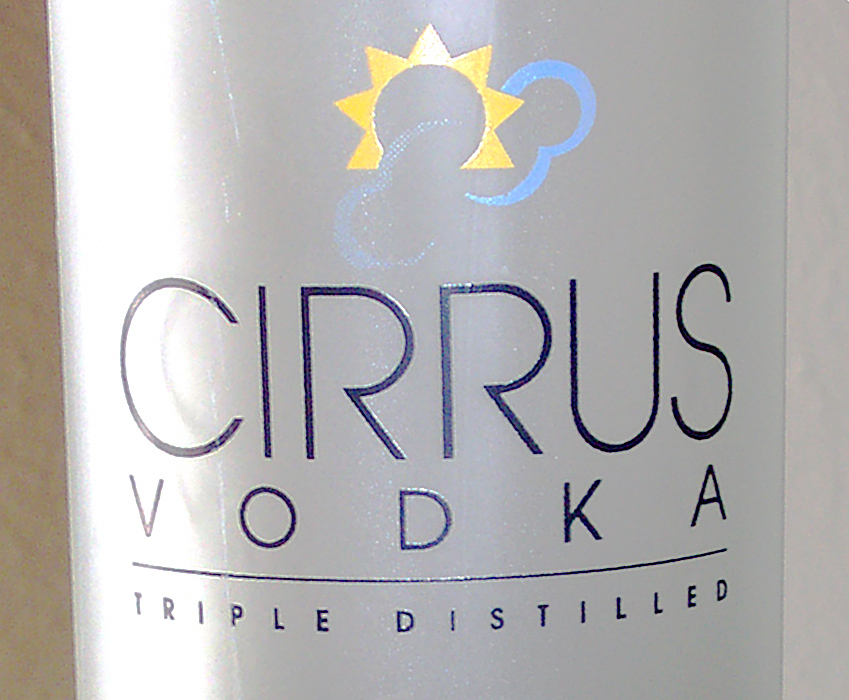
McCann, essentially a one-man-band known as Parched Group LLC, has been putting his money where he hopes consumers’ mouths are, a half-million dollar investment over the past 2-plus years to develop Cirrus Vodka.

The boutique distiller, who holds a bachelor’s degree in biology from Virginia Commonwealth University and a master’s in environmental health from Old Dominion University, experimented for 18 months to come up with his present formula, which went on Virginia store shelves during the summer.

It is literally cooked up in a Richmond facility from 400 pounds a day of locally-grown potatoes and is selling for about $22 for a 750ml bottle, which puts it in the crowded mid-premium category, although McCann refers to his product as “super premium.”

One edge McCann has over other newcomers to the field is that his vodka already has won a prestigious honor, a gold medal last spring in the renowned San Francisco World Spirits Competition. That came less than a year after Cirrus, with a formula then still being tweaked, scored 88 of a possible 100 points, meaning “highly recommended” in testing by the impartial Beverage Tasting Institute of Chicago.

Besides being a fan of vodka as a consumer, McCann got into the production end of things when he thought he spotted a niche within a niche.

“Two years ago, there were very few of what you would call 'American premium brands',” he said. "All you would see would be all imports.”

Now, there is one more American premium, although making it a lasting success still is an uphill climb for the Virginia entrepreneur.

"I work a lot of hours with little reward at this point, but my greatest reward is the response I have received from people,” McCann said.

His early successes have quickly put a spotlight on Cirrus that other boutique producers might envy. In addition to what’s inside, McCann was smart enough to realize having a distinctive bottle also was necessary to get scarce shelf space in stores.

Cirrus uses elegantly understated black lettering on a frosted glass bottle along with a sky-blue neck label and cap, and small blue clouds interlaced with a simplistic yellow sun, all explained on the reverse side of the bottle: “As with cirrus clouds that herald sunshine and perfect weather, Cirrus quality offers the promise of a good day.”

How is the product being received outside its home state?

“We are in talks with different distributors and are looking at expanding to North Carolina after the first of the year and to Texas, Maryland, Washington, D.C., Pennsylvania and Tennessee in the next six months,” McCann told me. “We have had additional interest from South Carolina, Georgia, Florida, Kansas and Colorado. We will certainly expand to other states as the opportunity arises and we feel we have a distributor that is a good fit for us.”

Finding a good boutique spirit is one thing. Finding a reliable supply of it is another. At the moment, Cirrus is a limited production item, “a maximum of 150 cases a month,” McCann said.

However, “We are expanding the process to produce as much as 300-plus cases per day in the next six to nine months. The equipment and distillery design and relocation here in Richmond is in the works.”

Tasting Notes: A recent sampling of McCann’s triple-distilled product shows he’s got the basic product down right. Cirrus is flat-out good stuff.

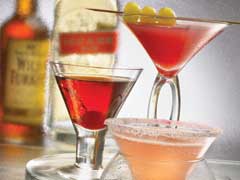
My panel of four tried Cirrus three ways -- straight from the freezer; in what passes for a “standard” martini these days now that the original gin component has been supplanted by vodka, and in a Cosmopolitan to see how the vodka would stand up to various cocktail flavorings.

Although the technical definition of vodka is a neutral grain spirit that is colorless, odorless and tasteless, any vodka aficionado knows that is not the case. The water, in particular, can impart as many taste aspects as the grain, potato or other matter used, and the filtration methods have much to do with the smoothness of the distillation.

Cirrus, syrupy cold from the freezer, exhibits a certain creaminess along with a hint of vanilla and a vague sweetness present in most multiply-filtered potato-based vodkas. For those who enjoy vodka cold and straight along with salty tidbits or strong cheeses, this is a drink that will hold its own.

In a martini, it worked well with my house brand vermouth, Noilly Pratt original French dry. I like the oak notes derived from the vermouth’s aging in wood, something that brings out the best in gins or vodkas. It certainly complemented the Cirrus, expanding the middle notes and finish while letting that signature creaminess come through.

However, we found the Cirrus wasted in the Cosmopolitan, with too many warring ingredients that tended to overshadow the nuances of the vodka. Better to use a lesser distillation for a drink that doesn’t require the finest vodka to be successful.

Back to Dowd On Drinks home page.
To Dowd's Spirits Notebook latest entry.
To Dowd's Wine Notebook latest entry.
To Dowd's Brews Notebook latest entry.

20061113

Hot cocktails of the moment


Pay no attention that it's on the Wine Enthusiast online site. The well-regarded "spirtualist" Gary Regan is merely using that venue to tell readers about his survey of imaginative 2006 cocktails.

It's worth the time to read it. There are some very clever mixologists operating in numerous outposts across the nation.

Dart to AP, laurel to DISCUS


The Columbia Journalism Review, a respected magazine devoted to all aspects of journalism, has a longstanding column called "Darts & Laurels" in which it calls special attention to missteps or special achievements. In the current issue, CJR gives a stinging dart to the Associated Press, the world's largest news organization.

In the words of Gloria Cooper, CJR's deputy executive editor:

(A dart) to The Associated Press, for a delayed reaction due to impaired judgment.

When the American Medical Association released the heady findings of a survey that showed an appalling degree of excessive drinking and promiscuous sexual behavior on the part of an astonishing number of college women during their spring break, the AP could not resist, characterizing the survey as "all but confirming what goes on in those 'Girls Gone Wild' videos."' Nor could countless outlets the AP serves, from the morning news shows and the daily newspapers to the cable newscasts and those on the Web, most of which flashed and splashed the damned — and damning — statistics with an unmistakable leer.

The morning after, however, soon arrived. First came a devastating analysis of the survey’s grossly unscientific methods and deceptive claims — an analysis published on the Mystery Pollster blog and emphatically reinforced by the president of the American Association for Public Opinion Research; then came the AMA’s admission that the study had in fact been a “media advocacy tool.”

For its part, though, the AP seemed reluctant to lose the buzz. Indeed, in an e-mail to the AP pressing for a correction, Frank Coleman, senior vice president for the Distilled Spirits Council [of the U.S., or DISCUS], took strong exception to what he said had been the AP’s first response — namely, that “a correction would only spread the story further.” As it turned out, however, the AP did eventually take the needed step toward the recovery of accuracy — right after Coleman sent the AP a copy of a Howard Kurtz column in The Washington Post that poured light on the media’s sordid binge. Cheers!

To Dowd's Spirits Notebook latest entry.
To Dowd's Wine Notebook latest entry.
To Dowd's Brews Notebook latest entry.
Back to Dowd On Drinks home page.

Not all that bubbles is champagne


OK, now they've gone and done it.

Not content with boasting that they invented vodka -- along with most other things enjoyed in the modern world -- the Russians have come up with the world's first sparkling vodka.

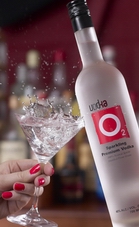
I speak not of some fizzy pseudo-spirits concoction like a "cooler" (ugh). Rather, O2 vodka from Ikon actually has oxygen bubbles injected into the smooth grain-based vodka.

To be perfectly accurate, however, it really wasn't Russians who came up with the new twist. That just made a catchy lead-in for this item. The old Russian brand is owned these days by International English Distillers and the patented bubbly version of the 80-proof beverage was developed in England by Philip Maitland.

The vodka, made mostly with wheat and a touch of malted barley, is distilled and filtered three times in 100-year-old copper pot stills. Creating the bubbly version was an 18-month process of trial and error.

Meanwhile, Diageo, one of the drinks industry's giants, has patented a new technology that creates a fizz in its vodka and other spirits by mixing a spirit with yeast and a fermentable carbohydrate, a method similar to that used to produce Champagne and sparkling wines.

No public announcement has been made by Diageo concerning a marketing timetable, or even which of its brands will be fizzed up.

To Dowd's Spirits Notebook latest entry.
To Dowd's Wine Notebook latest entry.
To Dowd's Brews Notebook latest entry.
Back to Dowd On Drinks home page.

Johnnie Walker really frosts 'em


Storing vodka in the freezer is a grand idea. Doing it with gin or some liqueurs can be OK. But, Scotch whisky?

It's OK to do, says Stuart Brown, the Walker Brands scotch Master who is suggesting the unusual move with Johnnie Walker's Gold Label Centenary Blend, an 18-year-old that goes for $80-plus.

Brown is telling beverage journalists that a day in the freezer will actually improve the whisky as an after-dinner drink by making it thicker and more syrupy, opening its caramel and vanilla notes.

He credits Guy Martin, a chef in Paris, with coming up with the idea of ultra-chilled scotch while nibbling on good-quality chocolate as a new dessert combination. But, he's insistent the Gold label is the only Johnnie Walker type that should get the treatment.

Why?

"Very simply, it tastes good," Brown said. "I can't explain why it does what it does. It's one of the few Scotches in the world that reacts this way."

Chef Guy, by the way, is a busy fellow on another front. He will open his first U.S. restaurant next year in a hotel now being constructed in Boston. Martin was awarded three Michelin stars in 2000 at the Grand Vefour restaurant in Paris. He has published more than a dozen cookbooks.

To Dowd's Spirits Notebook latest entry.
To Dowd's Wine Notebook latest entry.
To Dowd's Brews Notebook latest entry.
Back to Dowd On Drinks home page.

20061111

Vodka Museum moves to Moscow


For most visitors to Russia, there probably is no more culturally iconic a thing than vodka. Which bodes well for a new Moscow museum devoted to the national drink.

The Vodka Museum -- new to Moscow, but originally located in St. Peterburg -- displays more than 50,000 bottles of vodka, including many special versions of the drink, including some bottles produced more than two centuries ago. Visitors are offered samples of 10 different vodkas.

Vodka and Russia have a mutually intertwined history. In addition to being the drink of choice for celebrations and general socializing, there was a time when a bottle of vodka became a kind of national currency, "preferable to cash payments," according to the museum's curators.

They note, "In the beginning of the 1920s during a serious financial crisis when there was a shortage of monetary units, vodka labels served as cash in Siberia. This drink also plays a significant role in the Russian language and folklore. In other words, vodka is an important component of Russian life, an element of national identity and everyday culture."

To Dowd's Spirits Notebook latest entry.
To Dowd's Wine Notebook latest entry.
To Dowd's Brews Notebook latest entry.
Back to Dowd On Drinks home page.

20061110

Glenfiddich: Clearing the decks for expansion?


In a global industry that is continually shrinking in terms of how many owners there are -- think Brown-Forman, Pernod, etc. -- it's newsworthy when there is activity in a family-owned business.

William Grant & Sons, the distiller of Glenfiddich whisky, has been playing boardroom bingo, with managing director Simon MacDonald leaving to join Kabel-X, a technology company. As a result, the company has restructured into four divisions, with the head of each reporting to Roland van Bommel, the company's chief executive.

Mark Teasdale is managing director for North America, Gordon Dron for Europe, Kevin Fong for Asia Pacific and James Doherty for Latin America. Steven Sturgeon remains global marketing director.

Does any of this matter to those of us who basically are interested in what's being bottled under the Glenfiddich label, the world's No. 1-selling malt whisky? Probably not, especially considering it is doubtful the 120-year-old company would mess with a flagship brand that helped it gain an 8.1% increase in pre-tax profits for calendar year 2005.

However, William Grant & Sons is looking to expand a brand line that currently includes Grant's, The Balvenie and Hendrick's Gin. Last year it moved into the brandy field by buying Raynal & Cie, a French firm based in Cognac that produces such labels as Three Barrels. According to The Scotsman newspaper, "in October it was linked with a possible move for Invergordon Distillers, the Whyte & Mackay business that produces mainly own-label Scotch."

To Dowd's Spirits Notebook latest entry.
To Dowd's Wine Notebook latest entry.
To Dowd's Brews Notebook latest entry.
Back to Dowd On Drinks home page.

20061109

Redressing the Beefeater


When you buy a new house, one of the first things you do is repaint it to give it that personal touch.

Same thing goes with some spirits labels.

Back in June 2001, Beefeater brand gin was owned by Allied Domecq and it made the bottle taller and narrower, affixing a transparent label showing a younger looking yeoman.

Now, Pernod owns the Beefeater brand and plans to reveal its own version of the famous icon just before Christmas.

I haven't been able to get a sneak peak at what's in store -- or about to be in stores, so you'll have to be content with gazing at the present label until the grand unveiling. Pernod hopes it will stem the slumping sales of its gin, which dropped 6% in the most recent report, March 31, 2005, to March 31 this year.

20061031

Bourbon line enters the Castle


Castle Brands Inc., an international marketer of such premium spirits as Boru Vodka, has bought McLain & Kyne Ltd., a Louisville, KY, developer of premium small batch bourbon.

McLain & Kyne's line includes Jefferson's Reserve, Jefferson's and Sam Houston. The company now will be a fully-owned subsidiary of Castle, which is headquartered in New York.

Both the McLains and the Kynes, two sides of the Zoeller family, have roots in the bourbon industry dating to the late 18th and early 19th century.

Castle Brands other labels include Gosling's Rum, Sea Wynde Rum, Knappogue Castle Irish Single Malt Whiskey, Clontarf Irish Whiskey, Celtic Crossing Liqueur, Pallini Limoncello, Raspicello and Peachcello, and Brady's Irish Cream.

20061030

Welsh distiller broadens line


Penderyn Distillery, the Welsh whisky maker, is adding vodka and gin to its premium spirits line.

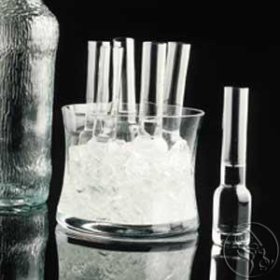
Brecon Special Reserve Gin is packaged in a clear glass bottle. Brecon Five Vodka is intended to look like a block of ice. The company also has redesigned its cream liqueur brand Merlyn. The work is overseen by master distiller Jim Swan and distiller Gillian Howell (seen here).

In the spring of 2005, Penderyn -- then just three years old -- introduced its first single-malt whiskey, created from barley malt and Welsh spring water. As I reported at the time, the privately owned distillery, which operates in the Brecon Beacons National Park, revives a Welsh industry that had provided experienced whiskey makers who were among the founding fathers of the American bourbon industry. In Penderyn, the American link lives on. The whiskey is aged in used bourbon casks shipped from the U.S. before being finished in Wales in rare Madeira barrels.

Brecon Five Vodka is five column distilled, using 100% wheat grain spirit. Brecon "Special Reserve" Gin uses 10 different botanicals married with barley spirit. Both use local water from park springs.

To Dowd's Spirits Notebook latest entry.
To Dowd's Wine Notebook latest entry.
To Dowd's Brews Notebook latest entry.
Back to Dowd On Drinks home page.

Ouzo, and others, remain exclusively Greek


The battle over what basic ingredient constitutes "true" vodka is temporarily solved, pending a final vote by the European Union Parliament in March. But Greek producers of the spirts known as ouzo, tsipouro, tsikoudia and Zivania can relax: They remain exclusively Greek.

"Now these drinks have their competitiveness protected, both within the European Union and toward third countries," said a statement from Greece's Agriculture Ministry. "Following particularly difficult negotiations, the designations of origin have been secured."

The spirit Zivania is made on the island of Cyprus. The three other spirits are made in various parts of Greece.

Ouzo, which has a distinctive taste of licorice, is made from the distilled residue of grapes, with anise and herbal flavoring added during production. The drink turns cloudy when water is added, and is similar in strength to vodka at about 80%. Tsipouro and tsikoudia are variants of ouzo, often without anise flavoring. Zivania also is made from grape residue but is stronger than the mainland products. Ouzo is by far the most popular of the four, at home and abroad.

To Dowd's Spirits Notebook latest entry.
To Dowd's Wine Notebook latest entry.
To Dowd's Brews Notebook latest entry.
Back to Dowd On Drinks home page.

20061029

'Most expensive bottle of liquor' verified

There is something in the world of adult beverages that sours people to try coming up with "the most expensive ..."

Finish that sentence with "cocktail," "bottle," "spirit," "vintage" or whatever strikes your fancy.

The latest official shocker? The $255,000 paid back on July 20 by an unidentified private collector for a bottle of Tequiila Ley .925 was certified on Oct. 26 by the Guinness Book of World Records as the most expensive bottle of liquor ever purchased.

The bottle itself ain't cheap. As seen here, held by Tequila Ley .925 CEO Fernando Altamirano, solid platinum and white gold were used to craft the bottle.

To Dowd's Spirits Notebook latest entry.
To Dowd's Wine Notebook latest entry.
To Dowd's Brews Notebook latest entry.
To Dowd's Non-Alcohol Drinks Notebook latest entry.
To Dowd's Tasting Notes latest entry.
Back to Dowd On Drinks home page.

20061028

Vodka: What's in a name?


Vodka can be made only from grain, potatoes or sugar beets.

Unless, of course, you're not beholding to European Union rules. Then any organic matter is fair game.

The EU Agriculture Ministers agreed this week on the severely limited definition of vodka, suggested as a compromise decision by Finland, which holds the rotating EU presidency.

The decision ended some oftimes-testy debating over the definition. According to the resolution, if the beverage is made from other ingredients, including grapes, that will have to be indicated on the label. Of course, all this still has to go to the full European Parliament for debate, and debate and debate, when it reconvenes next March.

Current EU rules, introduced 17 years ago, stipulate only that vodka should be produced using "agricultural products." The definition controversy was part of a more general discussion on new regulations on alcohol and spirits aimed at clarifying the rules on production and appelations.

According to a Vinexpo study, world vodka consumption will rise by 11.4% between 2003 and 2008.

To Dowd's Spirits Notebook latest entry.
To Dowd's Wine Notebook latest entry.
To Dowd's Brews Notebook latest entry.
Back to Dowd On Drinks home page.

Smokin' good Virginia whiskey


SPERRYVILLE, VA -- Virginia has been getting more recognition in recent years for its improving and expanding wine sector. But most students of American history will say "whiskey" well before "wine" when it comes to identifying the Commonwealth's

That's a heritage Rick Wasmund of Rappahannock County is trying to uphold with his own single malt whiskey, about which he's quick to tell anyone who wants to listen, "This whiskey doesn't speak for itself, it sings."

Wasmund's Copper Fox Distillery is located opposite his first business, Copper Fox Antiques, here. It is in the small maze of pots and tubes that he now spends much of his time along with his mother, Helen, and friend Sean McCaskey distilling their whiskey a batch at a time.

What makes Wasmund's whiskey unusual is that he has a different way of insitlling it with a special flavor, somewhat in the manner of Scotch whisky distillers who incorporate the aroma and flavor of peat smoke in their drinks.

As he explained it to a reporter for the Culpeper Star Exponent, "Wasmund stumbled upon his innovation seven years ago while burning some rotting cherry wood, on his property at Pelham farms in Middleton, Virginia. 'It was really just one of those "Eureka" type of moments,' said Wasmund. 'I realized how good the smoke smelled when it struck me that I had never heard of a whiskey made with fruit wood." As Wasmund investigated further, he found that fruit wood had indeed not been used to flavor a whiskey."

That led to a trip to a six-week internship to help produce Scotch at the Bowmore Distillery on the island of Islay. And, that, in turn led to the founding of Copper Fox LLC and a business deal with Virginia Lightning, an existing distillery in Culpeper. The first Copper Fox whiskey was produced but the business partners' deal went bad and still is mired in legal action.

Wasmund and Sean McCaskey re-started the whiskey-making project, using a combination of cherry and apple wood, the smoke from which permeates the whiskey. They distilled their first official batch in January, then called Wasmund's Single Malt Whiskey.

To Dowd's Spirits Notebook latest entry.
To Dowd's Wine Notebook latest entry.
To Dowd's Brews Notebook latest entry.
Back to Dowd On Drinks home page.

20061017

Orange: The basic black of cocktail colors


Someone once said Americans will eat anything if you color it orange. The same can be said about what we drink.

A casual stroll down the appropriate aisle of your favorite fully-stocked liquor store will reveal a variety of beverages accented by the essences -- or their chemical equivalents -- of lemons, limes and kiwis, of strawberries, raspberries and blackberries, of bananas, coconuts and vanilla beans.

But, above all, there is orange.

The exigencies of the competitive world of spirits long ago took drinks out of the boutique age of hand-crafted beverages made by backyard entrepreneurs and clusters of monks. Some do remain, but the majority of the market belongs to the big guys who do things in a big way.

Take Danisco Cultor USA Inc. Not exactly a household name, but the international food chemistry giant that has U.S. installations in New York, Florida, Kansas and Missouri is a powerful force in its competitive niche.

Food Ingredient News, a leading industry publication, recently featured Danisco's new Citrus Sensations line of flavors for the low, mid-proof spirit and malt-based drinks that are growing rapidly in popularity among younger American and European consumers.

The idea of the Citrus Sensations line is to let drink manufacturers react quickly to market preferences -- read that "fads" -- and, thus, maintain a competitive edge.

Manufacturers simply add the appropriate Citrus Sensations flavoring to a prescribed amount of alcohol plus still or carbonated water that is 5% fruit juice. The result: a custom made, fruit-flavored alcoholic drink that can quickly be put on the market. Almost as important, it also can quickly be pulled off the market when the fad passes, thus avoiding a waste of natural ingredients in storage.

Robert Saunders, Danisco's chief flavorist, told Food Ingredient News the flavors were concocted by research teams from the U.S., England, Mexico, Brazil and China.

Most are orange or orange-like, in keeping with the prevailing trend -- blood orange, honey tangerine, tangelo, pomelo -- in addition to sweet Indian lime and citrus spice.

Orange-flavored spirits are nothing new. Even the most casual drinker knows about such old standards as Grand Marnier and Cointreau, and even some brands of orange bitters. They had the orange market largely to themselves for decades. But they are liquers -- fortified, sweetened liquors -- while many of today's pop cocktails are built on basic alcohols such as vodka and gin.

Because your eyes are more easily fooled than your tastebuds, you may not even be aware that drinks made with such exotic items as blue or green Curacao, for example, are in disguise. They're all orange at heart.

Curacao, you see, is the generic term for orange liqueurs of any color produced from the peel of a bitter variety of Seville oranges. Most of the fruit now comes from Tahiti, but originally grew mostly on the West Indian island of Curacao, thus the name.

That seems appropriate since the global marketplace is being supplied with orange essence from the most unexpected places these days.

Take Carmel 777, a three-year-old orange-flavored brandy from Israel (about $23 for a 750ml bottle). It's getting very positive reviews even if Israel doesn't immediately come to mind when you think brandy.

But, that is merely a start. Beer and whiskey come readily to mind when you think of Irish potables, but Ireland's Boru brand vodka is gaining a foothold in the market with its orange-infused version.

Vodka is an obvious niche for such flavors, since the neutral distilled spirit combines so readily with infused flavors of all sorts. But in the world of spirits even the niches have niches. While such popular brands as Grey Goose, Three Olives, Smirnoff, Burnett's and others seem content to tell you they use oranges, others have gotten intensely specific about ingredients.

For example, Domaine Charbay, the Napa Valley, Calif., winery and distillery, has made its flavoring source part of the name of one of its vodkas, offering Charbay Blood Orange.

Van Gogh, the Dutch vodka and gin maker, now offers Vincent Oranje Vodka, using the Dutch spelling as a nod to the artist's origins. The manufacturer makes a point of telling consumers the flavor comes from a combination of Spanish Valencia oranges and Mediterranean blood oranges.

But ready-flavored drinks aren't the whole story. The pros like to use orange juice as at least one element, if not the main ingredient, in handmade drinks.

David Tucker, at the Crowne Plaza hotel's martini bar in Albany, NY, is a good example. He has something he calls the Tootsie Roll martini, using Stoli vodka, dark creme de cacao and orange juice garnished with a chocolate Kiss.

Making drinks at home does not, of course, have to be complicated or necessarily contain hard-to-find ingredients.

The Orange Blossom is a simple, time-honored concoction I remember my grandparents' generation enjoying: 2 ounces each of gin and orange juice, 1 teaspoon of superfine sugar, shake with ice, strain into a glass and garnish with an orange slice.

A simple orange drink I came across last winter on the Caribbean island of Antigua that seemed to appeal to all tastes was the Yellow Bird: 4 ounces of fresh orange juice with a jigger of white rum and a splash of Galliano liquer, over ice.

Tasty, refreshing and just perfect in bathing suit weather.

To Dowd's Spirits Notebook latest entry.
To Dowd's Wine Notebook latest entry.
To Dowd's Brews Notebook latest entry.
Back to Dowd On Drinks home page.

20061002

Cocktails in cans tested in Florida


Canned cocktails might seem like a waste of good liquor at first glance. But, it's been working elsewhere in the world and Diageo thinks it stands a good chance here as well.

That's why the spirits industry giant is using the Tampa, FL, area to test market its 12-ounce canned ready-to-drink (RTD) cocktails that contain the same alcohol content as most beers. Early returns on sales of the vodka-, rum- and whisky-based cocktails are favorable.

The flavors being tested:

• Captain Morgan and Cola
• Smirnoff Vodka and Lemon-Lime Soda
• George Dickel Whisky and Cola
• Seagram's 7 American Whiskey and Lemon-Lime Soda

"They're selling very well and we're pleased," said Bob Gibson, marketing director for the 150-store ABC Fine Wines. He told Advertising Age that Diageo plans to expand the test area and include an additional flavor featuring Crown Royal whiskey.

The drinks are 5 percent alcohol by volume and are packaged in 12-ounce cans, allowing their sale next to beer in convenience stores, gas stations and other retail outlets.

RTD cocktails have been accepted in numerous overseas markets. In Australia, Beam Global Wine & Spirits sells 7 million cases of its Jim Bean Bourbon Whisky and Cola annually. Here, the Diageo test is expected to run until next spring.

To Dowd's Spirits Notebook latest entry.
To Dowd's Wine Notebook latest entry.
To Dowd's Brews Notebook latest entry.
Back to Dowd On Drinks home page.

Washington's whiskey hits the big time


If price is a hallmark of whiskey quality, chalk up another first for George Washington.

In addition to being, as the historic phrase goes, "first in war, first in peace, first in the hearts of his countrymen" a bottle of the first George Washington Distillery Straight Rye Whiskey produced at Mount Vernon in 200 years went at auction for $100,000.

That makes it the record for the price of a bottle of American whiskey.

The Spirit of Mount Vernon dinner raised more than $200,000 in table sales, raising the total tally to more than $350,000 raised for Mount Vernon during both the dinner and auction. The auction lot, which included bottle numbers one and two of a limited edition of 24 bottles, was produced in October 2003 by a team of master distillers, then aged in a specially-made oak cask for more than two years on the grounds of Washington's estate in Virginia, then hand-bottled and labeled on Sept. 27 this year.

Marvin Shanken, chairman of M. Shanken Communications, made the high bid of $100,000. Shanken founded lifestyle and business publications for the wine and spirits industry, including Wine Spectator and Impact. Shanken is donating bottle No. 1 to a permanent display in the George Washington Distillery Museum, which will open to the public in April 2007. Bottle No. 2 will stay in his personal collection.

Ivan Menezes, president and CEO of Diageo NA, purchased bottle No. 3 for $25,000. Mark Smith, vice president of Brown Forman Corp., purchased bottle No. 5 for $12,000. Bottle No. 4 was presented to England's Prince Andrew, who cut the ribbon earlier in the day at the official dedication of the newly reconstructed distillery -- a project Mount Vernon began in 2000 with a grant from the Distilled Spirits Council and the Wine & Spirits Wholesalers of America.

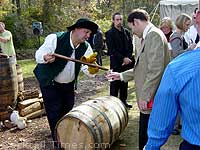
The master distillers who participated in the project were Joseph Dangler of Virginia Gentleman, Chris Morris of Jack Daniel's, Lincoln Henderson of Woodford Reserve, David Pickerell of Maker's Mark (see above offering samples of clear whiskey to Mount Vernon visitors), Jerry Dalton of Jim Beam, Ken Pierce of Very Old Barton, Gerry Webb of I.W. Harper and Geo. A Dickel, James Graf and Raylene Perry of Platte Valley, Jimmy Russell of Wild Turkey, Ron Call of Cruzan Rum, and Willie Ramos of Bacardi.

To Dowd's Spirits Notebook latest entry.
To Dowd's Wine Notebook latest entry.
To Dowd's Brews Notebook latest entry.
Back to Dowd On Drinks home page.

20060918

007 returns to his beery roots


The late Ian Fleming's super spy James Bond has taken on a patina of sophistication over the decades that makes most fans forget his humble origins.

In the first Bond novel, "Casino Royale," the character who became known for his knowledge and enjoyment of wines and spirits actually drank beer. (Pause here for startled gasps by those reading this sacrilege for the first time.)

The 21st and latest latest Bond flick, a version of "Casino Royale" that is true to Fleming's novel rather than being twisted into a serio-satirical comedic mess that went under that title in 1967, has a definite beer tie-in.

Producers not only have the latest Bond actor, Daniel Craig, drinking beer, they have a six-figure deal with beermaker Heineken for a promotional partnership that includes a TV commercial shot on the Bond set featuring Bond girl Eva Green.

Quite a change from some of Bond's haughtier pronouncements on what to drink.

Most of us remember his signature vodka martini in "Dr. No" -- and the instruction that it was to be "shaken, not stirred." In the same 1962 film, he turns up his nose at a 1955 Dom Perignon champagne, snootily telling his villainous host, "I prefer the '53 myself."

And now? Bottoms up.

To Dowd's Spirits Notebook latest entry.
To Dowd's Wine Notebook latest entry.
To Dowd's Brews Notebook latest entry.
Back to Dowd On Drinks home page.

WhiskeyFest NY looming


Organizers of Malt Advocate magazine's 9th-annual WhiskyFest New York, scheduled for Monday, Nov. 6, are promising in excess -- if that's not a bad word to use in this context -- of 200 of "the world's finest, rarest, and most expensive, single malt and blended Scotch, Irish, bourbon, Tennessee, and Canadian whiskies to sample in one grand ballroom."

Said ballroom is at the Mariott Marquis on Times Square for the 6:30 to 10 p.m. event. Tickets are $105 for general admission and $145 for VIP. The focus, say the organizers, "is on education, and distillery representatives will be on hand at the pouring booths to explain how the whiskies are made."

Among the speakers: Parker Beam, master distiller at Heaven Hill; John Campbell, distillery manager at Laphroaig; Ronnie Cox, director of The Glenrothes; George Grant, brand ambassador for Glenfarclas; Lincoln Henderson, whiskey expert for Suntory; Spike McClure, "master of Scotch knowledge" for The Classic Malts; Chris Morris, master distiller for Old Forester; Fred Noe of Jim Beam’s Small Batch Bourbons; Sharon Owen, brand ambassador for Glenfiddich & Balvenie; Richard Paterson, master blender for The Dalmore; Dan Tullio, band ambassador for Canadian Club, and Charlotte Voisey, brand ambassador for Glenfiddich & Balvenie.

For contact information on this and other drinks events, go to Dowd's Guide to Drinks Events.

To Dowd's Spirits Notebook latest entry.
To Dowd's Wine Notebook latest entry.
To Dowd's Brews Notebook latest entry.
Back to Dowd On Drinks home page.

20060912

The drinks are on the ... telly


It sometimes seems as if certain cable channels run only one program over and over and over. "M*A*S*H" in its early days, "Seinfeld" and "Law & Order" now.

At least each episode had a different twist. How many could you come up with up for an all-Scotch whisky channel?

Welcome to Singlemalt.tv, the world's first Internet television channel dedicted to the single malt -- and nothing else.

Rob Draper, an Australian film producer (seen here), is working right now in Scotland shooting footage for his brainchild, planned as a 24-hour online channel comprised of news, features and ongoing series. His target is to go live with it on Friday, Sept. 29.

Charlie MacLean, a noted author and whisky expert, will be the on-camera host. Narrowstep, an Internet television provider, will be the technological host.

"By the end of 2007, all the major networks in the United States will have launched high-quality, niche-market Internet channels," Draper said in a press statement. "So far the interest has been phenomenal. We put a place-holder Website up ... and we have already shut down one server in the U.S. because it can't handle the volume of traffic coming into it."

Internet television isn't widely known or understood. In simple terms, rather than being an Internet site it is a TV channel broadcast through the Internet. Some channels are available for free, others like the Scotch whisky channel are available for a monthly subscription fee.

Draper hired camera crews in various countries -- including Scotland, France, Norway, the Netherlands, Australia, Singapore and India -- to create film content.

"I have done a lot of work on Internet television going back to 1997 and it really is the future of television and the future of Internet," Draper told The Scotsman newspaper. "We are going to do very high-quality programming and my goal is to make it intelligent programming for people who want good entertainment, want to be informed and want to have fun."

To Dowd's Spirits Notebook latest entry.
To Dowd's Wine Notebook latest entry.
To Dowd's Brews Notebook latest entry.
Back to Dowd On Drinks home page.

20060908

Mauritius, and its rum, being discovered


Unless you're fond of map reading, you can be excused for not knowing the location of Mauritius.

If, however, you're a fan of fine rums, check your globe. The island nation off the east coast of Africa -- actually off the east coast of Madagascar which, itself, is off the east coast of Africa (see map)-- is showing signs of coming into its own as an international purveyor of fine rums.

Some months ago, as a judge in the first International Cane Spirits Competition, held in Tampa, FL, I had the opportunity to sample Starr African Rum, perhaps the best Mauritius has to offer. The judges awarded it a gold medal in the white rums category (including spirits aged less than a year).

The three other gold medalists in that category were more mainstream labels -- Santa Teresa Blanco, from Venezuela; Prichard's Crystal Rum, from the U.S., and Ron Botran White Rum, from Guatemala.

My tasting notes for the event called the Starr African Rum "peppery; floral; and, with a long finish." There are hints of cardamom and citrus, all of which work well in various rum punches.

Now, Mauritius will be expanding its sales in India as part of a new trade agreement signed between the two countries. (About 70% of Mauritius's population is of Indian descent.) The agreement allows Mauritius to triple its rum exports to India.

The change is part of a steady growth in the presence of Starr African rum. It received a "Superb 90-95 (Recommended)" rating from Wine Spectator last year, then the godl medal in Tampa, and has been popping up at various "beautiful people" events at which clever PR types have been managing to link the names of show biz luminaries.

When that happens, can mainstream success be far behind?

To Dowd's Spirits Notebook latest entry.
To Dowd's Wine Notebook latest entry.
To Dowd's Brews Notebook latest entry.
Back to Dowd On Drinks home page.

20060907

At $150 a bottle, Heaven's the limit


If Heaven Hill Distilleries is successful with its fall launch of a S150-a-bottle version, then we know rye has truly made a comeback.

The Bardstown, KY, distiller has produced 32 barrels, or about 3,000 of the 750ml bottles, of Rittenhouse Very Rare 21-Year-Old Single Barrel Straight Rye Whisky, a 100-proof concoction.

Bottls priced above $30 are considered premium, those above $49 super premium. Heaven, or Heaven Hill, only knows what to call a $150 category.

Those fortunate enough to have tried the new rye report it to be bold, spicy and somewhat bourbon-like. It was selected by master distillers Parker and Craig Beam.

Heaven Hill's flagship label is Evan Williams Bourbon. The company also produces a wide variety of spirits that includes Dubonnet, Hpnotiq, Elijah Craig Bourbon and Burnett's London Dry Gin.

To Dowd's Spirits Notebook latest entry.
To Dowd's Wine Notebook latest entry.
To Dowd's Brews Notebook latest entry.
Back to Dowd On Drinks home page.

20060902

A true whisky club under way in Scotland


While Americans were busy resting from their work and enjoying the long Labor Day weekend, workers in Ladybank, Scotland, were just beginning a unique construction project.

Scotland's first "private club" whisky distillery (shown here in an architect's sketch) began its $1.9 million first-phase construction at a location near St. Andrews on Thursday, the project funded by subscriptions from a global network of whisky fans. (See earlier story.)

The Ladybank Company of Distillers Club was dreamed up by James Thomson, 46, who ran a whisky distilling school at Bladnoch in Dumfries and Galloway. It is located on a former farm, and is expected to produce just under 9,500 gallons a year. It is planned that the membership will be closely involved in production decisions such as length of aging and type of casking, affecting the taste of the product.

Thomson, in an interview with local media that seemed part Q&A, part anti-establishment polemic, said the idea for a "co-creative" distillery came from his disillusionment with the distilling and production practices of an industry dominated by "inflexible multinational conglomerates," and his experience of training enthusiasts in the art of distilling.

The Distillers Club is limited to 1,250 members. Participants or their heirs are entitled to six bottles of whisky per year for the next 30 years. The 300 founding members each paid a one-time $6,000 for membership. Subsequent members will pay a higher fee.

Thomson plans to produce gin and other spirits along with single malt Scotch whisky. He said the total project cost is projected at $4.8 million.

To Dowd's Spirits Notebook latest entry.
To Dowd's Wine Notebook latest entry.
To Dowd's Brews Notebook latest entry.
Back to Dowd On Drinks home page.

20060830

The perfect sequel to 'Snakes On a Plane'


After a three-Manhattan evening and seeing Samuel L. Jackson on "The Daily Show" with Jon Stewart, the perfect sequel to Jackson's movie "Snakes On a Plane" occurred to me:

"Snakes On a Submarine."

Just saying.

Bombay Sapphire looking for design talent


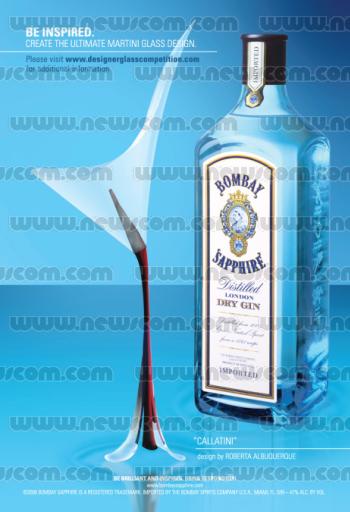
I've long been a fan of Bombay Sapphire Gin. The company's line of exotic and artsy cocktail glasses hasn't been around as long as the liquor, but I sometimes have found it as appealing as the gin itself. And, that's saying something.

Various established designers such as Michael Graves, Jonathan Adler and Yves Behar have been commissioned over the past few years to create unusual cocktail glasses to be used in Bombay print ads. Now, Bombay is looking to discover up-and-coming "no name" designers as part of its just-announced "Designer Glass Competition."

The competition rules were drawn up to encourage aspiring designers 21 or older from around the United States to interpret the classic martini glass in their own distinctive style. Up to 10 U.S. finalists will be selected by a panel of design experts and pared down to three. They will be flown to a glass blowing studio somewhere in the U.S. where their glasses will be created. The grand prize winner will be flown to Milan, Italy's Salone del Mobile in April to compete in the global finals.

To Dowd's Spirits Notebook latest entry.
To Dowd's Wine Notebook latest entry.
To Dowd's Brews Notebook latest entry.
Back to Dowd On Drinks home page.

Brown-Forman swallows tequila company


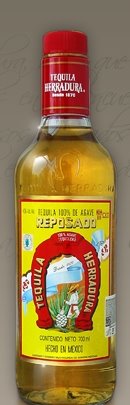
There isn't much that adult beverage giant Brown-Forman doesn't have in its portfolio. Now, it's even broader with the announcement that it will buy the assets of the Mexican tequila company Grupo Industrial Herradura for $876 million.

That will put the Herradura and El Jimador tequila brands and the tequila based New Mix ready-to-drink brand in the Brown-Forman lineup along with such familiar labels as Jack Daniel's, Southern Comfort, Finlandia Vodka, Canadian Mist, Old Forester Kentucky Straight Bourbon, Fetzer wines, Korbel California Champagne, Pepe Lopez Tequilas, Bolla Italian Wines, Appleton Estate Jamaica Rum, Durbanville Hills South African Wines, Chambord Liqueur and on and on and on.

To Dowd's Spirits Notebook latest entry.
To Dowd's Wine Notebook latest entry.
To Dowd's Brews Notebook latest entry.
Back to Dowd On Drinks home page.

20060826

Don't card him in a bar


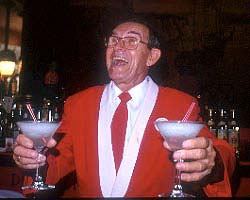
A lot of bartenders think they've seen it all. Hoy C. Wong probably has.

Wong has been working at the legendary Algonquin hotel in Manhattan as a bartender for the past 27 years. But, he has plenty of other experience on his resume. He should. He's 90 years old and has mixed drinks for everyone from tourists to show biz personalities to royalty.

Management at the Algonquin, where writer Dorothy Parker and other wits of the 1920s-40s held forth at their famous "Round Table" dinners, think he is the city's oldest active bartender, still coming in to work on a daily basis.

Fame is nothing new to Hong. In the 1970s, he was featured on the cover of Life magazine as the best of America's great bartenders.

"I like this job because one man behind the bar can make everybody happy," Wong said at the time.

The Daily Record in Morris County, NJ, just across the river from New York, offered this profile of Hong that I found quite informative.

To Dowd's Spirits Notebook latest entry.
To Dowd's Wine Notebook latest entry.
To Dowd's Brews Notebook latest entry.
Back to Dowd On Drinks home page.

20060820

A $1,400 Mai Tai is no gimmick


When you open a new upscale hotel, it's understandable that you want to offer something attention-getting. A glorious lobby, phenomenal service, special package deals.

But, a $1,400 Mai Tai at the hotel bar?

The Merchant Hotel in Belfast, Northern Ireland, which opened six months ago and began serving the Mai Tai special just this month, already has applied to the Guinness Book of World Records for recognition as the most expensive cocktail -- without gimmicks -- in the world.

I've previously reported on the proliferation of ludicrously priced drinks in various cities, some going for as high as $10,000, but they all are served with extras such as diamond earrings or jewel-encrusted swizzle sticks.

The reason for the Merchant's Mai Tai price tag is its basic rum component, an ultra-rare bottle of J. Wray Nephew from Jamaica. The 17-year-old distillation went into a mere six bottles of 700ml size, and the Merchant Hotel somehow got hold of one.

General manager Adrian McLaughlin declines to say how his people got the bottle or what they paid for it. He does confirm that it's kept in the hotel safe between drinks.

And just how many drinks has head bartender Sean Muldoon made so far? Only two. Which stands to reason. If you want a pricey cocktail in Ireland for a better price and with add-ons, you can always nip down to the Westin Hotel in Dublin for a "Minted" at a mere $640.

The vanilla and chocolate martini, served at the Westin's Mint Bar, includes vanilla-infused vodka and 200-year-old cognac. Its extras: It includes flakes of 23-carat gold and is served in a designer crystal glass with chocolate truffles on the side.

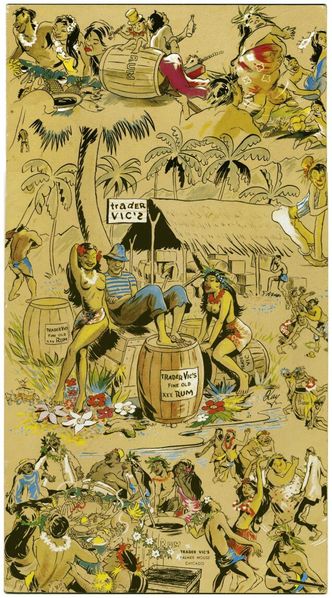
But, back to the Mai Tai, a Polynesian-sounding drink actually invented in the U.S. It was whipped up in 1944 as the signature drink at Trader Vic's in California by owner Victor Bergeron for his South Seas-style restaurant and bar.

Over the years, other Trader Vic's were started all over the world, known for their South Pacific decor, elaborate drinks menus (the cover of the 1965 edition is shown here) and live entertainment. Some eventually went off under non-Bergeron ownership and the credit for creating the Mai Tai was claimed by many other people.

In 1970, Bergeron, who died in 1984 at the age of 82, got fed up with people laying claim to his drink and wrote the following:

"Many have claimed credit. ... This aggravates my ulcer completely. ... In 1944, after success with several exotic rum drinks, I felt a new drink was needed. I thought about all the really successful drinks; martinis, Manhattans, daiquiris, all basically simple drinks.

"I was at the service bar in my Oakland restaurant. I took down a bottle of 17-year-old rum. It was J. Wray Nephew from Jamaica; surprisingly golden in color, medium bodied, but with the rich pungent flavor particular to the Jamaican blends. The flavor of this great rum wasn't meant to be overpowered with heavy additions of fruit juices and flavorings. I took a fresh lime, added some orange curacao from Holland, a dash of rock candy syrup, and a dollop of French Orgeat, for its subtle almond flavor. A generous amount of shaved ice and vigorous shaking by hand produced the marriage I was after. Half the lime shell went in for color.

"I stuck in a branch of fresh mint and gave two of them to Ham and Carrie Guild, friends from Tahiti, who were there that night. Carrie took one sip and said, 'Mai tai. Roa ae". In Tahitian this means "Out of this world. The best.' Well, that was that. I named the drink Mai Tai."

Today, there are Trader Vic's in places ranging from Dallas to Dhubai. In the U.S. alone, they are in Scottsdale, AZ, Beverly Hills, Atlanta, San Francisco, Chicago, Houston and Las Vegas, among other places, and abroad they are in such locations as London, Berlin, Tokyo, Shanghai and Beirut. The surfacing of the rare 17-year-old J. Wray Nephew in Northern Ireland brings back a key original ingredient, but any high-quality rum will do in trying to concoct as closely as possible the original 1944 Mai Tai recipe.

It's a fitting homage to the name Trader Vic's, which has popped up in films, books and in such unexpected places as the lyrics for the late Warren Zevon's song "Werewolves of London." To wit, "I saw a werewolf drinking a pina colada at Trader Vic's. His hair was perfect."

To Dowd's Spirits Notebook latest entry.
To Dowd's Wine Notebook latest entry.
To Dowd's Brews Notebook latest entry.
Back to Dowd On Drinks home page.

20060817

A book of stamps, an address form and ... some vodka, please


In the remote Republic of Tatarstan -- yes, there is such a nation -- the post office has gotten into the vodka business.

The autonomous nation within the Russian federation has pretty much run out of the traditional alcohol. In July, state legislation forced individual vendors and traders to either obtain a license to sell alcohol or close up shop. Faced with the overwhelming bureaucracy and the new cost of doing business, many folded.

The demand for vodka, however, has not diminished. It has just made the alcohol a de facto unit of currency in the barter-dependent economy.

"Vodka has been established as a very good currency," explains Alsu Kurmasheva of the Tatar-Bashkir Service unit of Radio Free Europe/Radio Liberty.

Rustem Arslanov, deputy head of Tatarstan's State Alcohol Inspectorate, says, "The lack of places selling alcohol in the villages is leading to illegal trade -- that's to say, trade has begun in bootleg alcohol. So, we need places that are licensed to sell alcohol."

The village post office serves many needs in rural Tatarstan -- post office, library, general goods store, and general meeting place. Olga Kuznetsova, director-general of the nation's postal service, says, "We have 58 shops and we are selling alcohol in 24 of those. When we have shops, they sell everything: milk, bread, and alcohol."

She plans to expand alcohol sales to 1,058 post offices around the country.

To Dowd's Spirits Notebook latest entry.
To Dowd's Wine Notebook latest entry.
To Dowd's Brews Notebook latest entry.
Back to Dowd On Drinks home page.

20060812

Another Cuban revolution in the making


The island nation of Cuba remains an enigma to most Americans, but the current precarious health of dictator Fidel Castro has thrust it back into the news once more.

Blocked off from the one-time Caribbean playground by a U.S. political and economic embargo that is nearly a half-century old, we're more familiar with its athletes, its cigars and rum, and the iconic face of Castro than any other aspects of Cuban culture.

St. Martin, Antigua and Puerto Rico have better resort facilities. Honduras produces cigars many aficionados say are just as good. And rum comes from so many places you may not think of Cuba first anymore. Earlier this year, for example, I helped judge a cane spirits international competition in Tampa, FL, that drew rums and similar
sugar-based drinks from more than 60 different producers from around the globe.

But that has not stopped producers of Cuban-"style" rum from building their consumer marketing plans around the legendary pre-Castro mystique.

The latest example is from Bacardi USA which is re-launching the Havana Club brand rum in the United States. It had been making rum under the Havana Club name but pulled it off the market because of legal issues. What it wants to do now is block Cuba from eventually selling the rum to the U.S. market.

The rights to the brand name have always been precious to opposing economic forces. In 1993, Cuba signed an agreement with the French beverage giant Pernod Ricard SA to sell Havana Club rum in 80 countries. Because of the trade embargo, the U.S. was not among the 80.

The Cuban government had acquired the trademark in 1974 when, it said, the original owner let it lapse. However, the Arechabala family said Castro forces that overthrew the government in 1959 had confiscated the distillery and products in 1960 and forced them to flee the island. On the other side of the debate, Bacardi said it purchased rights in the 1990s to the name and recipe from the Arechabalas, who created them in 1935.

U.S. courts recently ruled that the Cuban-French joint venture had no rights to the trademark in the U.S. So, on Aug. 3 this year, the U.S. Patent and Trademark office finished the 10-year legal tussle by declaring Cuba’s Havana Club trademark registration is “cancelled/expired.”

Bacardi’s re-launch of the legendary Havana Club brand will mean stiff competition for such comparative high-end newcomers as Grand Havana and Marti that were moving into a vacuum in readily available premium rums in the U.S..

Grand Havana has a strong, legitimate Cuban link. Although it is being made on the Caribbean isle of Grenada by Cuban-Americans from Miami, they are descendants of Don Tirso Arregui, a Cuban businessman whose rum distillery operated on the outskirts of Havana in the late 1800s.

The Arregui family, who also fled to the U.S. after Castro came to power, began last year to create small-batch offerings under the Grand Havana name. At their distillery, which boasts old-fashioned copper kettles, they double-distill the rum, then age it in sherry casks bought in Spain.

Marti, named for the 19th-century Cuban rebel leader and poet Jose Marti, actually was developed by the New York company Chatham Imports, working with rum makers in the Dominican Republic to craft a basic rum recipe. Their products are bottled by the Marti Autentico Rum Co. of Lewiston, Maine.

The resuscitated version of Havana Club is being viewed with great anticipation by rum aficionados. Bacardi has been making it for several years in anticipation of winning the trademark suit. It now is available in Florida in limited quantities, but a nationwide rollout is planned.

“It's based on the secret recipe that we gave to Bacardi so they could make it the same way we used to make it in Cuba,” said Ramon Arechabala, one of the original owners.

The blenders begin with traditional black-strap molasses made from concentrated, caramelized sugar cane, go through a fermentation process three times slower than classical fermentation, distill the liquid five times and age it up to three years in American white oak barrels.


It is presumed Cuba and Pernod Ricard will continue distributing some form of the Havana Club it has been selling. But that doesn't seem to worry the Arechabala family.

In a Miami Herald interview, Arechabala said, "Fidel lacks the formula of the right Havana Club. That's the only thing he couldn't take from me."

To Dowd's Spirits Notebook latest entry.
To Dowd's Wine Notebook latest entry.
To Dowd's Brews Notebook latest entry.
Back to Dowd On Drinks home page.

20060809

International Wine & Spirits results are in


The results are in for the International Wine and Spirit Competition, held in London
each year.

Here are the best-in-class gold medal winners in the wine competition. For winners in the wine competition, go to Dowd's Wine Notebook for a complete rundown.

• Absinthe - 72%
Absinthe Duplais, Switzerland

• Aquavit - Golden - 40%
O.P. Anderson, Sweden

• Aquavit - Golden - Over 40%
Gammel Opland Aquavit, Norway

• Bitters - Non Flavoured
1-Enkelt, Denmark

• Bourbon - 12 YO
Van Winkle Special Reserve, U.S.

• Bourbon - Overproof - 60-65%
William Larue Weller Kentucky Straight Bourbon Whiskey, U.S.

• Cognac - VS
Gronstedts VO, France

• Cognac - VSOP
Courvoisier Exclusif 6-12 YO, France

• Cognac - VSOP - Fine Champagne
Cognac Otard VSOP Fine Champagne, France

• Cognac - VSOP - Grande Champagne
Reserve Prince Hubert de Polignac, France

• Cognac - VSOP - Grande Champagne
Reserve Prince Hubert de Polignac, France

• Cognac - XO
Courvoisier Initiale XO Cognac, France

• Cognac - XO - Grande Champagne
Hine Triomphe Grande Champagne Cognac, France

• Flavoured Spirits - Aniseed
Arak Wardy, Lebanon

• Fruit Spirits - Blackberry
Zwack Erdei Szeder Palinka Blackberry, Hungary

• Fruit Spirits - Mulberry
Zwack Fehereper Palinka Mulberry, Hungary

• Gin - 43%
Consulate Premium London Dry Gin, South Africa

• Gin - 47%+
Finsbury Platinum Gin, England

• Grape Brandy - Solera - South Africa
Nederburg Potstilled Solera Brandy, South Africa

• Grape Brandy - South Africa - 10 YO
Van Ryn's 10 YO Vintage Brandy, South Africa

• Grape Brandy - South Africa - 12 YO
Van Ryn's 12 YO Collection Reserve, South Africa

• Grape Brandy - South Africa - 20 YO
Van Ryn's 20 YO Collection Reserve, South Africa

• Grape Brandy - Spain - 20 YO
Torres 20, Spain

• Irish Whiskey - Deluxe Blend
Tullamore Dew Heritage Irish Whiskey, Ireland

• Irish Whiskey - Single Malt - Peated
Connemara Peated Malt Whisky, Ireland

• Liqueur - Aniseed
Puccini Sambuca, The Netherlands

• Liqueur - Cassis
Crème de Cassis Gabriel Boudier, France

• Liqueur - Cherry
Wenneker Cherry Brandy, The Netherlands

• Liqueur - Cream - Non Flavoured
El Dorado Cream Liqueur with Golden Rum, Guyana

• Liqueur - Cream - Toffee
Dooley's Original Toffee & Vodka, Germany
Dooley's Original Toffee Liqueur, Germany
Dooley's Original Toffee Liqueur 70cl, Germany

• Liqueur - Cream - Wild Fruit
Amarula Cream Liqueur, South Africa

• Liqueur - Nut
Frangelico Hazelnut Liqueur, Italy

• Liqueur - Triple Sec
Stiernan Triple Sec, Sweden

• Liqueur - Tropical Fruit
Polar Limes Passionfruit, Germany

• Liqueur - Whisky/Herbal
Glayva, Scotland
Glayva Liqueur

• Rum - 100% Pot Still - 15 YO
15 YO El Dorado Rum, Guyana

• Rum - Blended - Venezuela
Santa Teresa 1796 Ron Antiguo De Solera, Venezuela

• Rum - Blended - West Indies - No Age Stated - 45%
Havana Club Barrel Proof, Cuba

• Rum - Fiji - 100% Pot Still - 57%
Inner Circle Rum General Manager's Reserve, Fiji

• Rum - Fiji - 100% Pot Still - 75%+
Inner Circle Rum Black Dot, Fiji

• Rum - White - 63%
Wray and Nephew White Overproof, Jamaica

• Scotch Whisky - Blended - 12 YO
Dimple 12 YO, Scotland

• Scotch Whisky - Blended - 18-21 YO
Buchanan's Special Reserve 18 YO , Scotland

• Scotch Whisky - Blended - No Age Stated
Buchanan's Red Seal, Scotland

• Scotch Whisky - Blended Malt - 10 YO
Sainsbury's Islay Malt, Scotland

• Scotch Whisky - Blended Malt - 12 YO
The Famous Grouse 12 YO Blended Scotch Whisky, Scotland

• Scotch Whisky - Blended Malt - 14-15 Y0
Johnnie Walker Green Label 15 YO , Scotland

• Scotch Whisky - Blended Malt - 17-18 YO
Bennachie 17 YO Pure Malt, Scotland

• Scotch Whisky - Blended Malt - no age stated
The Compass Box Peat Monster, Scotland

• Scotch Whisky - Deluxe Blend - 10-12 YO
Matisse 12 YO Blended Scotch Whisky

• Scotch Whisky - Deluxe Blend - 13-15 YO
Grant's Deluxe 15 YO, Scotland

• Scotch Whisky - Deluxe Blend - 17-18 YO
Dimple Original Deluxe 18 YO, Scotland

• Scotch Whisky - Deluxe Blend - 19-20 YO
Whyte and Mackay Old Luxury 1940 Blended Scotch Whisky, Scotland

• Scotch Whisky - Deluxe Blend - 21-22 YO
The Antiquary 21 Year Old Superior Delux Scotch Whisky, Scotland

• Scotch Whisky - Deluxe Blend - 30 YO
Whyte and Mackay 30 YO Oldest Aged Blended Scotch Whisky, Scotland

• Scotch Whisky - Deluxe Blend - No Age Stated
Dewar's Signature, Scotland

• Scotch Whisky - Single Grain - Cask Strength
The Invergordon Single Grain Stillman's Dram Cask Strength 1973, Scotland

• Scotch Whisky - Single Malt - Cask Finish - 15-16 YO
Dalwhinnie Distillers Edition , Scotland

• Scotch Whisky - Single Malt - Highland - 10 YO
Morrison's Single Highland Whisky 10 YO, Scotland

• Scotch Whisky - Single Malt - Highland - 12 YO
Old Pulteney 12 YO Single Malt Scotch Whisky

• Scotch Whisky - Single Malt - Highland - 14 YO
Clynelish 14 Year Old Highland Malt, Scotland

• Scotch Whisky - Single Malt - Highland - 15 YO
Glenmorangie 15 YO, Scotland

• Scotch Whisky - Single Malt - Highland - 21 YO
Glen Garioch 21 YO Highland Single Malt Scotch Whisky, Scotland

• Scotch Whisky - Single Malt - Highland - 35-38 YO
Balblair 38 YO Single Malt Scotch Whisky, Scotland

• Scotch Whisky - Single Malt - Highland - Cask Finish - 12 YO
Glenmorangie Port Wood Finish, Scotland

• Scotch Whisky - Single Malt - Highland - Cask Finish - 30 YO
Glenmorangie 30 YO Oloroso Cask Finish, Scotland

• Scotch Whisky - Single Malt - Highland - Cask Strength - 28-36 YO
The Stillmans Dram 33 Year Old Tamavulin Single Speyside Malt, Scotland

• Scotch Whisky - Single Malt - Islands
Talisker Distillers Edition, Scotland

• Scotch Whisky - Single Malt - Islands - 10 YO
Talisker 10 year old, Scotland

• Scotch Whisky - Single Malt - Islands - 15-16 YO
Highland Park 16 YO Single Malt Scotch Whisky, Scotland

• Scotch Whisky - Single Malt - Islands - 18-21 YO
Talisker 18 Year Old, Scotland

• Scotch Whisky - Single Malt - Islands - 25-30 YO
Highland Park 30 YO Single Malt Scotch Whisky, Scotland

• Scotch Whisky - Single Malt - Islands - Cask Strength - 25 YO
Talisker 25 Year Old, Scotland

• Scotch Whisky - Single Malt - Islay - 10 YO
Laphroaig 10 YO, Scotland

• Scotch Whisky - Single Malt - Islay - 12 YO
Bowmore Enigma Islay Single Malt Scotch Whisky 12 YO, Scotland

• Scotch Whisky - Single Malt - Islay - 14-17 YO
Lagavulin Distillery Edition 1989, Scotland

• Scotch Whisky - Single Malt - Islay - Cask Strength - 10-12 YO
Laphroaig 10 Cask Strength 10 YO, Scotland

• Scotch Whisky - Single Malt - Lowland - 10-14 YO
Glenkinchie The Distillers Edition 1991, Scotland

• Scotch Whisky - Single Malt - Speyside - 10 YO
Aberlour 10 Year Old, Scotland

• Scotch Whisky - Single Malt - Speyside - 12 YO
The Glenlivet 12 Year Old First Fill, Scotland

• Scotch Whisky - Single Malt - Speyside - 14 YO
Glenfiddich 1991 Vintage Reserve, Scotland

• Scotch Whisky - Single Malt - Speyside - 16 YO
Aberlour 16 Year Old Double Cask Matured, Scotland

• Scotch Whisky - Single Malt - Speyside - 17-18 YO
Glenfiddich Ancient Reserve 18 YO, Scotland

• Scotch Whisky - Single Malt - Speyside - 20-22 YO
The Glenlivet 21 Year Old, Scotland

• Scotch Whisky - Single Malt - Speyside - 25 YO +
The Macallan 25 YO Old Fine Oak Highland Single Malt Scotch Whisky, Scotland

• Scotch Whisky - Single Malt - Speyside - 30 YO +
The Balvenie Thirty, Scotland

• Scotch Whisky - Single Malt - Speyside - Cask Finish - 12-14 YO
The Balvenie Rumwood 14 YO, Scotland

• Scotch Whisky - Single Malt - Speyside - Cask Strength - 13-15 YO
The Balvenie Single Barrel 15 YO, Scotland

• Scotch Whisky - Single Malt - Speyside - Cask Strength - 28-33 YO
Convalmore 28 year old, Scotland

• Shochu - Barley - Aged - 38%
Long-term stored Mugi Shochu Aya Selection, Japan

• Shochu - Buckwheat - 38%
Long-term stored Soba Shochu Mayan No Tsubuyaki, Japan

• Shochu - Sweet potato - 25%
"Yaemaru" Sweet Potato Shochu, Japan

• Tequila - 100% Agave - Anejo
Don Eduardo Anejo, Mexico

• Tequila - 100% Agave - Reposado
Don Eduardo Reposada, Mexico

• Tequila - Silver - 100% Agave
Don Eduardo Silver, Mexico

• Vodka - 40%
Vodka Arsenitch, Latvia

• Vodka - Non Flavoured - 42%+
42 Below Vodka, New Zealand

• Vodka - Non Flavoured - 43%
Mainstay Cane, South Africa

• Vodka - Non-flavoured - 37%+
Renat Vodka, Sweden

• Worldwide Brandy - Jerez - Gran Reserva
Carlos I Imperial, Spain

• Worldwide Whiskey - Blended - 17-30 YO – Japan
Suntory Whsiky "Hibiki" 30 Year Old, Japan

• Worldwide Whiskey - Single Malt - 18-25 YO - Japan
The Yamazaki Single Malt Whisky 18 Year Old, Japan

• Worldwide Whiskey - South Africa - 5-10 YO
Three Ships Single Malt 10 YO, South Africa
Sazerac 18 YO Kentucky Straight Rye Whiskey, South Africa

To Dowd's Spirits Notebook latest entry.
To Dowd's Wine Notebook latest entry.
To Dowd's Brews Notebook latest entry.
Back to Dowd On Drinks

20060727

In a bag, in a box, in your glass, mmm


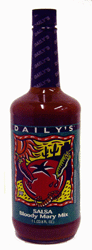
Ye gods! It was bad enough to have to accept wine in a box, then wine and some drinks in a bag. Now we're being asked to accept the cross-pollination of them with a ready-to-drink Bloody Mary in a bag-in-a-box.

Daily’s, the Pittsburgh maker of fruit mixers and ready-to-drink cocktails, plans to jump into the adult beverage market with the first such drink in September.

Daily’s already sells a line of chilled cocktails including the margarita, cosmopolitan, mangotini and appletini in 1.75ml bag-in-box containers.

“The Bloody Mary is at the top of the list of most popular cocktails,” Tim Barr, Dailey's marketing director, said in a statement, "but it is not an easy cocktail for consumers to make. We have made it easy by developing a high quality, delicious premixed Bloody Mary in a compact, tote-anywhere box."

Daily’s Ready-to-Drink products and fruit mixers are manufactured by American Beverage Corp., a non-carbonated beverage company that is part of the Dutch food group Royal Wessanen. The company makes such other products as T.G.I. Friday's Mixers.

To Dowd's Spirits Notebook latest entry.
To Dowd's Wine Notebook latest entry.
To Dowd's Brews Notebook latest entry.
Back to Dowd On Drinks home page.

Cinzano wooing the ladies


Cinzano isn't just the same old vermouth plus a name on cafe table umbrellas.

The Italian company is adding to its product lineup for the first time in 144 years with two new varieties of its wine-based drink, Spritzz Up, which are designed to be drunk with lemonade or tonic over ice.

"Fruity Wine" and "Cheeky Red," says the company's marketing manager, are aimed at women in the 18-30 age niche.

"We've looked at the market, done our research and believe there's a sizeable opportunity for a wine-based drink that you mix with lemonade or tonic in large wine glasses over ice," Karen Crowley said in a statement.

Spritzz Up is 14.5% alcohol by volume. The primary market will be the United Kingdom, but with an eye toward taking the drink to the U.S. in the near future.

Cinzano has been making vermouth since 1796 and is particularly known for its red, sweet version called Cinzano Rosso although it also has a white called Cinzano Bianco plus Cinzano Extra Dry, and rosé, lemon and orange versions.

The brand is owned by Campari Group.

To Dowd's Spirits Notebook latest entry.
To Dowd's Wine Notebook latest entry.
To Dowd's Brews Notebook latest entry.
Back to Dowd On Drinks

20060724

A toast to a fast buck


If there’s a buck to be made, does it have to be made this way?

I was sitting in a plush restaurant on the banks of upstate New York’s Mohawk River, right near the Erie Canal, an utterly gorgeous summer spot, and feeling very relaxed. Until, that is, I looked over the dinner bill for our party of four and noticed something didn’t look quite right.

Two of us had had two cocktails – Grey Goose martinis, to be precise – about an hour apart. The price was $1 more apiece for our second ones. Perhaps we’d caught the end of the happy hour discount for the first one? No. The answer wasn’t that simple.

“That’s the up charge,” the waitress explained. “We should have charged you the higher price for the first one, too, but we just missed it.”

An “up charge” usually refers to the extra cost of getting a premium brand liquor rather than what’s in the bar well. But that wasn’t what she meant.

“I mean the charge because you ordered your drink straight up. That’s $1 extra.”

You’re telling me, I carefully asked, I have to pay you extra for not putting ice in my drink, a drink that doesn’t normally come with ice anyway?

“That’s the policy,” she said with a straight face in the presence of three other witnesses.

Was this a trend I’d been missing? I’ve consumed adult beverages in a dozen countries and several dozen states and spend a lot of my time writing on the topic, but I’d never heard of such a practice. A standard martini is shaken or stirred with ice, but not poured over it. The mechanics of the thing are the same, so it’s not a matter of doing any more work preparing the drink.

In my review of the restaurant, I noted that on my next visit I’ll order a cocktail on the rocks, but also ask for a spoon so I can save $1 and scoop out the ice. Assuming, of course, they haven’t come up with a spoonage charge.

This whole thing sent me scrambling to both local sources and, via a quickie e-mail poll, to food and beverage editors around the country to get their reactions.

Among several dozen respondents locally and nationally, I found only one, Jan Norris of the Palm Beach (Fla.) Post, who was familiar with this surcharge.

“A barkeep here says, yes, it's built into the computer for $1 extra on ice-less drinks,” she said. “To quote him: ‘You're getting 1.5 extra ounces of liquor in the glass, which is essentially one shot, for $1. It's actually a good deal.’ “

However, that certainly is a minority view in my mini-survey.

Phil Vettel of the Chicago Tribune opines, “There are a couple of restaurants and bars in this area that charge 50 cents to $1.50 for ‘rocks,’ but I've NEVER heard of charging extra for leaving ice out of the glass. Outrageous! What's next, a surcharge for not slicing the bread?”

Deborah S. Hartz of the Fort Lauderdale Sun-Sentinel says, “Down here we get charged extra for a ‘rocks pour.’ Supposedly a larger pour when you order a drink on the rocks than when you order it straight up.”

Ellen Sweets, food editor of the Denver Post, added, “Lordy, just when you think things can't get any weirder in this wonderful world of ours, surprise!”

Al Sicherman of the Minneapolis Star-Tribune checked with his son, a Manhattan bartender. His reply: “My son says a martini implies straight up. (He) is puzzled as to at what point somebody would have said ‘That's an extra $1’ because, as noted, a martini is normally straight up, so it would be ‘extra’ compared with what?”

Barbara Durbin of the Oregonian in Portland echoes that latter statement, rhetorically asking, “Since when would a martini normally HAVE ice in it?”

However, there is no end to the imagination of people in business. My favorite came from Susan Nicholson, an Atlanta food writer and author of the nationally syndicated “7 Day Menu Planner.”

“I always get a Gibson straight up,” she said. “Last time a very casual restaurant charged me $6 for ‘well’ gin -- and $1.33 for the onions!”

To Dowd's Spirits Notebook latest entry.
To Dowd's Wine Notebook latest entry.
To Dowd's Brews Notebook latest entry.
Back to Dowd On Drinks home page.