20060304

Cane Festival competition judges unveiled


The first International Sugar Cane Spirits Festival & Tasting Competition will set some benchmarks for sugar-based spirits when an international panel of judges renders it decisions later this month in Tampa's Ybor City.

Spirits will be judged in the following classes:

√ Overproof
√ Flavored / Spiced / Cream
√ White Rum, including those spirits aged less than one year.
√ Dark Rum
√ Premium Rum
√ Rhum Agricole Blanc
√ Rhum Agricole Vieux
√ Cacahça, unaged
√ Cacahça, aged

The judges, in alphabetical order by nation:

UNITED STATES

• Paul Artrip, Virginia
Rum collector, food and beverage writer for regional Parrot Head Clubs.

• Natalie Brown, Ybor City, FL
Owner, Good Luck Café, Ybor City.

• Robert A. Burr, Coral Gables, FL
Host of the "Gifted Rums" seminar in Coral Gables, FL.; editor of The Pedestrian Pocket Guide to Coral Gables and the "Coral Gables Pedestrian Guide" Web site.

• Christopher Carlsson, New York
Editor, Spirits Review.

• Peter Covino, Kissimmee, FL
Entertainment editor, dining critic and spirit connisseur at the Osceola (FL) News-Gazette.

• Gary Crowder, New York
Senior Vice President/Resort Operations at Mohegan Sun Hotel Casino, Uncasville, CT.

• Wayne Curtis, Maine
Author, ""And a Bottle of Rum: A History of the New World In 10 Cocktails," scheduled for summer release by Crown; travel writer and contributor to numerous Frommer's guidebooks.

• William M. Dowd, Albany, NY
Editor and publisher of Dowd's Bar Blog, a blog-ring of four online sites; associate editor and chief restaurant critic for the Times Union newspaper and its two Web sites; published in literally dozens of U.S. and Canadian newspapers and such national magazines as Sante, and on numerous Web sites.

• Catherine Eagles, San Francisco, CA
Rum connoisseur; president, Buzzbar Productions.

• Daphne Muse, Oakland, CA
Writer published in The Washington Post, San Francisco Chronicle, San Jose Mercury and Hungry Mind Review; commentaries have aired on WTOP-FM and NPR.

• Jack Robertiello, New York
Writer and Web editor for Adams Beverage Group, former editor "Cheers"; author of "Mangia, The Best Italian Food in New York City."

• Ed Schiller , Ybor City, FL
Sea captain and master mariner, has traveled the world sampling indigenous spirits in their local environs; owner of Gaspar's Grotto in Ybor City.

ENGLAND

• Ian Burrell, London
Owner of Cottons, an award-winning Caribbean restaurant in London with the largest collection of rums in the UK; rum expert for Taste & Flavour School for Spirits.

SWEDEN

• Duane Dove, Sweden
Proprietor/sommelier of Sjögräs, restaurant and bar with what reputedly is the largest rum collection in Sweden; roots in Trinidad & Tobago and Guadeloupe; known for his “Rum & Chocolate,” matching aged rums with chocolates made with Caribbean cocoa.

PANAMA

• Francisco Fernandez, Panama
Master distiller at Varela Hermanos, makers of Abuelo and other rums.

Following the March 22-25 festival, results will be distributed to the national alcoholic beverage media, the Caribbean travel media and posted on the Ministry of Rum and Polished Palate Web sites.

To Dowd's Spirits Notebook latest entry.
To Dowd's Wine Notebook latest entry.
To Dowd's Brews Notebook latest entry.
Back to Dowd's Bar Blog home page.
New Zealand consumers have the spirit(s)


Think New Zealand and what adult beverage comes to mind?

Bourbon, of course.

Don't believe me? Just check with the Distilled Spirits Association of New Zealand and they'll tell you that their latest statistics show bourbon is the nation's drink of choice. Total per capita consumption of spirits and spirit-based drinks increased by 1.8% in calendar 2005, continuing the category’s steady growth trend over the last few years.

Other spirits in the top five for New Zealand consumers by volume in 2005 were (2.) Scotch, (3.) gin, (4.) vodka and (5.) dark rum.

Spirits' share of per capita volume has risen to 23% from 22% in 2000, while wine was 33% up from 30%. Beer, as is the case globally, dropped precipitously, from 48% to 44%.

Speaking of Kiwi land spirits, the country's only whiskey distillery is broadening its production and adding two lines.

Southern Distilling Co. is best known for its Hokonui Whiskey, a refinement of a basic moonshine recipe. It now will begin producing The Southerner, a whiskey liqueur sweetened with manuka honey, and a legal version of the irish moonshine known as Poitin (pronounced poteen or posheen), to which they may add a bit of sweetner

Owners Malcolm Willmott and Peter Wheeler say they expect to ramp up production to 50,000 litres a year. Willmott said Poitin would be released for St. Patrick's Day, March 17.

To Dowd's Spirits Notebook latest entry.
To Dowd's Wine Notebook latest entry.
To Dowd's Brews Notebook latest entry.
Back to Dowd's Bar Blog home page.

20060228

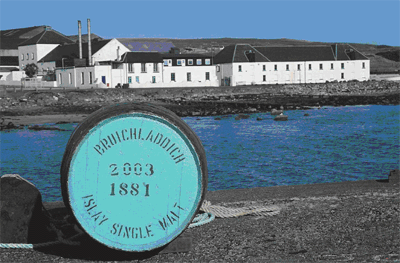
Bruichladdich back with a 184-proof bang


Most Scotch distilleries have been working on ways to smooth out the peaty aromas and tastes of the popular whisky to broaden its market appeal. Virtually no one is trying to make it have more kick.

Except the Bruichladdich distillery on the Isle of Islay, off Scotland's west coast. It is reviving a centuries-old recipe for a 184 proof whisky -- which means an astounding 92 percent alcohol.

Why?, you may ask. Me, too.

Well, Bruichladdich Managing Director Mark Reynier is very straightforward about that: “We are only doing this because we have this ancient recipe and because we can. Our team can only get involved in the fun of recreating truly historic malts because we are independent -– and we can.”

The run began this week -- Monday, Feb. 27, at 11:30 a.m., to be precise -- and only 12 barrels of the quadruple-distilled single malt will be produced, with master distiller Jim McEwan doing the honors.

Martin Martin, a 17th Century travel writer of some renown, mentioned this particular whisky in his book, "The Western Islands of Scotland."

" … The first taste affects all the members of the body: two spoonfuls of this last liquor is a sufficient dose; and if any man should exceed this, it would presently stop his breath, and endanger his life.”

McEwan, a distiller of four decades' experience, said, "The whisky first ran at 92%, which will make an average of 90%. It is very similar to the whisky tasted by Martin all those years ago. It’s very floral, but most importantly it most certainly takes your breath away!”

Bruichladdich (pronounced "Brook-Laddie," Gaelic for a raised beach) was built in 1881 by William Harvey and his brothers. It was closed in 1994 by its then-owner, Jim Beam Brands. It was purchased in 2000 by Mark Reynier, a wine merchant who headed a group of investors and, after a spruce-up of the original Victorian equipment, resumed distilling on May 29, 2001.

To Dowd's Spirits Notebook latest entry.
To Dowd's Wine Notebook latest entry.
To Dowd's Brews Notebook latest entry.
Back to Dowd's Bar Blog home page.


  

20060224

Return of a 'killer' drink


As his charcoal stick danced across the cloth napkin, capturing the slants and curves of the nightclub dancers and their lusty followers, the little man in the bowler hat began working faster and faster.

His vivid portraits of freewheeling cafe life leapt off the impromptu canvas, at once bold and graceful, revealing and enigmatic, acting as a guide for his later versions done in colorful oils.

A body of work fueled by a creative fire, of course, but perhaps just as much by frequent sips of the pale green liquid ever present on his table.

Such is the legend of the tragic 19th century artist Henri Toulouse-Lautrec (above), portrayed as a brilliant artist but a tortured alcoholic in several "Moulin Rouge" films and countless biographies.

While the work of Lautrec (1864-1901) lives on, his drink of choice -- absinthe -- receded into dim memory after it was banned throughout much of Europe and the United States around the time of World War I.

Absinthe, an herb-infused alcohol that began as a medicine, had been blamed for bad judgment, poor health, even outright madness. Nevertheless, it was the drink beloved of 19th century Parisian cafe society, enjoyed by such writers and artists as Baudelaire, Lautrec, Picasso, Degas and Manet. In fact, in those times the cocktail hour was referred to as l'heure verte -- the green hour -- in honor of absinthe.

There are those who theorize that the anti-absinthe forces were funded by the wine industry, which was losing ground in the marketplace to the "Green Fairy," as the drink was known. Any link, no matter how tenuous, between evildoers and absinthe was loudly proclaimed until enough of the public grew fearful of its continued availability to demand a ban.

Absinthe began its comeback several years ago in England, where entrepreneurs discovered no legal ban remained in effect prohibiting sale or consumption of absinthe. Its availability has spread to neighboring countries and even to the U.S., although consumption here is limited by the federal government's guidelines against the original-strength version.

Ted Breaux, a New Orleans chemist and microbiologist, has replicated the recipe used by Edouard Pernod for the premier absinthe of that Parisian heyday. According to the chemistry newsletter from England's Oxford University, "Breaux has spent seven years studying absinthe ... (He) owns two bottles of century-old premium Pernod's, which greatly facilitated his efforts. Breaux's absinthe, soon to be commercialized outside of the U.S., is believed by many to be the finest the world has seen since 1915."

Absinthe is made by steeping dried herbs in ethyl alcohol, then distilling the liquor. The main herbs are nothing unusual … anise and star anise, peppermint, wormwood, fennel, perhaps a few others, depending upon which recipe one prefers. Wormwood is the catalyst for a chemical change during the process that, combined with the very high alcohol content (usually in excess of 150 proof, or 75 percent), gives the drink its potency through release of the chemical thujone.

Absinthe today is manufactured primarily in Spain, the Czech Republic and France, the latter on a very limited basis. (It also is a popular bootleg product in Switzerland, with an estimated 15,000 gallons turned out annually, virtually all for domestic consumption.)

Hill's Absinthe, Deva Absenta and Pernod-Ricard -- the great-granddaddy of them all -- are the major brands. Although technically above the permissible U.S. strength, they are not impossible to buy domestically in very limited quantities. If you can't find them locally, you can always try ordering them through your favorite liquor store, or through an online source.

A no-strings-attached modern American version of absinthe is Absente, priced at about $40 and testing out at a comparatively moderate -- by absinthe standards -- 110 proof. It's also referred to as "petite absinthe" because of its lowered potency.

The federal government frowns on the original strength absinthe because it contains a high level of thujone. Thujone is believed to be the culprit in the bad things one hears about absinthe, although historically much of the mayhem and madness blamed on it doesn't hold up under scrutiny.

Wormwood itself is not inherently bad. It has been used as a medicine for stomach ailments and as an herbal dietary supplement. Its medicinal uses crop up regularly in the Bible. The problem comes with the concentration ingested.
The Absente brand maintains the distinctive flavor by using the milder southern wormwood, which has a much lower thujone content than the 10 parts per million maximum dictated by federal law. In its heyday, original-style absinthe measured in the range of 30 or more.

Whether excessive consumption of absinthe produces murderous rages, melancholy ruminations or just a mild dysphoria remains up for debate. Even one of its most ardent admirers, the Irish writer Oscar Wilde (1854-1900), was ambivalent on the subject. As he wrote on two different occasions:

"A glass of absinthe is as poetical as anything in the world. What difference is there between a glass of absinthe and a sunset?"

And:

"After the first glass, you see things as you wish they were. After the second, you see things as they are not. Finally, you see things as they really are, and that is the most horrible thing in the world."

To Dowd's Spirits Notebook latest entry.
To Dowd's Wine Notebook latest entry.
To Dowd's Brews Notebook latest entry.
Back to Dowd's Bar Blog home page.

20060222

'Washington's whiskey' on the comeback trail


Back in the dark ages of my occasionally misspent youth, when the legal drinking age in New York was 18 and minimum wage was less than a buck an hour, 30 cents would buy you a nice highball. Really.

Highball. Then a common term for a simple mixed cocktail, now a quaint, anachronistic word. The highball of choice for my untrained young palate was rye and ginger. Four ounces of ginger ale and a shot of whatever rye the bartender poured into it. I wasn't into labels in those days. Even for the ginger ale.

Nowadays, worldly sophisticate that I am, rye rarely comes to mind. Which seems to be a rather common thing in the whiskey world. Rye -- a whiskey distilled from rye or rye and malt -- is far down the list of brown beverages, peering up longingly at the lofty perches occupied by a sea of bourbons, an ocean of scotches. That isn't stopping every rye distiller, however. After all, vodka wasn't always wildly popular. Bourbon had its down periods. So, there's hope for a rye rebound.

Such star bourbon makers as Jim Beam, Wild Turkey, Old Overholt and Van Winkle have their ryes. Old Potrero, lesser known but a must-have with rye aficionadoes, has several styles. What all these brands have in common is a strong alcohol nose at first, followed by a spicy richness, then varying degrees of lingering warmth.

Another distiller putting a lot of its marbles on a rye comeback is Michter's American Whiskey Co., and mention of it becomes very topical in this month of presidential holidays.

Michter's is arguably the nation's oldest existing rye name despite a gap in its lineage. Most historians think it supplied George Washington's Continental Army during its bitter winter encampment at Valley Forge, PA. Although Michter's distillery today is located in Bardstown, KY, then it was in Schaefferstown, PA.

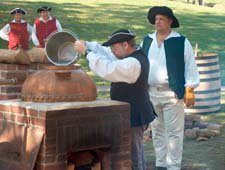
(Washington's own fondness for whiskey made on his Mt. Vernon, VA, farm has been the creative spark behind resurrecting the process on those very premises, as shown in the photo above with period-costumed distillers using Washington's original recipe. Visitors can see it all happen as part of the American Whiskey Trail tour.)

Michter's history can be traced to 1753, when a Swiss Mennonite immigrant named John Shenk began making whiskey in Schaefferstown, located in a triangle of Pennsylvania Dutch country defined by Harrisburg, Lancaster and Reading.

Christopher Carlson of Spirits Review notes that even though the Michter's name now is owned by the Kentucky distiller which is producing the rye there, the original distillery was designated a historic landmark but was partially scrapped. It is ... being restored by the present owner."

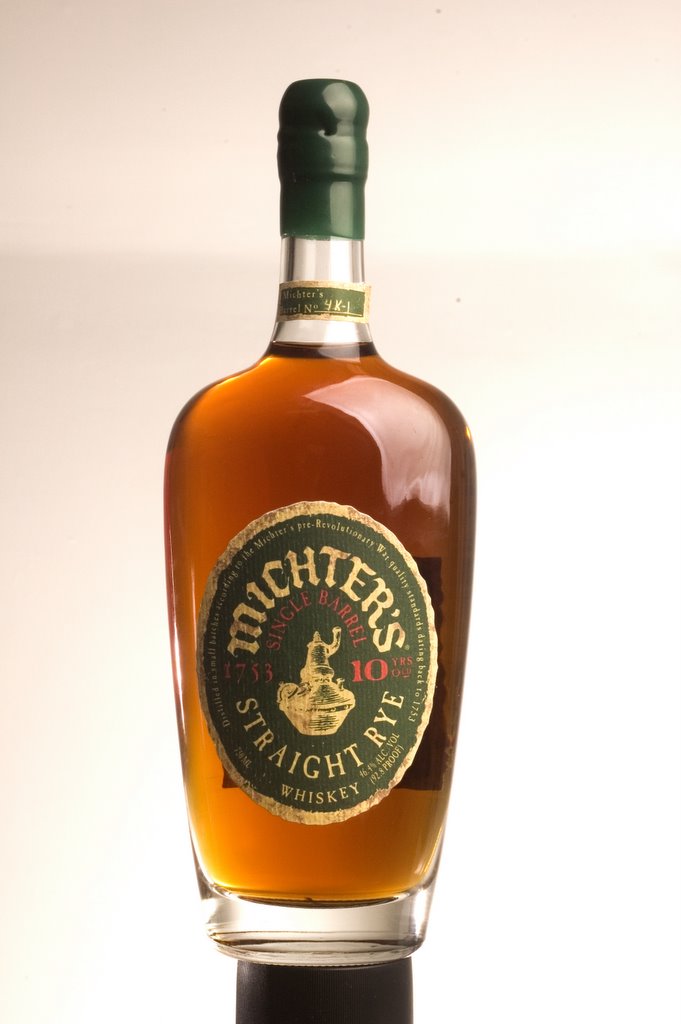
Despite Bardstown being in the heart of an area that produces 90% of the world's bourbon, Michter's now has a line of very nice ryes to complement its bourbon: Michter's Small Batch US 1 Unblended American Whiskey (83.4 proof), a grain alcohol that can be lumped into the rye category, aged in bourbon- soaked white oak barrels (suggested retail price $34.99); Michter's Single Barrel US 1 Straight Rye (84.8 proof), aged at least 36 months in charred white oak barrels (SRP $42.99), and Michter's Single Barrel Straight Rye (92.8 proof), aged 10 years in charred white oak (SRP $57.99).

I don't find, as a matter of course, that a higher alcohol content automatically means a better liquor. Usually quite the opposite, since many distllers tend to let alcohol's kick substitute for distillation subtlety. However, in the case of Michter's ryes, the higher the proof, the smoother and more complex the taste.

I particularly recommend the 10-year-old single barrel. It's excellent when smoothed out with an ice cube or two, or a few drops of cool water that help open its nose and afternotes.

To Dowd's Spirits Notebook latest entry.
To Dowd's Wine Notebook latest entry.
To Dowd's Brews Notebook latest entry.
Back to Dowd's Bar Blog home page.
Cane Spirits Festival In Tampa


Wine festivals and beer festivals are available in abundance all across the country. But if you want to try something different, jot down March 22-25 and Tampa, FL. That's when the International Cane Spirits Festival will take over Tampa's Ybor City area.

For those not quite sure what "cane spirits" means, think cachaca (pronounced kah-SAH-shah) from Brazil, guaro from Costa Rica and rum from many countries. Anything made by starting with cane sugar. Even P51 from Sazerac in New Orleans. That's shorthand for its full name, pirassununga.

The competition, part of a four-day festival of ethnic-oriented activities that include food, drink and music, is being run by Edward Hamilton, author of several books on rum and whose Web site, the Ministry of Rum, is key to the event. I'll be among the judges in the event, with tastings scheduled for Thursday and Friday.

Among some of the brands that may be new to consumers will be Beleza Pura Super Premium Cachaca, Guapiara & "Guap" Lemon Cachacas, and Australia's Inner Circle Rums.

Ybor City, which at one time was a separate entity until being annexed by Tampa, was a cigar-making center for several generations. Much of it has been restored and serves as a Hispanic cultural tourism area, replete with shops, restaurants and performance areas. The Florida Cuban Heritage Trail, a statewide route created to increase awareness of connections between Florida and Cuba, includes Ybor City.

To Dowd's Spirits Notebook latest entry.
To Dowd's Wine Notebook latest entry.
To Dowd's Brews Notebook latest entry.
Back to Dowd's Bar Blog home page.
20060220

The high cost of keeping up


The rapidly escalating prices of cocktails and some whiskies has been well documented on this site and elsewhere, but it's getting difficult to keep up with the pricing gimmicks.

The last eye-popper is the Juber Cocktail at $3,000 a pop.

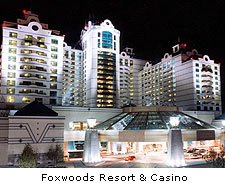
It's the new signature cocktail at the Foxwoods Resort Casino in Connecticut. The concoction uses Bombay Sapphire gin, Blue Curacao, dry vermouth and a blue-sugar coating on the rim of the martini glass.

Well, what you may ask, makes it worth $3,000? Especially considering that no drink on the casino's cocktail menu goes for more than $9, and many are just $7.

I forgot to mention that a pair of custom-made blue sapphire and diamond earrings, set in a sterling silver pick, comes with the drink that made its debut over the weekend at the casino's new Mezz Ultra Lounge.

What is it about all these gimmick drinks that are pushing establishments to become more and more creative as well as pricier?

"I think people are willing to spend more to have a premium experience so they're buying less but they're buying higher quality. It obviously makes a statement about status and the ability to afford it but I think it's also a spontaneous, celebratory thing," Brett Anderson said in an interview with Newsday, the Long Island newspaper. He is senior vice president and editorial director for the Robb Report, the luxury lifestyle magazine.

Location certainly will be paramount for good sales. The presence of high-rollwers at the casino might help, but we're now in Year 2 of the Diamond Martini offered at the Blue Bar in New York's legendary Algonquin Hotel -- $10,000 gets you the drink and a diamond from the hotel jeweler -- but only two have been sold.

Anderson is no stranger to high price gimmick cocktails. The Robb Cocktail created for the Robb Report in 2003 at the Rivoli Bar in London's Ritz Hotel, cost $87,600 then. It's no longer available, and the hotel is mum on how many sold, if any. But, at the time it was offered the cocktail was made with 22-carat gold leaf Eskalony vodka, Grand Marnier, peach liqueur and Ritz private label champagne. A 13.66 carat yellow diamond swizzle stick that doubled as a bracelet was plopped in it before serving.

To Dowd's Spirits Notebook latest entry.
To Dowd's Wine Notebook latest entry.
To Dowd's Brews Notebook latest entry.
Back to Dowd's Bar Blog home page.
20060217

Hindu wrath over Southern Comfort poster


While thousands of Muslims the world over legitimately protested unflattering caricatures of the prophet Mohammad in a Danish newspaper -- and thousands more used it as an excuse to pillage, loot and riot -- a controversy over the use of the Hindu goddess Durga was resolved in a much more civilized manner.

Durga was used in posters (seen here) displayed at the Balon Oriental Disco Bar in Athens, Greece, to promote Southern Comfort whiskey. Hindus throughout Europe have been up in arms about the frivolous and insulting nature of the posters and demanded satisfaction.

Durga is the Hindu manifestation of supreme beauty and deadly power. Her name is synonymous with the triumph of good over evil. The Indian community in Athens tried unsuccessfuly for three months to have the posters removed as well as sending letters to Brown-Forman, the American manufacturer of Southern Comfort.

Finally, a Southern Comfort representative reacted after an intervention by the Greek Embassy in Delhi. The Southern Comfort vice president for media communications sent a letter saying, in part, "On behalf of Brown-Forman and Southern Comfort, I extend our sincerest apologies for the inappropriate use of the image of the Hindu Goddess Durga. I also promise that we will do everything in our power to prevent any reoccurrence of this offence in the future.

"Brown-Forman's marketing, advertising and promotional policy prohibits the use of any religious imagery in the promotion of our beverage alcohol brands. The use of Goddess Durga was in violation of that policy. This violation occurred because of human error -- our employees responsible for approving the promotion simply didn't know that the image was, in fact, a Hindu deity. We have already taken steps to amend our review process to ensure we don't make this mistake again.

"The offensive use of the image of Durga was used in one bar in Athens, Greece. The image was removed on Monday night, February 13. We took this action within hours of first learning about the complaints against the use of the image. ... We will make every effort to ensure that the offending display is burned instead of thrown away."

To Dowd's Spirits Notebook latest entry.
To Dowd's Wine Notebook latest entry.
To Dowd's Brews Notebook latest entry.
Back to Dowd's Bar Blog home page.
20060216

Brits banning smoking in pubs, elsewhere


If you're a smoker headed for England, enjoy lighting up in a pub, restaurant or any other public place for now. That activity will be banned in a year or less.

Parliament has voted, 384 to 184, for a total ban on smoking in indoor public places, something that will end the tradition of the smoky British pub.

Neighbor Ireland instituted the same ban in March 2004. The same will occur in Scotland and Northern Ireland over the next year, and factions in Wales are debating the issue.

Prime Minister Tony Blair's government had supported a partial ban that still would have allowed smoking in private members' clubs and pubs that do not serve food.

To Dowd's Spirits Notebook latest entry.
To Dowd's Wine Notebook latest entry.
To Dowd's Brews Notebook latest entry.
Back to Dowd's Bar Blog home page.

20060208

Russians crank up the stills again


The Russian vodka shortage I reported on earlier is about to end.

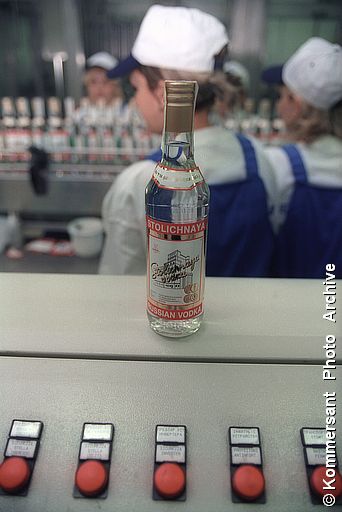
Major Russian distilleries began vodka production again today after a forced shutdown caused by a bureaucratic foulup that kept the tax stamps necessary to remain in operation from being distributed.

Kommersant, Russia's online daily, said such distilleries as Veda, Russian Alcohol and OST Group have confirmed that they have refired the stills. However, industry leader Kristall and majors Liviz and Ladoga have not yet resumed production, pending further paperwork.

The national tax service began supplying vodka producers with stamps first because vodka accounts for more than half the alcoholic beverages produced in Russia. Wine producers will have to wait until closer to spring to receive stamps, because their product is less popular in Russia in the winter, Kommersant noted.

To Dowd's Spirits Notebook latest entry.
To Dowd's Wine Notebook latest entry.
To Dowd's Brews Notebook latest entry.
Back to Dowd's Bar Blog home page.

20060202

Sticker shock in the Big Apple


It was just a few years ago that the price of a Jim Beam Manhattan hit $14 in New York City. Shocking enough to make me call home from a comfy chair in the Library Bar at the trendy Hudson hotel on West 58th Street to share the astounding development with my wife.

Admittedly, it was a great Manhattan, but $14 seemed very steep even for New York.

Since then cocktail prices -- and even beer and wine prices in some places -- have been skyrocketing. Absurdly so, in the opinions of many.

The iconoclastic Village Voice newspaper has launched a campaign to out the overchargers, asking for anecdotes from readers. Even people from other publications are writing in. The latest roundup of outrage makes for excellent reading -- as well as being a good consumer guide.

To Dowd's Spirits Notebook latest entry.
To Dowd's Wine Notebook latest entry.
To Dowd's Brews Notebook latest entry.
Back to Dowd's Bar Blog home page.
20060130

Lack in the (ex) USSR


Nyet, nyet, a thousand times nyet.

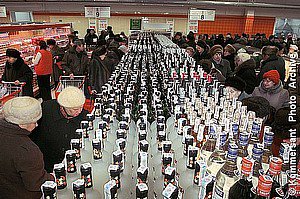
Yet, it's true. Russia is running out of vodka. Stock has been depleted at many distilleries.

”As of today, some branches of Rosspirtprom (the state alcohol company) have sold all product made (in the) past year. Moscow Cristall has terminated the shipment as well, as its warehouses are empty,” Rosspirtporm's Dmitry Dobrov told Interfax, the Russian business and general news service.

At the start of the year, the distilleries were selling vodka they had produced in late 2005. Very quickly, they ran through stocks. Production has been idled because of a controversy over government failure to properly introduce a revised act on the state control of alcohol turnover, which took effect Jan.1 of this year.

Desperate buyers, such as those seen here at the EuroSpar store in Nizhny Novgorod, have been snapping up whatever domestic vodka they can find.


To Dowd's Spirits Notebook latest entry.
To Dowd's Wine Notebook latest entry.
To Dowd's Brews Notebook latest entry.
Back to Dowd's Bar Blog home page.

20060125

Martini & Rossi 'honors' Spirits Notebook


Really? Well, let's make that assumption. Otherwise, I'd have to say Martini & Rossi pilfered an original drink -- or at least its name.

M&R has sent out CDs to news media everywhere boosting a drink it calls the "Pom-Pom." It's part of a Winter Olympic Games-related push to remind consumers of M&R's Italian heritage. However, back on Nov. 26, 2003, I unveiled the "Pom Pomme," a drink I created for the holiday food section of the Albany (NY) Times Union. Here's the story, verbatim:

HERE'S A NEW DRINK TO CHEER ABOUT
By William M. Dowd


Traditions have to begin somewhere. It's often difficult to trace them to their origins, but this one is a snap. It's The Pom Pomme, and it's brand new.

Challenged to come up with a new cocktail for the holidays, I hit on the idea of combining the fruit of the moment -- the pomegranate -- with the alcohol of the moment -- vodka; in this case, Chopin, a quadruple-distilled Polish vodka made from Podlaise region potatoes.

Pom from pomegranate, pomme de terre from the French for potato. Thus, The Pom Pomme.

One could, of course, really get into the holiday spirit by adding a touch of apple juice and a touch of apple liqueur to create a Pom Pomme Pomme Pomme, pomme by itself being French for apple. Or, a drop of rum and it's Rum Pom Pomme Pomme Pomme for Christmas parties. But that would be silly.

The new cocktail has many elements of the holiday feasting table -- the bittersweet tang of the pomegranate juice reminiscent of cranberry flavor, the rosy pink of the mixed ingredients, a touch of orange from the fruit often found on Thanksgiving tables or in a Christmas stocking.

Putting together a Pom Pomme is easy. Just have a tall cocktail shaker on hand, with plenty of crushed ice.

Pom Pomme
( Makes 2 drinks)


1 ounce pomegranate juice
1 medium orange
6 ounces Chopin or other potato vodka (Blue Ice, Luksusowa, Teton Glacier)
2 teaspoons superfine sugar
2 ounces Triple Sec

Directions: Cut orange in half. Use fruit reamer to squeeze juice of half the orange into the cocktail shaker half-filled with crushed ice. Add 1 ounce of pomegranate juice and stir slightly. Add vodka, superfine sugar and Triple Sec. Shake briskly, then strain into a chilled, stemmed cocktail glass. Drop a couple of seeds into the glass and garnish with an orange slice. Note: Pomegranate juice is available in the produce section of most supermarkets.

Here's the M&R recipe for its version:

3 parts M&R Extra Dry Vermouth
1 part pomegranate super juice (sweetened, otherwise you will need to add sugar)
1 part POM Wonderful or fresh pomegranate juice.
Orange twist
Directions: Build ingredients over ice, garnish with orange twist.

Your choice on which version you prefer. But, for the benefit of cocktail historians, remember where you read it first.

By the way, I'm not the only "victim" here. When I whined about this travesty via e-mail to Doug Blackburn, a newspaper colleague who writes on beer (among many other things), he responded:

" ... and today the august paper of record, the nyt, introduces its readers to barley wine. maybe they're simply following up on ... (this).

To Dowd's Spirits Notebook latest entry.
To Dowd's Wine Notebook latest entry.
To Dowd's Brews Notebook latest entry.
Back to Dowd On Drinks home page.

20060120

Tequila war ends with a toast


U.S. liquor bottlers who wanted Mexico to continue allowing them to import tequila in bulk for bottling later in the U.S. have gotten their way.

Mexican government officials in 2004 accused U.S. bottlers of adding lower-cost alcohol and selling the blend as "tequila." As a result, they threatened to require that the spirit be bottled in one of the five Mexican states -- Jalisco, Guanajuato, Nayarit, Michoacan and Tamaulipas -- that make up the tequila region and where the blue agave plant is grown to make tequila.

The Distilled Spirits Council of the United States (DISCUS) and other trade groups vociferously objected to the claim and the threatened prohibition, calling them a violation of the North American Free Trade Agreement. Their opposition is understandable since 73% of the $400 million worth of Mexican tequila imported in 2004 was shipped in bulk form.

The Mexican government issued a release on Jan. 17, saying a new agreement that guarantees the authenticity of tequila sold in the U.S. is proven by the creation of a registry that identifies approved U.S. bottlers.

Tequila has become a staple of the U.S. liquor market, particularly in such popular cocktails as margaritas. Sales volume in 2004 increased by 8.3% to $3.3 billion in retail sales, according to DISCUS.

To Dowd's Spirits Notebook latest entry.
To Dowd's Wine Notebook latest entry.
To Dowd's Brews Notebook latest entry.
Back to Dowd's Bar Blog home page.
20060118

Baileys briefly branching out


Baileys Original Irish Cream, the creation that found a use for two old, underutilized Irish products by combining them into one new product that clicked with consumers internationally, is at it again.

In addition to the original drink that helped use Irish cream and inexpensive Irish whisky, we now will see Baileys Caramel and Baileys Mint Chocolate in a few months. Baileys Brands is planning to hit the market in time for St. Patrick's Day (March 17) and sell the new flavors for a limited time.

The new flavors are being test marketed in Arizona, and will be sold nationally at $18.99 for a 750ml bottle.

Baileys was launched in Ireland in 1974. It is now available in 180 markets worldwide. It is the No. 1 selling liqueur in the world and No. 6 among all distilled spirits sold worldwide.

To Dowd's Spirits Notebook latest entry.
To Dowd's Wine Notebook latest entry.
To Dowd's Brews Notebook latest entry.
Back to Dowd's Bar Blog home page.

20060116

New beverages from Heaven


Heaven Hill Distilleries Inc. is hitting the market with several new offerings.

First, the Bardstown, KY, company is releasing a pomegranate liqueur called PAMA that it has been testing in New York, Miami, Chicago and Southern California. The sweet/tart flavor comes from the use of all-natural California pomegranates.

Then, it will add Two Fingers Lime and Two Fingers Berry to its tequila-based Two Fingers Gold and Silver line. The beverages, which are 35 percent alcohol volume, are made of tequila distilled from agave plants from Mexico's Los Altos region in the Jalisco Province where farmers have grown agave for more than 100 years. Natural flavorings are added to the mix.

"The groundswell of interest in the pomegranate, combined with consumer's desire for new, mixable and colorful spirits, made this the perfect time to launch PAMA Pomegranate Liqueur," said Kate Latts, Director of Marketing for Heaven Hill marketing director.

Heaven Hill Distilleries produces and markets a portfolio that includes such brands as Evan Williams Kentucky Straight Bourbon whiskey, Hpnotiq liqueur, Whaler's rum and Burnett's gin and vodka.

To Dowd's Spirits Notebook latest entry.
To Dowd's Wine Notebook latest entry.
To Dowd's Brews Notebook latest entry.
Back to Dowd's Bar Blog home page.

20060113

A gin-vodka duo


Distilling doesn't have to be big business. Ask Derek and Sonja Kassebaum of Lake Bluff, IL.

The 30something couple are the co-founders of North Shore Distillery, the state's first bonded and licensed distillery they founded 14 months ago. Quite a leap from their homebrewing beer days. Their new enterprise produces Distiller's Gin No. 6 and North Shore Vodka.

"We looked at over 25 spices for the gin before settling on the final recipe," Derek told the St. Paul Pioneer Press's online reporter.

Both the gin and the vodka are made from the same spirit base-liquor purchased from a regional producer and business partner. The base is boiled in a German-made copper still.

In one of the most flowery descriptions of a distilled spirit I have ever read, the Pioneer Press correspondent described the Distiller's Gin No. 6 as the firm's "flagship product (that) tastes like a mini-symphony in one's mouth: The prologue is an anise smell quickly followed by a scherzo of cardamom, a rondo of lavender and then back to a coda of juniper. Sonja refers to the flavor as 'complex.' The blended botanicals are a special combination of cardamon, lavender and cinnamon. Juniper berries are required to call the product gin."

Good lord, hand me the bottle, Mathilda.

The same spirit base-liquor used for gin is purified through a charcoal filtering system to produce the vodka.

The vodka label has a martini glass with skewered olives in a see-through bottle. The gin label has a frosted cutout panel on the front with the same martini glass on the bottle back.

Bottles are priced at $30.69 for a 750 liter bottle. Availability? As Derek told me, "Our products are difficult to get outside of the Chicago area except, thanks to this wonderful Internet, our gin and vodka are available on-line."

To Dowd's Spirits Notebook latest entry.
To Dowd's Wine Notebook latest entry.
To Dowd's Brews Notebook latest entry.
Back to Dowd's Bar Blog home page.

20060112

Grey Goose creator, 86, dies


Toasts no doubt will be raised today to the memory of Sidney Frank, the multimillionaire entrepreneur credited with touching off the super-premium liquor revolution with Grey Goose vodka.

Frank, 86, died Wednesday in San Diego. His publicist said the cause was heart failure. He was ranked No. 164 on the Forbes 400 Richest Americans list in October, with a net worth of $1.8 billion.

Frank got his start in the liquor business selling Dewar's White Label and Ancient Age for Schenley Distillers, then pushed the German liqueur Jägermeister to the under-30 market niche. Nine years ago, he created Grey Goose, such a hit that it shattered the $30-a-bottle price barrier for good.

For a full rundown on Frank, check Forbes.com.

To Dowd's Spirits Notebook latest entry.
To Dowd's Wine Notebook latest entry.
To Dowd's Brews Notebook latest entry.
Back to Dowd's Bar Blog home page.

20060110

On the Cutty-ing edge


If the label on your Cutty Sark begins looking different, it's not the impact of the whisky inside.

Berry Brothers & Rudd, the company that owns the Scotch whisky brand, is launching its first packaging redesign in seven years.

The project will include a new bottle design (seen here) as well as packaging changes. The new container has a taller, leaner shape, available in 70cl and 75cl, 1l and 1.75l sizes.

The changes are in response to a falloff in Cutty Sark's market share. It failed to make the top 10 list of best-selling Scotches in the United Kingdom, its home turf, in 2005 and has been seeing increased competitive pressure globally.

To Dowd's Spirits Notebook latest entry.
To Dowd's Wine Notebook latest entry.
To Dowd's Brews Notebook latest entry.
Back to Dowd's Bar Blog home page.

20060104

Fighting counterfeit Scotch


More Scotch is produced and consumed in India than in Scotland. That kind of market size can lead to many problems, including counterfeiting, in India and other countries.

Not currency, mind you, but fake Scotch production. Two members of the Scotch Whisky Association (SWA) -- Richard Burrows, director of French spirits giant Pernod Ricard, who is the new chairman, and Paul Walsh, chief executive of Diageo, the world's biggest spirits company, who becomes vice chairman -- are leading the battle against such chicancery.

SWA estimates that the level of counterfeit Scotch bottles in countries like India "could be as high as one in 10," with figures approaching that in France, Belgium and Australia.

He said: "In any one day we [SWA] are prosecuting 50 cases around the world with people trying to pass products off as Scotch whisky," the group said in a statement.

To Dowd's Spirits Notebook latest entry.
To Dowd's Wine Notebook latest entry.
To Dowd's Brews Notebook latest entry.
Back to Dowd's Bar Blog home page.

20051220

Scotch is in their future


More than 300 investors have paid US$3,000 each for six bottles of single malt whisky a year for 50 years. But, they'll have to be patient before getting started.

To explain: Ladybank, a distillery that will be constructed on the site of an abandoned mill near Fife, Scotland, rounded up the first 330 backers of what it hopes will be a group of 1,250 financial supporters. According to The Times of London, the first product will be ready for consumption in 2017.

So far, $1.5 million of the $4.5 million expected to be spent has been raised. Investors also will have access to the guest rooms, dining area and library of the adjoining Ladybank private members' club, expected to be completed by 2007.

The Ladybank brochure describes the project (see illustration) as a “luxurious country club with one difference — here the activity is focused on the special mystique that is the production of fine single malt whisky.”

Founder James Thomson told The Times the empty old farm buildings at the end of a narrow track will not begin to be converted until next spring, and production will not start for another year after that.

Thomson said he envisions his members attending whisky-making classes in the converted 18th century mill or taking a stroll in an adjacent “secret Victorian garden,” with rockeries, grotto and a pond. Those especially pressed for time will be able to land their helicopters on the lawn.

Whisky production will be on a small scale, with about 25,000 litres distilled per year compared with between one million and two million for most whisky distilleries. The whisky will be shared among members and “VIP customers” with little, if any, sold commercially.

What will the whisky style be? "Our members will be able to decide how they want their whisky, whether they want it peaty or not too peaty, how they want it bottled," Thomson said.

To Dowd's Spirits Notebook latest entry.
To Dowd's Wine Notebook latest entry.
To Dowd's Brews Notebook latest entry.
Back to Dowd's Bar Blog home page.

20051219

Cut-rate Scotch due in India


An experiment in India by a British whisky manufacturer may lay the groundwork for a lower-priced tier of scotch.

UB Group, India's largest liquor distributor, is launching a low cost variant of its Black Dog Scotch whisky to expand its market to a larger Indian consumer segment, particularly middle-income consumers. To do so, it will expand its existing bulk sourcing arrangement with White & Mackay, the UK-based scotch maker.

The new Black Dog is different in maturity as well as price. Sources quoted by the Business Standard of India said UB currently sells 12-year-old scotch at US$39 a bottle. The new version will be five years old and sell at about $22.

White & Mackay's core brands include Whyte & Mackay Scotch Whisky, Dalmore Single Highland Malt, Glavya Liquer and Isle of Jura Malt Whisky.

To Dowd's Spirits Notebook latest entry.
To Dowd's Wine Notebook latest entry.
To Dowd's Brews Notebook latest entry.
Back to Dowd's Bar Blog home page.

20051212

Rum: The new vodka?


If fancy bottles and smart marketing helped make vodka the best-selling spirit in the world, perhaps the same can be done for rum.

That is, at least, what Lascelles deMercado of Jamaica is hoping. Andrew Denoes, seen here, is doing his best to show off the line of Edwin Charley premium rums and increase its sales globally by at least 15 percent per year. Denoes is general manager of the subsidiary Lascelles Wines & Spirits.

The Edwin Charley Proprietor's premium rum collection comes in hand-blown, sculpted Venetian glass bottles for an average retail price of $100.

This is a shift in targets since for years Lascelles' Appleton Rum has been its flagship product. The new plan is to diversify to satisfy more niches.

"Looking at the global alcohol market, we have noted with great interest the increase in sales of spirits while beer sales are on the decline. What is taking up the slack is premium spirits and wines," Denoes said in an interview with Caribbean Business Report. "A lot of alcohol consumption is aspirational. You can treat yourself to a $40 bottle of wine or Scotch; you can't buy a $40 bottle of beer. This shift in demand is favourable to us and Lascelles is now focusing on premium spirits."

Global rum consumption is about 110 million cases a year, Caribbean Business Report said, with North America accounting for 27 million cases -- 19 million in the U.S., 5 million in Mexico, and 3 million in Canada.

"We recognize that if we are to build the Jamaica rum sub category we cannot be one-dimensional," Denoes said. "By that I mean we need to have more than one dominant product. You need a handful of brands to create a strong category. Appleton ... has become the No. 1 imported rum in some key markets around the world (such as in Mexico and in Canada), but the feedback we are getting is that there is a demand for another brand so we have chosen Edwin Charley as a more contemporary rum."

Lascelles, founded in 1825, has the largest stock of aged Jamaican rum in the world. It sells nearly 2 million cases a year worldwide.

To Dowd's Spirits Notebook latest entry.
To Dowd's Wine Notebook latest entry.
To Dowd's Brews Notebook latest entry.
Back to Dowd's Bar Blog home page.

20051208

Mmmmmm, now that's wheat!


It's in the New York Post, so it must be real.

The firebreathing tabloid reports that a bad batch of Ketel One vodka has been caushing headaches, not for its consumers but for the Dutch distiller. It seems a lot of complaints were being heard in various cities, and a lot of drinks sent back by unhappy customers complaining of an odd taste.

The Post contacted Bill Eldien, president of Nolet Spirits which owns Ketel One, and quoted him as saying the bad batch was the result of "a higher wheat content, with more of a wheat flavor." He went on to say that all the affected bottles had been recalled and the problem corrected.

Now we can all rest easy.

To Dowd's Spirits Notebook latest entry.
To Dowd's Wine Notebook latest entry.
To Dowd's Brews Notebook latest entry.
Back to Dowd's Bar Blog home page.

20051202

The Diva, The Donald, The Sidekick and The Professor


More new vodkas -- a nearly daily occurrence -- with some personal twists that may intrigue you.

• Diva Vodka: This wheat-based vodka is triple distilled, filtered through Nordic birch charcoal then filtered again -- through such precious gems as diamonds, emerald and rubies, we are told. A glass tube in the bottle is filled with 48 crystals that can be used as a garnish. They include cubic zircona, smoky topaz, pink tourmaline, amethyst, citrine and peridot. Basic retail price: $60 a bottle.

• Trump Super Premium: Drinks Americas Holdings Ltd. (DKAM) has signed a licensing agreement with The Trump Organization for this new vodka. Beyond that, the announcement was a veritable avalanche of hyperbole and braggadocio -- perhaps the main ingredients in the product? -- and very little product detail. One little detail that certainly was not included in the PR was that The Donald is a noted tee-totaler, a result of his own dislike for alcoholic beverages and the untimely death of his brother from alcoholism, something Trump has spoken about publicly. DKAM, by the way, develops, owns, markets, and nationally distributes alcoholic and non-alcoholic premium beverages often associated with celebrities. Among them: Willie Nelson's Old Whiskey River Bourbon and Bourbon Cream; Roy Yamaguchi's Y Sake, and golfer Greg Norman's Norman's Wines from Australia.


• McMahon Perfect Vodka: The younger set may only know him as an old commercial pitchman for Publisher's Clearinghouse, but generations knew Ed McMahon as the hard-drinking, jovial sidekick of Johnny Carson for decades on late-night TV. Thus, it's no real surprise for most that the onetime Marine fighter pilot has come out with his own vodka. It's a premium Russian imported spirit, filtered four times.

• Most Wanted Vodka: Seth Fox, an engineer in Leavenworth, KS, today runs a small distillery operation called High Plains. Just two years ago he was manufacturing creatine ethyl ester, a muscle strengthener to aid in heart surgery, for the University of Omaha. The compound he produced with an alcohol base intrigued him and led to experiments with distilled alcohol. That, in turn, led to his distillery and Most Wanted Vodka. Fox, who had made his own beer and wine for years, runs a one-man operation. He is limiting production and is distributing only in Kansas for now; he has sold 20,000 bottles of the Kansas grain vodka since late July when he put his product on the market.


To Dowd's Spirits Notebook latest entry.
To Dowd's Wine Notebook latest entry.
To Dowd's Brews Notebook latest entry.
Back to Dowd's Bar Blog home page.

20051122

Top Aruban rum U.S.-bound


Destilerias Unidas is hoping its success peddling rum throughout the Caribbean and Latin America will translate to the American market.

DU, working with U.S. importer Velocity International, is bringing its aged Aruban rum, Cartavio, here. The rum, Aruba's top seller, has been a staple in many Spanish-speaking countries since the distillery was begun by the Cartavio Sugar Co. in 1929. It already has a solid niche in the Euopean market as well.

In 1929, Cartavio Sugar Co. purchased 10,000 oak cases from Slovenia, at the time the source of the best white oak . The same barrels and the same process still are used to create the rum in Aruba.

"The aging process has not changed at all over the past 76 years, despite modern developments, because the flavor and aroma of Ron Cartavio can only be maintained using the oak casks," said Mario Maggi, executive vice chairman of Destilerias Unidas. "Our rums are handcrafted from all-natural sources, starting with our artesian water through to our traditional distilling process where no additives are used."

The Cartavio line ranges from the white rum Blanco Superior, with sweet vanilla aromas, to the 12-year-old Old Rum of Solera, with hints of spices, light chocolate and light coffee.

Cartavio's distillery has 15 rooms, houses 40,000 casks and contains 8 million liters of aging rum.

"We plan to cover several European countries and the United States with a broad launch over the next two years," Maggi said.

To Dowd's Spirits Notebook latest entry.
To Dowd's Wine Notebook latest entry.
To Dowd's Brews Notebook latest entry.
Back to Dowd's Bar Blog home page.

20051119

Introducing, the Cocktail of the Century


Forget your Singapore Slings, Harvey Wallbangers and Tequila Sunrises. The quintessential cocktail of the 20th Century, and still in the lead early in the 21st, is the martini.

That's according to sales of a gajillion of them worldwide, with the martini outpacing all other drinks by a wide margin. If you want that ranking formalized, here it is: The martini finished No. 1 in the Anchor Hocking "Drinks of the Century" survey of 150 members of the United States Bartenders Guild, the exclusive U.S. affiliate to the International Bartender's Association.

Anchor Hocking, celebrating its 100th year of glassware manufacturing, commissioned the survey as part of its anniversary celebration as well as part of Las Vegas centennial celebration and, of course, as a way of calling attention to its line of cocktail glasses.

"The view from behind the bar tells us that the martini is adored by Americans more than any other cocktail," says Tony Abou-Ganim, a well-known mixologist. "Martini lovers may argue over the merits of vodka versus gin, olives versus onions, but they all agree that the emblematic martini glass, elegant in its design and classic in its simplicity, is the only way to serve
a perfect martini."

The survey also defined 10 additional cocktails that define each of the decades between 1900 and 2000, with a few milestones to further define the period for you . They are:

1900-1910
Drink:
Old Fashioned
Milestones: Wright brothers take flight, Henry Ford makes the Model T, Cubism emerges.

1910-1920
Drink:
Singapore Sling
Milestones: Einstein's theory of relativity, steel invented.

1920-1930
Drink:
Bloody Mary
Milestones: Charles Lindbergh's solo Atlantic flight, penicillin discovered, the Jazz Age.

1930-1940
Drink:
Manhattan
Milestones: Great Depression, golden age of radio, Swing music emerges, Art Deco at its peak.

1940-1950
Drink:
Mai Tai
Milestones: World War II, the Cold War, the NBA begins play.

1950-1960
Drink:
Vodka Martini
Milestones: Sputnik, rock and roll, the Beatnik generation.

1960-1970
Drink:
Whiskey Sour
Milestones: The Beatles, Muhammad Ali, 007, Woodstock, Martin Luther
King's "I Have a Dream," the lunar landing.

1970-1980
Drink:
Long Island Iced Tea
Milestones: The Sexual Revolution, detente, "Jaws," Microsoft founded.

1980-1990
Drink:
Sex on the Beach
Milestones: Yuppies, Apple Macintosh, cable TV, Hip Hop goes mainstream.

1990-2000
Drink:
Cosmopolitan
Milestones: Launch of the World Wide Web, the threat of Y2K, Nelson Mandela freed.

To Dowd's Spirits Notebook latest entry.
To Dowd's Wine Notebook latest entry.
To Dowd's Brews Notebook latest entry.
Back to Dowd's Bar Blog home page.

The Admiral goes abroad


It's difficult enough to keep up with the never-ending introduction of new vodkas on the domestic market, as I keep saying ad nauseum, but if you've been able to do so and want to get ahead of the curve, international travel will give you that opportunity.

If you're heading for Russia or England, for example, you can try the latest Russian vodka just being released in the UK: Dovgan Admiral Vodka. Not that it's a new brand -- in fact, it's been made in very limited amounts for about a century -- but it is new to the Western market.

Dovgan Admiral has been made for domestic sale only since 1901 by the distillery Buturlinovskiy, Russia’s oldest, and the recipe for the drink was created in 1885. It's a smooth vodka, with overtones of sweet vanilla and a peppery finish. The formula has not been altered for the international market. Other Russian vodkas are made from a common spirit base bought in from formerly government-owned producers.

“For the UK market, Blue Planet Spirits has insisted that the recipe for Dovgan Admiral remains exactly the same and that the label be almost untouched,” commented Matthew Barnett, managing director of Blue Planet which has the distribution contract. “So, yes, a lot of the copy on the bottle is still in Russian and the bottle has a traditional styling, but that’s the point, Dovgan is a genuine Russian vodka that has stood the test of time and is a contemporary Russian brand that will be equally at home in the UK market.”

To Dowd's Spirits Notebook latest entry.
To Dowd's Wine Notebook latest entry.
To Dowd's Brews Notebook latest entry.
Back to Dowd's Bar Blog home page.

20051118

But is moonshine still OK?


West Virginia is reining in excessive alcohol consumption -- the kind you get from overproofed drinks.

Simply put, if the alcoholic beverage is 190 proof (95 percent alcohol), it's out.

The push for such a government ruling came from colleges, law enforcement and community groups. It makes West Virginia one of at least a dozen states with such limitations.

Carla Lapelle, a dean at Marshall University, in Huntington, WVa, said the alcohol is not something you drink at a cocktail party. Rather, she said, college students buy it "intent on getting very drunk."

The Associated Press notes that at least a dozen other states ban or limit the sale of 190-proof grain alcohol, and that neighboring Pennsylvania and Virginia, for instance, sell it only for medicinal or commercial use, and require a permit for its purchase.

The ruling obviously was expected to be made because the state's Alcohol Beverage Control Administration already had stopped stocking 190-proof grain alcohol at its warehouse, which provides all liquor sold in the state. And, a month earlier it asked liquor retailers to remove the product from their shelves.

To Dowd's Spirits Notebook latest entry.
To Dowd's Wine Notebook latest entry.
To Dowd's Brews Notebook latest entry.
Back to Dowd's Bar Blog home page.

Pennsylvania vodka may join the parade


Western Pennsylvania once was the unofficial center of American alcohol distilling.

It was there that President George Washington had to put down what became known as the Whiskey Rebellion when predominantly Scoth-Irish farmers refused to pay ever-increasing taxes on their whiskies. Many of them pulled up stakes and moved to Virginia and Kentucky, and the whisky business in the Keystone State essentially dried up.

A local businessman has thoughts of returning the region to alcohol-based riches by taking advantage of the worlwide boom in vodka consumption.

Marketing consultant C. Prentiss Orr Jr., buoyed by a $165,000 state grant, Pittsburgh businessman is looking into distilling western Pennsylvania potatoes into premium vodka.

"We're in the very early stages of our research, but I'm intrigued with the possibilities," says Orr, 50, who organized Pennsylvania Pure Distilleries LLC. Orr previously served as a vice president of the Greater Pittsburgh Area Chamber of Commerce. He was quoted in the Pittsburgh Tribune-Review newspaper.

Orr estimates that 1.3 million pounds of potatoes grown locally would enable him to distill about 50,000 bottles of vodka. He said a feasibility study funded by the state grant will include marketing and branding options.

Vodka accounts for 27 percent of U.S. liquor consumption, according to the Distilled Spirits Council of the United States.

If Orr's explorations lead to actual production, his would be the third distillery in the nation to make vodka exclusively from potatoes. The existing ones are Distilled Resources inc. in Rigby, ID, which makes Teton Glacier vodka, and Maine Distilleries, which recently introduced Cold River vodka.

To Dowd's Spirits Notebook latest entry.
To Dowd's Wine Notebook latest entry.
To Dowd's Brews Notebook latest entry.
Back to Dowd's Bar Blog home page.

(it better be) Good to the last drop


Some time ago I wrote about the joys of tasting a rare Scotch whisky from The Glenlivet Collection that sells for $2,000 a bottle. Little did I know that was mere pocket change.

Johnnie Walker is topping that pricing level with a blend that goes for $24,150 a bottle -- or, as some experts have figured it out, $862 a sip.

Diageo, the British drinks conglomerate that owns Johnnie Walker, came up with the idea of mixing a variety of Scotland's best whiskies, all over 30 years old and some as old as 70, to obtain its 1805 anniversary pack. Only 200 bottles have been made, and released just in time for high-rollers' Christmas shopping.

The aptly-surnamed Jim Beveridge, Diageo’s Master of Blending, created the offering. The first bottle was sold at a spirited (no pun intended) auction during a high-tech promotional blowout (see photo) in Shanghai, where Diageo pulled out all the stops to try cashing in on a large market of young Chinese partygoers with plenty of disposable income.

Meanwhile, in Calgary, Alberta, Canada, a liquor merchant has become the first to obtain a $100,000 barrel of Scotch from Glenfiddich. Willow Park Wines & Spirits purchased the 1974 vintage cask that will yield 220 bottles at about $600 a bottle.

Store purchaser David Michiels said 220 bottles will come from the cask. Peter Gordon, a great-great-grandson of the Glenfiddich founder, plans to visit Calgary to celebrate the buy from his 139-year-old distillery in Dufftown, Scotland.

To Dowd's Spirits Notebook latest entry.
To Dowd's Wine Notebook latest entry.
To Dowd's Brews Notebook latest entry.
Back to Dowd's Bar Blog home page.

20051116

Tastiest spirits take the golds


The results are in from the 2005 International Wine & Spirit Competition and the gleam in the eyes of several distillers and blenders is a reflection of the gold medals.

The best-in-class golds, as opposed to the standard gold medals, for spirits went to, in alphabetical category order (any classes not listed received no best-in-class golds):

Absinthe: Absynthe Apsinthion De Luxe, Apsinthion Absinthe (both Poland).

Aquavit Clear: Simers Taffel Aquavit (Norway).

Aquavit Golden: Saturnus Kallsupen Akvavit (Sweden).

Armagnac VSOP: Janneau VSOP (France).

Calvados 24-38 YO: Calvados Domaine Familial Louis Dupont 38 Year Old (France).

Calvados XO: Boulard Grand Solage, 3-5 YO (France).

Cognac Extra: Cognac Maxime Trijol Extra Grande Champagne (France).

Cognac VS Grand Champagne: Louis Royer Tres Vieux Grande Champagne Distillerie Les Magnolas (France).

Cognac VSOP: ABK6 Coganc VSOP Super Premium (France).

Cognac VSOP Fine Champagne: Louis Royer VSOP Fine Champange Force 53 (France).

Cognac XO: Louis Royer XO (France).

Cognac XO Fine Champagne: Hine XO Antique Cognac (France).

Cognac XO Grande Champagne: Hine Triomphe Grande Champagne Cognac 40 years old (France).

Fruits Spirits/Berry: Hämmerle "Vom ganz Guten" Vogelbeeren Brand (Austria).

Fruit Spirits/Pip: Hämmerle "Vom ganz Guten" Williams Birnenbrand (Austria).

Fruit Spirits/Stone: Hämmerle "Vom ganz Guten" Marillenbrand (Austria).

Gin 40%: Svensk Gin 40% (Sweden).

Gin 40-44%: Sainsbury's Blackfriars Gin (England).

Gin 50%+: Plymouth Gin Navy Strength (England).

Grape Brandy/Jerez:Soberano 5 (Spain).

Grape Brandy/South Africa 3-5 YO: Barry & Nephews Muscat Cape Potstill Brandy.

Grape Brandy/South Africa 10 YO: Uitkyk.

Grape Brandy/South Africa 12 YO: Van Ryn's Collection Reserve.

Grape Brandy/South Africa 14-15 YO: Van Ryn's Collection Reserve 15 Year Old.

Grape Brandy/South Africa 20 YO: Van Ryn's Collection Reserve 20 Year Old.

Grappa/South Africa: Helmut Wilderer Muskat Barrique 2003.

Irish Whisky Single Malt 8-12 YO: Locke's Premium Single Malt Whiskey.

Irish Whisky Single Malt Peated: Connemara Peated Single Malt Irish Whiskey.

Liqueur/Aniseed: Puccini Sambuca (Netherlands).

Liqueur/Cassis: Gabriel Boudier Crème De Cassis De Dijon (France).

Liqueur/Dairy, Flavored - Toffee/Caramel: Dooley's Original Toffee & Vodka (Germany).

Liqueur/Fruit, Citrus - Orange: Mandarinetto di Sicilia Russo (Italy).

Liqueur/Mint: Mitjans Mint Cream (Chile).

Pisco, Non-Aromatic: Pisco Payet Quebranta 2003 (Peru).

Rum/Blended 57%: Bounty Millenium Fiji Black Label Rum (Fiji).

Rum/Blended, South America 12-18 YO: Flor de Cana Centenario Rum.

Rum/Blended, West Indies, No Age Stated: Admiral Rodney Extra Old St. Lucia Rum 6 YO (St. Lucia).

Rum/Pot Stil, 15-21 YO: El Dorado Rum 21 Year Old (Guyana).

Rum/Pot Still 57%: Inner Circle Rum "General Managers Reserve" Green Dot (Fiji).

Rum/Pot Still 75%: Inner Circle Rum "Directors Special" Black Dot (Fiji).

Rum/White 37-43%: Matusalem Platino White Rum (Dominican Republic).

Rum/White Over 60%: Clarke's Court Pure White Rum (Grenada).

Scotch Whisky/Blended: Asyla Blended Scotch Whisky.

Scotch Whisky/Blended, Cask Finish 21 YO: Whyte and Mackay 21 Year Old Special Reserve Blended.

Scotch Whisky/Deluxe Blend, 12 YO: Grant's Premium.

Scotch Whisky/Deluxe Blend, 15-17 YO: Grant's Deluxe.

Scotch Whisky/Deluxe Blend, 17-18 YO: Buchanan's Special Reserve 18 Year Old.

Scotch Whisky/Deluxe Blend, 18 YO: Chivas Regal.

Scotch Whisky/Deluxe Blend, 21-25 YO: Grant's 25 Year Old Rare & Extraordinary.

Scotch Whisky/Deluxe Blend, 30-35 YO: Ballantine's 30 Year Old.

Scotch Whisky/Single Grain: Girvan 1964 Single Grain.

Scotch Whisky/Single Grain, Cask Strength, 40 YO: Duncan Taylor Rare Auld Cask Strength Invergordon 1965.

Scotch Whisky/Single Malt, Highland, 12 YO: Aberfeldy Single Highland Malt.

Scotch Whisky/Single Malt, Highland, 14 YO: Clynelish.

Scotch Whisky/Single Malt, Highland, 16-17 YO: Balbair 16 Year Old Old Single Malt.

Scotch Whisky/Single Malt, Highland, 30 YO+: The Dalmore Stillman's Dram 30 Year Old Limited Edition.

Scotch Whisky/Single Malt, Highland, Cask Finish, 38 YO: Balblair.

Scotch Whisky/Single Malt, Highland, Cask Strength, 20-25 YO: Glen Ord 25 Year Old.

Scotch Whisky/Single Malt, Highland, Cask Strength, 30-35 YO: Duncan Taylor Rare Auld Cask Strength MacDuff 1969 Sherry Cask.

Scotch Whisky/Single Malt, Islands, 14-16 YO: Scapa 14 Year Old.

Scotch Whisky/Single Malt, Islands, 18-21 YO: Talisker 18 Year Old.

Scotch Whisky/Single Malt, Islands, Cask Strength, 25 YO: Talisker.

Scotch Whisky/Single Malt, Islands, Cask Strength, 30 YO: Limited Edition Isle of Jura.

Scotch Whisky/ Single Malt, Islay, 12 YO: Caol Ila 12 Year Old, Caol Ila 12 Year Old Islay Single Malt, and Caol Ila Single Malt 12 Year Old.

Scotch Whisky/ Single Malt, Islay, 16-18 YO: Bowmore 17 Year Old.

Scotch Whisky/ Single Malt, Islay, 20 YO: Bruichladdich 20 Year Old Flirtation.

Scotch Whisky/Single Malt, Islay, Cask Strength, 12 YO: Lagavulin.

Scotch Whisky/Single Malt, Lowland, 21-29 YO: Auchentoshan 21 Year Old Lowland Single Malt.

Scotch Whisky/Single Malt, Lowland, 30 YO: Linlithgow.

Scotch Whisky/Single Malt, Speyside, 10 YO: Aberlour.

Scotch Whisky/Single Malt, Speyside, 12 YO: Origene Pure Highland.

Scotch Whisky/Single Malt, Speyside, 14-16 YO: Glendfiddich 1991 Vintage Reserve.

Scotch Whisky/Single Malt, Speyside, 18 YO: Glenfiddich Ancient Reserve.

Scotch Whisky/Single Malt, Speyside, 21 YO: The Glenlivet 21 Year Old Archive.

Scotch Whisky/Single Malt, Speyside, 27-29 YO: Tomintoul.

Scotch Whisky/Single Malt, Speyside, 30 YO: The Stillman's Dram Limited Edition Tamnavulin.

Scotch Whisky/Single Malt, Speyside, 35 YO: The Balvenie Vintage Cask 1971.

Scotch Whisky/Vatted, (Pure) Malt, 15-18 YO: Old Parr Classic 18 Year Old.

Scotch Whisky/Vatted, (Pure) Malt, 21 YO: Bennachie.

Scotch Whisky/Vatted, (Pure) Malt, Cask Strength, 10-12 YO: Matisse 12 Year Old.

Scotch Whisky/Vatted, (Pure) Malt, Cask Strength, 12 YO: Whyte and Mackay.

Shochu Barley: Long-term stored Mugi Shochu Aya Selection (Japan).

Shochu Buckwheat: Long-term stored Soba Shochu Nayuta No Toki (Japan).

Shochu Rice: Ryukyu-Bijin (Japan).

Tequila, 100% Agave, Aged: El Tesoro de Don Felipe Paradiso nd Sierra Antiguo Tequila Anejo.

Tequila, 100% Agave, Reposado: Tequila Amatitlan Reposado.

Tequila/Blended, Joven (Young): Sauza Extra Gold.

Tequila/Blended, Reposada (Rested): Sauza Hacienda.

Vodka/Flavored, Vanilla: Svensk Vodka Vanilla (Sweden).

Vodka/Non Flavoured, 42%+: Export Strength Premium Vodka (England).

Vodka/Non Flavoured, 37%+: Renat Brannvin Vodka (Sweden).

Vodka/Non Flavoured, 40%: Vikingfjord Vodka (Norway).

Worldwide Whiskey/Bourbon, 8-12 YO: Van Winkle 12 Year Old and Van Winkle Reserve Kentucky Straight Bourbon.

Worldwide Whiskey/Bourbon, No age stated: Elmer T. Lee Single Barrel Kentucky Straight Bourbon.

Worldwide Whiskey/Japan, 21-25 YO: Suntory Whisky Hibiki 21 Year Old.

Worldwide Whiskey/Japan, Cask Strength, 21-25 YO: Suntory Single Malt Whisky Vintage Malt 1982.

Worldwide Whiskey/Japan, Cask Strength, Peated, 12-14 YO: Suntory Single Malt Whisky Vintage Malt 1991.

Worldwide Whisky/Bourbon, Overproof: Knob Creek Kentucky Straight Bourbon.

To Dowd's Spirits Notebook latest entry.
To Dowd's Wine Notebook latest entry.
To Dowd's Brews Notebook latest entry.
Back to Dowd's Bar Blog home page.

20051111

All vodka, all the time


I am close to making a major change in this blog: Subdividing it into two categories, "Vodka" and "All Others."

Why such a drastic thought? The never-ending flood of vodkas being introduced to us from all corners of the ... well, not just the nation, but the globe.

My regular readers have been kept apprised of this flow from such surprising places as China, but the parade shows no signs of ending. The two latest entries in the expanding luxury-niche market come from Italy and Scotland, not known as hotbeds of vodka making but everyone is getting into the act so don't be surprised by points of origin.

Roberto Cavalli, the Italian fashion designer, is introducing his Roberto Cavalli Vodka to the New York, Miami and Los Angeles markets this month. The small-batch vodka is made of mountain water from northern Italy, and filtered through -- get this -- crushed, layered Italian marble. Of course. That's why it costs $60 a bottle.

The other is Blackwood's Nordic Vodka from Scotland, triple distilled using crystalline water from Shetland, then filtering over Nordic Birch charcoal. An added gimmick: When you chill the bottle in the refrigerator or freezer, the label changes color from frosted to "iceberg blue." When it turns blue, it's best to drink. Price: $27, although that's for a 700ml bottle compared to the average vodka bottle of 750ml.

These two are not the only new high-end vodkas recently introduced. Here are a few more, in descending order of price:

• Stolichnaya Elit (Russia), $60, based on a very old Russian recipe.
• Jean-Marc XO (France), $50, using mineral spring water filtered through limestone.
• Perfect 1864 (France), $40-$45, made from French wheat and Vosges mountains water.
• Siku Ultra Vodka (Greenland), $35, the most fascinating of the new vodkas simply because of its water source -- melted crystal ice from Greenland's 60,000-year-old Qalerallit Sermia glacier.


To Dowd's Spirits Notebook latest entry.
To Dowd's Wine Notebook latest entry.
To Dowd's Brews Notebook latest entry.
Back to Dowd's Bar Blog home page.

20051109

Yum. Yuck! Yum. Yuck!

Everyone is getting into everyone else's act. Bourbon king Jim Beam Brands has gotten into wine. The Mogollon Brewing Co., a popular Flagstaff, AZ, micro-brewery, is getting press for its entry into the vodka wars. Now, beer ultramegagiant Anheuser-Busch has formed a spirits unit called Long Tail Libations Inc.

Its first product: Jekyll & Hyde.

It is two products packaged as one. As Mic Zavarella,, Long Tail's director of innovations, describes it, Jekyll is "a 60 proof, scarlet-red product with a wild berry flavor" and Hyde is "80-proof, black in color a little licorice tasting." The bartender or consumer mixes the two liquids to create the final cocktail.

Don't go rushing out to your local spirits shop to look for it. Jekyll & Hyde is just in the market testing stage, sold only in selected restaurants and bars in the test markets -- Columbia, MO, Denver, Las Vegas and Orlando, Fla., the company said.

The move isn't a total surprise. The U.S. beer industry has been losing customers to mixed drinks, particularly among younger drinkers, especially women.

To Dowd's Spirits Notebook latest entry.
To Dowd's Wine Notebook latest entry.
To Dowd's Brews Notebook latest entry.
To Dowd's Tasting Notes latest entry.
Back to Dowd On Drinks home page.

20051102

Vodka evolution or revolution?


Vodka is the hottest drink in the Western world. Strings of vodka bars are popping up across Europe and vodka-based specialty martini menus are now commonplace in upscale bars and restaurants.

In Ukraine, a former part of the old Soviet Union where one would think vodka had been marketed as broadly as possible, a new vodka called La Femme has just been launched to appeal to women.

Anyone who thinks the fad may quickly dissipate isn't paying attention. In the U.S., vodkas of all sorts are being embraced with a passion once reserved for activities to keep you warm during a long Russian winter. Vodka-themed cookbooks are hitting the shelves. Guided vodka bar-hopping tours are popping up in major metro areas. A jump in the practice for fun and/or profit of infusing vodkas was the catalyst for a new English-language Web site on the topic from Fris, the Danish distiller. Such things attest to the widening trend.

As further evidence of its durability, I point to the ever-rising flood of vodkas on the American market that seems to have no end in sight.

I'm not speaking of merely new brand names, but of new twists from established labels as well as new bases from which new vodkas are springing.

In just the past few weeks we've seen the entrance of a variety of new vodka flavors from established distillers as well as the debuts of these players in this most crowded niche of the distilled spirits market:

• Medoff's, distilled from Oregon barley.

• Anglesey, a toffee-flavored vodka from Wales.

• Han, a barley-based vodka from China.

• Cold River, made in Maine at the state's first distillery, from Maine potatoes.

More and more, older brands such as Stolichnaya, Absolut, Skyy, Barton, Finlandia, Ketel One and others are flooding the market with such floverd vodkas as orange, melon, raspberry, chocolate, lemon and on and on.

If you think you're too discerning to be won over by the heavy print and billboard ads for all these vodkas, not to mention dueling liquor store displays, bear in mind that the sales forces are working longer and harder on thinking how to get their brand names into your skull than you are about keeping them out.

One perfect example, which kicks off this month on the Sundance television channel: "Iconoclasts." It's a weekly series underwritten by the French vodka maker Grey Goose that is aiming to extend its high-end vodka brand by creating entertainment that appeals to the demographic groups that like the Sundance Channel.

Each episode will team up two innovators from different fields, including film and television, architecture and design, fashion, food, music and sports. They'll each explore the other's world, acting as a guide for the viewer.

Sundance Channel does not air commercials, so there will be no spots for Grey Goose vodka, but the company will support promotional events, demographic tartgeting research and advertising.

To Dowd's Spirits Notebook latest entry.
To Dowd's Wine Notebook latest entry.
To Dowd's Brews Notebook latest entry.
Back to Dowd's Bar Blog home page.