20060708

Va. blazes a whiskey sales trail


If wineries can sell their products on the premises, why can't whiskey distillers?

Well, at least one can in Virginia. And only one, at this point.

Chuck Miller, seen here, received a license from the state to sell his products to the public at his Belmont Farm Distillery in Culpeper County as of July 1. Before, he was limited to selling through Alcohol Beverage Control (ABC) stores, which he had been doing since 1987.

"We've been dreaming about this for years," said Miller who, with his wife, Jeanette, is selling two products -- Virginia Lightning, an actual moonshine priced at $12.55 for a fifth, and Copper Fox, a Virginia whiskey priced at $17.90 a pint, from the gift shop at distillery.

Miller, 61, a retired airline pilot, credits county supervisor Steve Walker for getting the ball rolling toward Virginia General assembly approval. Walker, he says, believed whiskey distillers should be treated the same as wineries. Since the corn for the concoctions is grown on Belmont Farm, Walker suggested trying to get approval because of what he called a "value-added farm" approach.

With the assistance of Delegate Ed Scott, R-Culpeper, and a friendly ABC administration that helped write the necessary legislation, the project slowly made its way through various hearings and debates, finally getting approval and being signed into law by Gov. Tim Kaine.

Miller plans to continue selling his products through the state's ABC stores, but told a local newspaper, "This has done wonders for my business" by drawing more tourists as well as curious locals to the Belmont Farm operation.

To Dowd's Spirits Notebook latest entry.
To Dowd's Wine Notebook latest entry.
To Dowd's Brews Notebook latest entry.
Back to Dowd On Drinks home page.

20060630

Party in a glass? Perhaps


Calling the concept a cocktail party in a bottle may be stretching it a bit, but it's close.

While there are plenty of enticingly-colored concoctions on the market that can go straight from bottle to stemmed glass without any more work than removing the top -- Hpnotiq, Remy Red and Amarula Cream come easily to mind, they don't have quite the fulsome lifestyle concept of Cocktails by Jenn.

From its unabashed emphasis on targeting young, socially active women to its clever Web site that acts as a sort of national party central clearing house, the two-year-old Danville, CA, company pushes pre-made cocktails as central to a fun lifestyle.

Its stock in trade is a quartet of 100 milliliter single-serve vodka martinis in various flavors and colors, sold in totes designed to look like designer handbags, plus an enameled charm featuring such things as a shoe, a martini, an airplane, a ring, a cell phone and an ice cream sundae.

The cocktail flavors -- cosmopolitan, tropical blue lagoon, lemon drop and appletini, and limited-edition seasonal flavors such as key lime and chocolate peppermint -- carry a suggested retail price of $15 for the collection, or $20 for a 750 milliliter bottle of any of the flavors.

How is the company doing? Well enough for Barton Brands, a division of beverage giant Constellation Brands, to have noticed it and purchased the company last October. Since then, marketing efforts have pushed distribution to 31 states and the PR rhetoric to new heights.

Take this, for example:

"More than a beverage, Cocktails by Jenn embodies the spirit of friendship and quality time with girlfriends – whether it’s a relaxing girl’s night at home watching movies or a rocking girl’s night out on the town. This 'girlfriend inspired' brand prides itself on focusing on the fulfillment that these relationships bring to a woman’s life and the notion that anything can be accomplished with the encouragement and support of girl friends."

To Dowd's Spirits Notebook latest entry.
To Dowd's Wine Notebook latest entry.
To Dowd's Brews Notebook latest entry.
Back to Dowd On Drinks home page.

New American whiskey for sale ... ooops, too late


Unless you have a personal connection in Denver, forget about trying what may well be America's newest whiskey.

Stranahan's Colorado Whiskey, aged two years in oak casks, is sold out a mere six weeks after its first release.

"We just didn't have enough product to put in all the stores that people would like," said Jess Graber, majority owner and manager of Stranahan's. "We had commitments for a lot of our inventory."

The Denver distillery produced its first cask in April 2004. By law, whiskey must age two years in oak casks before it can be sold commercially. The distillery produced 1,000 cases of the aged whiskey in 2004. Projections call for 3,000 cases of the 2005 product will be available.

The whiskey sold at a suggested retail price of $54.95.

Stranahan, co-founder of Flying Dog Brewery, is a major investor in Graber's whiskey business. (Curiously, they met when volunteer firefighter Graber helped battle a blaze at Stranahan's barn.) His brewery supplies mash for the distillery.

To Dowd's Spirits Notebook latest entry.
To Dowd's Wine Notebook latest entry.
To Dowd's Brews Notebook latest entry.
Back to Dowd On Drinks

20060619

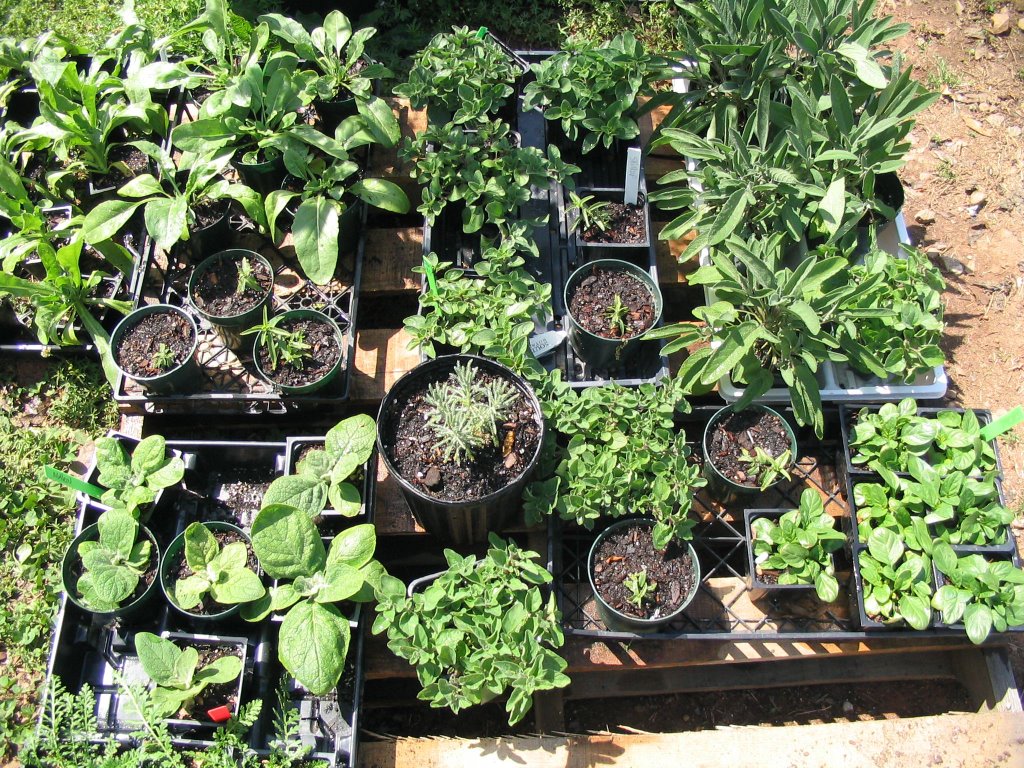
From garden to glass


As I aimed the spray of water at the sprawling herb garden, just emerging from a prolonged period of heavy rain but already threatening to wilt under the hot early summer sun, I mentally ticked off everything I was going to do when the crop reached its peak.

Creating herb blends to perfume the smoke of the barbecue grill. Brightening the routine tossed salads in need of some new tastes. Finding just the right chopped leaves to blend into artisanal chevre cheeses from the local farm stands.

And, of course, infusing vodka.

Not that there is any shortage of flavored vodkas on the market. Infusions are arguably the biggest thing in the world of alcoholic beverages these days. The major money is found in handling infusions at the mass-production level in factories or distilleries, not at the local bar no matter how much of a signature gimmick is created. Virtually every commercial brand of vodka, for example, offers versions infused with various fruit flavorings. Likewise with some gins, rums and even whiskies.

It is just that I prefer my own infusions, free of chemicals and trickery. Buying such concoctions may be fine for ease of use but, just as a home cooked meal can be more enjoyable than a takeout spread, doing your own infusing is a lot more fun. It certainly can lead to a more enjoyable
cocktail party conversation than simply opening a bottle.

For example, a friend insists the only way to drink sambuca is with three -- not two, not four, but three -- coffee beans submerged in the glass. That is known as serving the anise-flavored Italian liqueur con mosche, literally "with flies." I have always been tempted to slip a few
brown-coated M&Ms into his drink to see if he really knows the difference.

Of course, I could simply buy a bottle of negra sambuca, already infused with coffee essence. But that would kill the conversation.

Infusions have been around for nearly as long as alcohol has been part of the human experience. Liqueurs concocted on farms, in monasteries and in laboratories give testament to the boundless imagination of amateur and professional chemists. Mead makers of the Middle Ages infused their honey liquor with herbs and spices. And, the strength of alcohol was long believed to counteract the toxic parts of certain substances favored as medicines throughout the centuries.

Alcohol can be infused with botanicals, marinated with macerated fruits, or stirred together with other potions. It can be dotted with flecks of pure gold, cloves, grains of pepper, sprinklings of cinnamon. The mixtures can be festive, imaginative, wonderful introductions to grown-up spirits. They can be used as dessert toppings, as baking ingredients or -- as many tavern owners and restaurants know -- excellent appetite-boosters and after-meal relaxers.

They can be flavored with nuts, fruits, exotic plant extracts. They can be orange, blue, black, white, red, pink, yellow, green or any other color.

Benedictine is generally regarded as our oldest multi-infusion alcohol, invented in A.D. 1510 at the Benedictine Abbey in the Caux district of Normandy, France. The sweet, aromatic liqueur is flavored with more than 20 plants and herbs from a closely-guarded secret recipe. (A popular modern variant is B&B, a combination of Benedictine and brandy.)

If you're interested in doing some of your own infusing, the best strategy is to begin with the simplest recipes.

Get a trio of small (half-pint or so) sealable jars and run them through the dishwasher to sterilize them. Pour each about two-thirds full of a decent grade of vodka and begin the infusing process.

Use small amounts of liquid to get a better handle on the proportions of infusing material that suit your taste.

Like a particular chili pepper, such as those hot little Asian numbers? Bruise one ever-so-slightly to allow some of the oil to seep out and let it steep in a sealed jar of vodka for about 10 days. Shake it occasionally during that time, but don't unseal the jar.

Want to try a citrus style? Juices of lemons, oranges and limes are the most acidic and share their essence very well. Feel free to mix them if you're a "limon" sort of person.

If you want to try a complicated cocktail in a bottle, raise the number of ingredients to four or five, such as I do when I create my Summer Salad Vodka

Begin with cubes of peeled, seeded fresh cucumber, add a quarter teaspoon of dried dill or a sprig of fresh thyme, a grind of fresh cracked black pepper and a squeeze of fresh lemon juice to create a
refreshing infusion reminiscent of a summer salad. (For an extra kick, add two drops of Tabasco hot sauce or Tabasco green pepper sauce when you serve the drink.)

If your tastes run toward the sweeter side of the scale, your vodka can be infused with virtually any fruit. Simply bruise the fruit so its sugars and acids will leach out during the incubation period. You can speed the process by pouring the liquor over fresh-cut strawberries, kiwis, mixed fruit salad or melons.

Remember to run your infused liquors through a small-screen sieve before serving. Many a nice drink has been spoiled by the residue left from stems, seeds, leaves and skins.

One last tip: The infusing materials don't always have to be tossed away. Think of how nice some of those pieces of fruit will taste after sitting in a vodka or gin bath for a few weeks.

To Dowd's Spirits Notebook latest entry.
To Dowd's Wine Notebook latest entry.
To Dowd's Brews Notebook latest entry.
Back to Dowd On Drinks

20060613

Italian fizzy aperitif goes American


Aperol Soda, a low-alcohol drink popular in Italian cafes, now is available in the U.S.

The fizzy, bitter-orange-flavored aperitif is a mere 3% alcohol. It was introduced in 1995 and became an immediate success on the Italian market.

Aperol Soda is an offshoot of Aperol, an aperitif developed in 1919 by the Barbieri brothers whose 11% drink found a niche in a domestic market that had largely been ruled by higher alcohol aperitifs.

Today, the Aperol brands are owned by the Campari Group.

To Dowd's Spirits Notebook latest entry.
To Dowd's Wine Notebook latest entry.
To Dowd's Brews Notebook latest entry.
Back to Dowd On Drinks

The Vodka Report: In the Pink

From the pink gowns Marilyn Monroe and Jane Russell wore in the iconic 1953 film "Gentlemen Prefer Blondes" to biker chick Pinky Tuscadero on TV's "Happy Days" to current pop singer Pink, the color pink has always said FEMALE!, albeit in many different ways.

I recently reported on p.i.n.k., a Dutch vodka infused with both caffeine and guarana, selling at $40 per 750ml bottle. As noted, the gimmick is using the Brazilian guarana bean that contains a natural form of caffeine, 2 1/2 times stronger than the caffeine found in coffee or tea.

Now comes Pinky vodka, a Swedish product infused with a dozen botanicals, including violets, rose petals and wild strawberries. At 80 proof, like p.i.n.k., Pinky sells for $30-$33 per 750ml bottle. It's imported and distributed by Liquidity brands.

As usual, there is other news on the vodka market. Snow Leopard, for example.

This particular big cat, which lives in remote, icy areas of Asia, is the inspiration for a new premium vodka, launching exclusively at the famous Harvey Nichols Wine Shops in London and a small handful of London's landmark bars.

Snow Leopard is made with spelt, a grain traditionally used by Polish distillers, now made at Polmos Lublin, one of Poland's leading distilleries. The company has pledged to donate 15% of its profits to the Snow Leopard Trust, an organization created to protect the future of the animal. The vodka is sold at $60 and up per bottle.

To Dowd's Spirits Notebook latest entry.
To Dowd's Wine Notebook latest entry.
To Dowd's Brews Notebook latest entry.
Back to Dowd On Drinks

20060607

A sidewalk pleaser from the Big Apple


Eben Klemm whips up a better cocktail than he does a name. Witness "The V(ini).

It's the cocktail selected as the best among all served at New York City's 20,000+ sidewalks cafes (that covers Manhattan, Brooklyn, Queens, the Bronx and Staten Island), as chosen by the Consumer Affairs Department in the city's first-ever Sidewalk Cafe Drink Contest.

Klemm is director of cocktail development at B.R. Guest Inc., which runs Vento Trattoria in Manhattan's Meatpacking District where the drink was unveiled.

Says Klemm, "A lot of places will make watermelon martinis all year round. I only make it when it's fresh."

"The V(ini)" got its V from Vento and its (ini) from martini. The recipe for the pink pleaser:

1 oz. citrus vodka
1 oz. limoncello
Juice of ½ lime
1 oz. fresh watermelon puree

Add all ingredients to shaker, fill with ice, shake and strain into cocktail glass. Garnish with orange twist.

To Dowd's Spirits Notebook latest entry.
To Dowd's Wine Notebook latest entry.
To Dowd's Brews Notebook latest entry.
Back to Dowd On Drinks

20060605

Electrobar not pretty, but it does the job


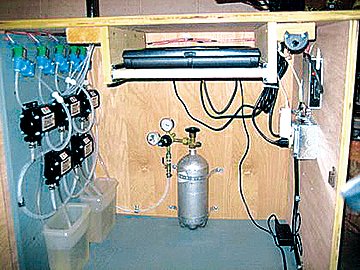
A can of pressurized carbon dioxide, a laptop computer and a series of pumps and hoses. Not terribly high tech, but good enough to whip up a cocktail to your specifications.

The device is the Electrobar, invented by Chris Yahn, 22, of Wheeling, WVA.

What started as a senior thesis project for Wheeling native Chris Yahn could become a replacement for the neighborhood bartender.

Yahn created the machine last year, his final at DeVry University in Columbus, OH. He recently picked up $10,000 by winning an entrepreneurial contest sponsored by West Virginia University, not bad for a $1,600 investment he now hopes will make him wealthy.

Yahn said the project required about three months of programming. He estimates about 50 hours went into creation of the machine's prototype.

"I pretty much took all the initiative," Yahn told the Charleston Daily Mail newspaper."I did all design work, all programming, all the electrical design."

A Dell laptop computer inside the cabinet stores the drink information. An operator uses the computer monitor atop the cabinet to send signals to the control board. The liquid comes out of a spigot attached to the machine's top, putting the precise amounts of ingredients in the cup. The pressurized carbon dioxide controls the flow of alcohol through the pumps and hoses. All the ingredients are poured in simultaneously.

"Basically, all the person has to do is put ice in the cup," Yahn said. "The machine does the rest."

To Dowd's Spirits Notebook latest entry.
To Dowd's Wine Notebook latest entry.
To Dowd's Brews Notebook latest entry.
Back to Dowd On Drinks

The Vodka Report: A periodic reality check

New vodkas and vodka flavorings are as common as toadstools after a spring rain. Yet, they keep on being introduced to the market as vodka maintains its status as the No. 1 selling spirit in the world.

Here are some of the latest offerings:

• p.i.n.k. -- The first caffeine- and guarana-infused vodka stays in the usual strength range at 80 proof for this Dutch-made spirit. The concept is based on the trend of mixing alcohol with "energy" drinks. David Mandell, a former Federal Aviation Administration official who now is president and CEO of an organization called High Energy Holdings LLC, worked with several partners to create p.i.n.k. Clarendon Flavor Engineering developed a process to extract the natural intensity component from the guarana bean, while removing its dark color and tart flavor. The Brazilian bean contains a natural form of caffeine, 2 1/2 times stronger than the caffeine found in coffee or tea.

“While traveling through Brazil on government business, I witnessed the power of guarana and its widespread popularity,” Mandell told HappyHours.com. “The bean is now being used in sodas, juices, work-out drinks, vitamins, and a host of foods. For us, it was a perfect ingredient for p.i.n.k.”

The suggested retail price for a 750 ml bottle is about $40.

• Absolut Ruby Red -- This grapefruit-flavored vodka is initially aimed at the summer market, but the company obviously would hope it gets enough of a following to still sell year-round even at a reduced level.

It has a floral aroma with pungent grapefruit notes. As always, Absolut is marketing it through parties, celebrity-centric TV shows and a Web page offering drink recipes using the new vodka.

The suggested retail price is about $30.

• Diaka -- Although the company hasn't set a firm suggested retail price, its PR people are calling this Polish-made spirit the world's most expensive vodka because of its unique diamond filtration method.

Diaka, an acroym for diamond vodka, is filtered using up to 100 diamonds of up to a carat in size to give it clarity and smoothness. It also has crystals in the bottle itself, although they're not diamonds.

This all reminds me of my earlier report on the introduction of Diva, a triple distilled wheat-based vodka filtered through Nordic birch charcoal then filtered again -- through such precious gems as diamonds, emerald and rubies, we are told. A glass tube in the bottle is filled with 48 crystals that can be used as a garnish. They include cubic zircona, smoky topaz, pink tourmaline, amethyst, citrine and peridot. Suggested retail price: $60 a bottle.

To Dowd's Spirits Notebook latest entry.
To Dowd's Wine Notebook latest entry.
To Dowd's Brews Notebook latest entry.
Back to Dowd On Drinks

20060604

New Kentucky distillery under construction


Kentucky is about to get another distillery.

Ray Jamieson, a lawyer in Memphis, TN, and his son, Hugh, are building a new bourbon distillery in Fulton County, western Kentucky.

The facility is projected to produce bourbon and other distilled spirits by fall, according to Jamieson. The $770,000 project will employ about 15 people.

Jamieson said he expects a 2,500-barrel bourbon production in the first year and 5,000 barels annually after that.

Plans call for a visitor's center and production building, both of which are projected to be completed in about six months.

To Dowd's Spirits Notebook latest entry.
To Dowd's Wine Notebook latest entry.
To Dowd's Brews Notebook latest entry.
Back to Dowd On Drinks

20060525

Diet cocktails speed up blood alcohol


Cocktail drinkers who use mixers containing artificial sweeteners may be doing themselves more harm than good.

Despite reducing total calories in the drink, a new study says artificial sweeteners lead to a high rate of alcohol absorption, resulting in a greater blood alcohol concentration.

The study was done by a team at the Royal Adelaide Hospital in Australia, and presented this week at the Digestive Disease Week meeting in Los Angeles.

Dr. Chris Rayner, who headed the research team, said the artificial agents accelerate the emptying of the stomach.

The team studied eight healthy male volunteers. On one day, Rayner said, the subjects consumed an orange-flavored vodka drink made from alcohol and a mixer sweetened with sugar containing 478 calories. On the second day, they drank the same amount of alcohol with a diet mixer containing 225 calories.

The researchers measured the rate of stomach emptying using ultrasound technology and took blood samples at 30-minute intervals for three hours. The time to empty half of the diet drink from the stomach was 21 minutes, compared to regular drinks which took 36 minutes for the same degree of emptying.

Peak blood alcohol concentrations were substantially greater with diet drinks at an average of 0.05%, while regular drinks measured at 0.03% blood alcohol concentration.

Rayner said drinks of this type tend to be consumed at times other than meal times, when food would slow gastric emptying.

To Dowd's Spirits Notebook latest entry.
To Dowd's Wine Notebook latest entry.
To Dowd's Brews Notebook latest entry.
Back to Dowd On Drinks

20060513

Coming to a glass near you ...


The tequila pandemic is going strong. One example: The impending debut of another contender in the ultra-premium category.

La Certeza, an estate-crafted tequila, is being shipped to selected test markets around the country. It has been created from blue agaves grown on the 3,500-acre Beckmann estate near the town of Tequila in Jalisco state. The products are a joint venture between the Beckmanns, the former co-owners of Jose Cuervo, the Boissets and the La Certeza family, a group of tequila artisans.

Price points: blanco for $40, reposado for $45, añejo for $60.

The Beckmann name is an icon in the Tequila area. The family has owned the land since 1758 and began producing "vino de mezcal," the precursor to modern tequila, in 1795 under the first government license ever issued for the product.

The La Certeza brand is twice distilled in traditional Cognac stills and double-aged in bourbon and French oak barrels for both flavor and color.

Elsewhere, Blavod Extreme Spirits' tequila brand, El Diamante del Cielo Tequila, has added retailers in nine U.S. states to its network.

These are just two examples of the increase in both vendor points and brands of tequila. In 2004, tequila sales surged by 8% in the U.S., outpacing all other distilled beverages. Revenue last year rose by 11% to $1.06 billion, according to figures from the Distilled Spirits Council of the U.S. (DISCUS). Overall sales by volume were up by 20.6% for the last two years, and sales of high-end premium brands grew by an astonishing 51% in the same period.

To Dowd's Spirits Notebook latest entry.
To Dowd's Wine Notebook latest entry.
To Dowd's Brews Notebook latest entry.
Back to Dowd's Bar Blog

20060508

New drinks pour into the niches


Forget for a moment the familiar labels in the whiskey world. No more Jim Beams, Canadian Mists, Glenfiddichs and the like.

Not that they are going to disappear from vendor shelves, but if you look past the obvious you may be seeing several newcomers looking to create, and then fill, some consumer niches.

Take Piedmont Distillers, for example. The Madison, NC, operation is the state's only legal distiller, yet its biggest push is for something it calls Catdaddy Carolina Moonshine.

If you're old enough to remember film icon Robert Mitchum, the label may conjure up images of him driving dusty backroads in his '51 Ford, trying to evade federal agents as he transported moonshine from place to place in 1958's "Thunder Road."

If that's too far back for you, then just go for the novelty of it all -- a clear whiskey made from an old recipe for an illegal mix, yet now fully legal and made in small batches in copper stills in the foothills of the Blue Ridge Mountains.

Piedmont is keeping the formula under wraps, but traditional moonshine used corn mash, a mixture of corn, malt and sugar. And this particular product ($19.95) is sleekly packaged in a tall, glazed bottle rather than the traditional clear moonshine bottle or jug.

Across the Atlantic, a tradition much longer than that of moonshine making was revived several years ago when the Welsh Whisky Co. (no "e," please) was created. That returned the manufacture of single malt whisky to a land that had done it for centuries, then let the art die out.

The company recently installed a 'round-the-clock production process that will allow it to increase the output of its Penderyn whisky by half, to a quarter-million bottles a year.

What that means is that the company will be able to moves its products to vendors in the United States and elsewhere at a greater rate than before. Company chairman Brian Morgan said it has been exporting a mere 20 percent of its Penderyn.

If your taste runs in directions other than the brown whiskies, and if you prefer having the beverages brought to you rather than having to seek them out through a spirits vendor or helpful middleman, keep an eye on what several other foreign producers are shipping here in large numbers.

Jose Cuervo International, riding the crest of the tequila boom, is coming out with three flavored tequilas -- citrico, oranjo and tropiña. All have a blend of fruit flavors, with lime the dominant one in citrico, orange in oranjo and pineapple in tropiña.

They'll be released in major U.S. markets in June and July, then begin nationwide distribution. They'll be available in various sizes, priced from $16.99 to $18.99.

Not to be outdone in the competition for consumer dollars, more and more flavored vodkas are hitting the market. Absolut, for example, is releasing its eighth flavor, ruby red grapefruit, in June.

Fris vodka, owned by the same company that owns Absolut, is letting cocktail club owners and consumers get into the act with its infusion program.

In addition to its original, lime and apple flavors, Fris is supplying key test establishments with three-ounce servings of vodka infused with a wide range of flavorings running the gamut from sweet and exotic to savory and dry.

The year-long program is being overseen by Ryan Magarian, a mixologist with a growing reputation that was enhanced when Food & Wine magazine selected him for its 2004 list of "34 under-35 Tastemakers."

Magarian's tips on infusions -- using such disparate flavorings as coriander, cranberries, pears and cumbers -- are available online.

To Dowd's Spirits Notebook latest entry.
To Dowd's Wine Notebook latest entry.
To Dowd's Brews Notebook latest entry.
Back to Dowd's Bar Blog

20060421

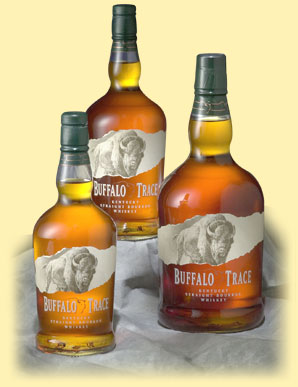
Buffalo Trace sharing its experiments


Buffalo Trace has quietly been working with what amounts to an adult chemistry set for about 17 years. What comes of the activity is a steady stream of experimental whiskies from the Franklin County, KY, distiller.

Now for the first time, Buffalo Trace plans to bottle a few experimental barrels. Its rule will be a maximum of 400 bottles of any one kind for each experiment to be released, beginning late this month.

Says Harlen Wheatley, master distiller, "We love to push the envelope of whiskey making by exploring different ideas and methods we've never tried before."

Company officials say the first three barrels will be the start of making more periodic releases. The first trio will be called the Buffalo Trace Experimental Collection.

Buffalo Trace says no pre-release tasting samples will be available, so I can't provide first-hand tasting notes. Here, instead, are details of the first three releases as described by the company:

• French Oak: This bourbon was aged 10 years in a French oak barrel in which the staves were first air-dried for 24 months. The oak has given the whiskey a sugary sweetness and dark caramel color.

• Twice Barreled: After aging this bourbon for 8 years, 8 months, this whiskey was put into a new barrel. With twice the wood, this whiskey has lots of oak and a long, warm finish.

• Fire Pot Barrel: This barrel was heated to 102 degrees F for 23 minutes to dry the wood prior to filling. The whiskey has a smoky nose, and hints of fruit and tobacco on the pallet.

The Experimental Collection will be packaged in 375ml bottles at $46.35 each. Each label will fully describe information unique to that barrel.

Buffalo Trace Distillery is a family-owned company. in a distillery producing bourbon and vodka on site. The facility recently was named to the National Historic Register.

To Dowd's Spirits Notebook latest entry.
To Dowd's Wine Notebook latest entry.
To Dowd's Brews Notebook latest entry.
Back to Dowd's Bar Blog
20060419

A sensory soiree


Hi Bill:

I host sensory wine tastings, bringing everything from cut-up cigars to limestone, etc., to build smell files about wine varieties.

Can something similar be done with vodka, tequila and gin?

Many thanks,

Allison Robbins

Dear Allison:

That's an interesting question. I'd say one can definitely do that with all three, although vodka would be the least aromatic.

Vodka must be, by legal definition, odorless, colorless and tasteless. I agree that it's colorless, but there is a bit of a nose and one can detect tastes depending upon the type of water used as well as whether is is a grape, potato or grain vodka.

Because vodka can be made from any organic matter, so tastes and aromas do sometimes come into play.

Gin, however, is virtually a booming bottle of herbals. There are some basics in each blend, such as juniper berries, lemon, etc., but the varieties are enormous. (Just take a look at the side panel on a large bottle of Bombay Sapphire Gin for an example of a lengthy list of infusions.)

Tequila presents some good possibilities, depending upon the style. There are three -- blanco, which is silverish or clear and is not aged; reposada, which is aged 3-11 months in wood and picks up nuances from the leaching process, and anejo, which is aged a year or more in oak and picks up caramel, butterscotch and herbal notes.

If you try any of these, I'd love to hear back from you on the details.

To Dowd's Spirits Notebook latest entry.
To Dowd's Wine Notebook latest entry.
To Dowd's Brews Notebook latest entry.
Back to Dowd's Bar Blog

Rye on the rebound (online version)

Back in the dark ages of my occasionally misspent youth, when the legal drinking age in New York was 18 and minimum wage was less than a buck an hour, 30 cents would buy you a nice highball. Really.

Highball. Then a common term for a simple mixed cocktail, now a quaint, anachronistic word. The highball of choice for my untrained young palate was rye and ginger. Four ounces of ginger ale and a shot of whatever rye the bartender poured into it. I wasn't into labels in those days. Even for the ginger ale.

For many years, though, rye rarely came to mind. Rye -- a whiskey distilled from rye or rye and malt -- is far down the list of brown beverages, peering up longingly at the lofty perches occupied by a sea of bourbons, an ocean of scotches.

But that hasn’t deterred all rye distillers. After all, vodka wasn't always wildly popular. Bourbon had its down periods. The current success and attention of the forgotten whiskey may indeed be signalling a rye rebound.

Such star bourbon makers as Jim Beam, Wild Turkey, Old Overholt and Van Winkle are pushing their ryes. Old Potrero, lesser known but a must-have with rye aficionadoes, has several styles on the shelf, and Michter’s, which has a whole range of ryes, is making a huge comeback.

And, in a victory of huge proportions for the legitimacy of rye, Heaven Hill Distilleries' Rittenhouse Bottled-In-Bond Rye Whisky took the title of "North American Whiskey of the Year" at the recently-completed 2006 San Francisco World Spirits Competition.

In the whiskey world, that’s akin to Rudy making the varsity football team at Notre Dame.

The annual competition is perhaps the most prestigious spirits competition in the industry. Rittenhouse’s victory meant it had to clear two huge hurdles.

First, it had to be judged a double gold –- a unanimous pick -- medal winner in a blind tasting in its rye whiskey class. Then it had to top all other double gold winners in the North American Whiskey category, which included bourbons, Canadian whiskies and artisinal spirits made by micro-distilleries.

Kirstin Jackson, brand manager for Rittenhouse Rye Whiskey, didn’t mind crowing a bit after the triumph.

"Historically, rye whiskey has been the ultimate expression of classic American whiskey style, and we at Heaven Hill Distilleries were one of only three remaining producers to keep the style alive during the lean years when rye was overshadowed by bourbon and Scotch and Irish whiskies," she said.

Rittenhouse Rye was launched by the Continental Distilling Co. of Philadelphia after the repeal of Prohibition. Later, it was bought by Heaven Hill Distilleries, the nation's largest independent family-owned spirits producer and the second largest holder of aging American whiskey in the world.

While the victory as best North American whiskey overall might have been a surprise, winning in the rye category was not. Rittenhouse was named "Whiskey of the Year" for 2005 by Wine & Spirits Magazine, and last summer Esquire called it "one of the best American Whiskeys at any price."

In recent years I’ve been trying high-end ryes. While a high price doesn’t always guarantee quality and enjoyability, it seems to help. For example, I was very pleased with Michter's Single Barrel Straight Rye (92.8 proof), aged 10 years in charred white oak. It carries a suggested retail price of $57.99. Now, however, Rittenhouse chimes in at the opposite end of the pricing scale with a suggested price for its 100-proof version at about $19 and its 80-proof at about $15.

To Dowd's Spirits Notebook latest entry.
To Dowd's Wine Notebook latest entry.
To Dowd's Brews Notebook latest entry.
Back to Dowd's Bar Blog
20060415

What next? Freezers for Eskimos?


If someone told you Russians would be importing vodka, you'd truly know the world has been turned upside down. Or, upside from Down Under.

The Tamar Distillery, a new manufacturer operating at Beauty Point on the island of Tasmania off the southeast coast of Australia, has signed a six-year distribution deal for its Strait brand vodka after initial test events in Russia showed strong consumer and distributor reaction to its distillation.

Philip Ridyard, managing director of Tamar, said at a media event,"The Russian market is very sophisticated and we're looking to break into that area along with other imported spirits internationally.

"The main attraction is the quality of the wheat grain alcohol we're using and also the quality of the Tasmanian natural spring water. Water is so important as it provides the purity and the individual character of the vodka. No vodka is identical and our Russian colleagues were impressed with Tasmania's quality and disease-free attributes."

Plans call for eventually expanding the line to include Tasmanian fruit-based and spiced vodkas as well as fruit liqueurs and gin.

To Dowd's Spirits Notebook latest entry.
To Dowd's Wine Notebook latest entry.
To Dowd's Brews Notebook latest entry.
Back to Dowd's Bar Blog

20060414

The Donald, The Drink: The update


Late last year I wrote about the impending debut of Trump Super Premium Vodka. The question at the time was whether it would be just another novelty label or whether it actually would sell.

Well, the initial reports say the latter is the case. Drinks Americas Holdings, which is handling the marketing and distribution of teetotaler Donald Trump's distillation say 40,000 cases have been ordered in the first 30 days of presenting to wholesalers. That's an opening tally of about $5 million in advance orders, and that's only from a limited number of states. The company expects to begin shipping by May 1.

Why the strong showing? J. Patrick Kenny, CEO of Drinks Americas, told Drinks Business Review, "In our view the Trump name is one of the most recognizable and valuable global trademarks in existence today, synonymous with the very best in class."

The super premium vodka category is the fastest growing segment of the largest distilled spirits category, according to the Distilled Spirits Council of the U.S. (DISCUS). While super premiums account for only 23% of sales by volume, almost 44% of the revenue - exceeding $1.3 billion per year - comes from the segment.

Drinks America develops, owns, markets, and nationally distributes alcoholic and non-alcoholic premium beverages often associated with celebrities. Among them: Willie Nelson's Old Whiskey River Bourbon and Bourbon Cream; Roy Yamaguchi's Y Sake, and golfer Greg Norman's Norman's Wines from Australia.

To Dowd's Spirits Notebook latest entry.
To Dowd's Wine Notebook latest entry.
To Dowd's Brews Notebook latest entry.
Back to Dowd's Bar Blog

20060412

Caymans 'tourist' rum enters U.S.


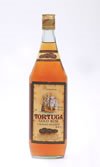
Fans of Tortuga Rum no longer have to go to the Cayman Islands for a bottle. It now is being made available in 10 U.S. states with nationwide distribution expected by mid- to late summer.

Majestic Distilling of Lansdowne, MD, is the U.S. importer.

The Tortuga Rum Co. Ltd., founded in 1984, is the largest duty-free liquor business in the Cayman Islands. Its premium and flavored Tortuga Rums, blends of Jamaican and Barbados rums, are a good seller to cruise ship passengers and other tourists. Prior to signing a distribution agreement with Majestic, they were available only in the Caymans.

Majestic is offering Tortuga rums in 1.75, liter and 750ml bottles. Banana, coconut and spiced flavors will be introduced later this year.

The Tortuga Rum Co. is a family-owned business based in Grand Cayman. It already has international business experience with its Tortuga Caribbean Rum Cakes, the Caymans' No. 1 export product.

To Dowd's Spirits Notebook latest entry.
To Dowd's Wine Notebook latest entry.
To Dowd's Brews Notebook latest entry.
Back to Dowd's Bar Blog
20060408

Gimme a T(equila)


NEW YORK -- Tequila. For some people the name conjures up images of lost weekends in Tijuana, wild nights at college parties, or self-medicating visits to dingy bars when life got too much to bear.

That was then, this is now. The consumer market for the onetime outlaw alcohol continues to expand, with the 100% pure blue agave super premium niche recording a 25% sales increase in the past year. Tequila has gone mainstream and upscale in a big way.

In fact, it has gone so mainstream that the Inter-American Development Bank’s Multilateral Investment Fund (MIF) has just approved a $1.6 million grant to support the Tequila Trail, a sustainable tourism project in the Tequila region of the Mexican state of Jalisco.

The aim is to highlight the region's natural and cultural attractions such as mariachi music and the charrors, the traditional horsemen. The region is linked by highways to Guadalajara, the country's No. 1 convention city, and to Puerto Vallarta, one of Mexico's most popular seaside resorts. The project also will be supported by the Jose Cuervo Foundation and other distillers.

Beyond Jose Cuervo, Sauza, Patron, Don Eduardo, Corazon, Don Julio and other familiar names, more newcomers to the American market keep popping up, drawing comparisons to the explosion in vodka labels that shows no signs of abating.

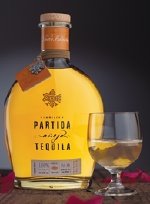
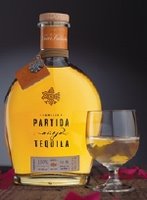
Partida, for example, is an estate-grown tequila made by the Partida family in Mexico's Amatitan region. They've released tequila in all three official categories -- Blanco, Reposado and Añejo. Partida's Reposado won a double gold at the recent San Francisco World Spirits Competition, the Blanco won a single gold, the Añejo -- aged 18 months in French-Canadian oak barrels -- won a silver.

It also earned a perfect, and rare, five-star tasting mark from my colleage F. Paul Pacult in his respected Spirit Journal. Not bad at all for a tequila introduced to the general market less than a year ago. Suggested retail prices: $45 for Blanco, $57 for Reposada, $62 for Añejo.

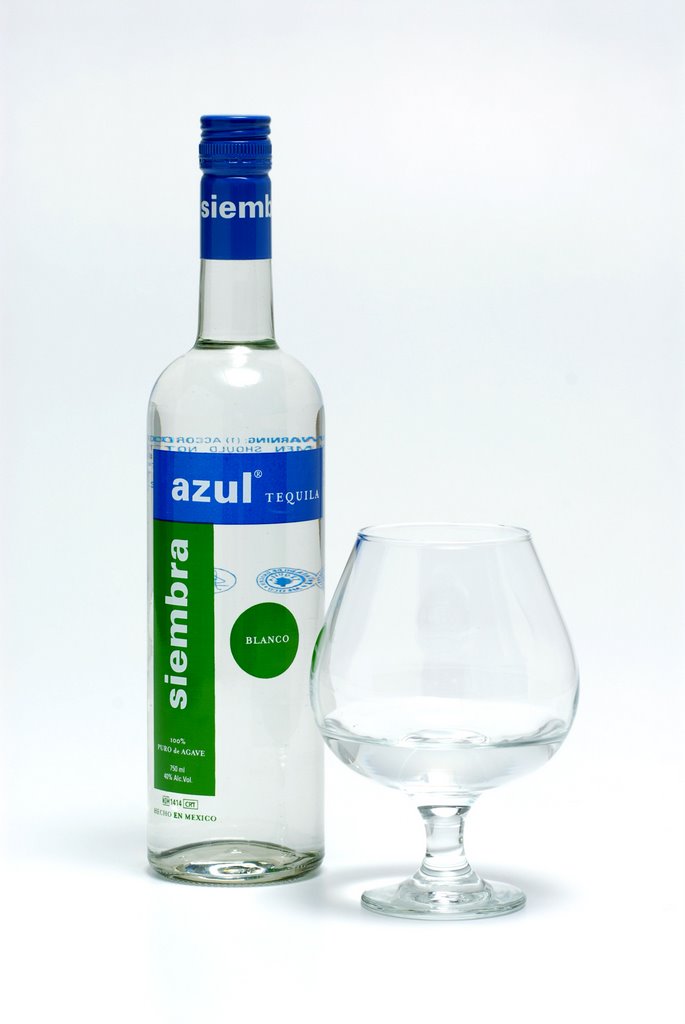
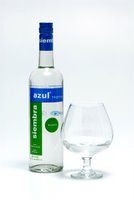
At the other end of the production extreme is Siembra Azul (Blue Harvest), a kosher, 100% blue agave small-batch product just introduced to the U.S. market in March. It's produced by David Suro-Piñera, who returned to his native land after two decades in the States to take up commercial tequila making.

"I've spent 20 years researching the greatest tequilas and made hundreds of trips in search of the rarest and best tequilas that my homeland offers," says Suro-Piñera.

His tequila comes in three traditional varieties, all produced in the highlands of Jalisco state. The Blanco retails for about $34, the Reposado for $39, the Añejo for $45.

The first batches of Siembra Azul Blanco and Reposado are available only in New York, New Jersey and Pennsylvania restaurants, bars and liquor stores, but will go national in the coming months. Consumers elsewhere who can't wait can order through online companies such as Sherry-Lehmann Wine and Spirits in New York.

Tequila has its unique points. For one, there are no vintage years because tequila is made year-round from a plant that takes eight to 12 years to mature and its ripeness doesn't depend on the climate of one particular year. However, the weather obviously plays a major role year after year on the quality of the blue agave plants.

Once the best plants are selected, workers cut off the outer layers to reveal the piña, the pineapple-like heart of the plant, roasting it, with a clay oven the most traditional and, say purists, the best way to heighten flavor, then undergoing the fermentation and distillation processes.

Just as true champagne can only be made in Champagne, France, true tequila can only be produced in the Tequila region of Mexico and must meet stringent government regulations. It is made in two general categories:

Tequila 100% Agave -- Must be made only with the juice of the blue agave plant and must be bottled at the distillery in Mexico. It may be Blanco, Reposado, or Añejo.

Tequila -- Must be made with at least 51% blue agave juices. It may be exported in bulk to be bottled in other countries following the NOM standard. It may be Blanco, Gold, Reposado, or Añejo.

NOM, the official Mexican product safety requirements, defines four types of tequila:

Blanco, or Silver -- The traditional tequila. Clear, transparent, fresh from the still. Must be bottled immediately after distillation process. Traditionally served in a two-ounce glass called a "caballito."

Oro, or Gold -- Modified by adding colorings and flavorings, caramel the most common. Widely preferred for frozen Margaritas.

Reposado, or Rested -- Kept in white oak casks or vats called "pipones" for two to 11 months. Much mellower than blanco or oro, pale in color, gentle bouquet.

Añejo, or Aged -- Matured in white oak casks for a year or more. Maximum capacity of the casks should not exceed 159 gallons. Amber color, oak notes.

Reserva -- Not technically a category, but recognized as an Añejo aged in oak up to eight years.

The aforementioned Paul Pacult was the leadoff speaker at a recent tequila workshop in Manhattan for beverage journalists and industry insiders. He, mixologist/author Dale DeGroff, spirits experts Steve Owen and Doug Frost and beverage historian Dave Wondrich led the group through a tasting of the full range of tequilas as well as sampling several drinks created by DeGroff ("The Craft of the Cocktail").

MY TASTING NOTES

The Manhattan tasting covered a trio of 100% blue agave tequilas, from young to aged, and can be used as a basic yet high-quality range of tequilas for an at-home tasting party.

(1.) The Don Julio Blanco had a slight greenish tinge with an initial taste to match -- pleasant brine, dill and clover.

(2.) The Don Eduardo Reposada tended toward notes of butterscotch from being aged form several months in oak.

(3.) The Corazon Añejo showed the results of being aged two years in new oak, with a vanilla aroma and initial flavors and aftertaste of vanilla, caramel and pear.

To Dowd's Spirits Notebook latest entry.
To Dowd's Wine Notebook latest entry.
To Dowd's Brews Notebook latest entry.
Back to Dowd's Bar Blog

20060402

Tea and alcohol, a great partnership


I have a weakness for people who try to marry two of my favorite beverages, tea and spirits.

Gary Regan, writing in the San Francisco Chronicle, takes on the topic just as I did two summers ago in creating the Marteani, a refreshing green tea/vodka cocktail that excited some local interest among bartenders looking for a warm-weather special.

Regan, who writes a column called The Cocktailin, writes about Qi Lapsang Souchong Tea Liqueur, a product made by Qi Spirits, a new company in San Francisco. The liqueur is distilled by Lance Winters of St. George Spirits in Alameda, a partner in the new venture.

You can get the details by linking directly to the company or to Regan's column.

As noted, the California drink utilizes a commercial tea liqueur. My New York drink uses a commercial iced tea, Arizona brand green tea with honey and ginseng.

Here's the California recipe, adapted from a recipe by Kieran Walsh, bar manager at Solstice Lounge in San Francisco.

QI SPIRITS COCKTAIL INGREDIENTS

• 3 kumquats, halved (plus 1 kumquat for garnish)
• 1/3 oz. simple syrup
• 2 dashes Peychaud's bitters
• 2 dashes orange bitters
• 1 3/4 ounces Bulleit Bourbon
• 1/3 oz. Qi Tea Liqueur

INSTRUCTIONS

Muddle the halved kumquats with the simple syrup and both bitters in a mixing glass. Add ice, the bourbon and the Qi liqueur, and stir for approximately 30 seconds. Strain into an ice-filled old-fashioned glass and add the garnish.

And, here's the New York recipe from my own adult chemistry set:

DOWD'S MARTEANI INGREDIENTS

• 3 oz. Arizona Green Tea w/honey and ginseng
• 3 oz. all-grain vodka (Absolut, Blue Ice, Beldevere, etc.)
• 6 drops Angostura Bitters
• Splash of Galliano or Strega
• 2 orange slices
• 1 mint leaf

INSTRUCTIONS

In a metal cocktail shaker, combine tea and vodka. Add bitters and splash of Galliano liqueur, or the more herbal Strega if you prefer, plus a handful of ice cubes. Stir briskly, then strain quickly into a frosted martini glass. Twist the juice from an orange slice into the drink and let it meander through the solution on its own. Garnish with an orange slice and a mint leaf for color.

To Dowd's Spirits Notebook latest entry.
To Dowd's Wine Notebook latest entry.
To Dowd's Brews Notebook latest entry.
Back to Dowd's Bar Blog home page.
20060331

Plymouth goes Deco to push its gin


American gin aficionadoes planning a trip to the United Kingdom can get a preview of Plymouth Gin's new look in June.

They will join domestic drinkers in the UK who will see and sample the new Pymouth before it is rolled out globally as part of a new marketing campaign.

The new design, says the Plymouth PR folks, "takes its inspiration from the Art Deco period of the 1920s and 1930s and it is presented as a cut glass decanter-style bottle, the first major design change in the premium gin’s 200-year history."

The new look will get its U.S. debut in August. What you'll notice hasn't changed is the gin's potency, still at 82.4 proof.

To Dowd's Spirits Notebook latest entry.
To Dowd's Wine Notebook latest entry.
To Dowd's Brews Notebook latest entry.
Back to Dowd On Drinks home page.

20060329

Scotch rarity on the block


A bottle of what is believed to be the oldest unopened bottle of Scotch whisky in the world could be yours. If, that is, you can outbid all others on April 4 when the Glenfiddich Rare Collection 1937 goes up for auction in New York's Grand Central Terminal as part of Tartan Week celebrations.

The annual week-long festivities celebrate Scottish culture and heritage. Glenfiddich is partnering with City Harvest, a New York-based charity, to auction one of the four remaining bottles of this exceptionally rare spirit.

Rare Collection 1937 comes from one cask at the Glenfiddich Distillery in Dufftown, Scotland, that yielded 61 bottles. Company officials explain that import laws required a special 750ml bottle to be made, so the item being auctioned is, therefore, the only 750ml bottle of this particular whisky ever produced. The spirit was cask aged for 64 years and bottled in 2001.

If you're interested in reserving a seat at the auction, call (212) 982.8300 ext. 111. Really.

To Dowd's Spirits Notebook latest entry.
To Dowd's Wine Notebook latest entry.
To Dowd's Brews Notebook latest entry.
Back to Dowd's Bar Blog home page.

20060328

Laphroaig wins hearts in San Francisco test


Laphroaig found the 6th annual San Francisco World Spirits Competition worth its time again this year.

The Scottish company was named "Distiller of the Year" and its 30-Year-Old Single Malt Scotch was named "Best in Show/Whisk(e)y."It's made at the distillery (seen here) on Islay, Scotland, at 86 proof and $240 a bottle.

The other "bests of show" were:

White Spirits: Plymouth Gin, England, 82.4 proof, $23.
Vodka: Zyr Vodka, Russia, 80 proof, $32.
Aquavit: Linie Lysholm Aquavit, Norway, 86 proof, $25.
Rum: Ron Matusalem 10 Year Old Clasico Rum, Dominican Republic, 80 proof, $20.
CachaÇa: Sagatiba Velha Luxuosa Cachaça, Brazil, 80 proof, no price given.
Tequila: El Tesoro El Tesoro Paradiso, Mexico, 80 proof, $121.
North American Whiskey: Rittenhouse Bottled-in-Bond Rye Whiskey, Kentucky, 100 proof, $13.
Brandy: Hennessy Richard Hennessy Cognac, France, 80 proof, $1,800.
Liqueur: Chartreuse Green Herbal, France, 110 proof, $48.
Fruit Liqueur: Grand Marnier Cuvée Speciale Cent Cinquantenaire, France, 80 proof, $215.
Blended Scotch: Johnnie Walker Green Label, Scotland, 86 proof, $50.
Calvados: Grand Pommier XS Calvados, France, 80 proof, $300.

Full medal results are available on the event Web site.

To Dowd's Spirits Notebook latest entry.
To Dowd's Wine Notebook latest entry.
To Dowd's Brews Notebook latest entry.
Back to Dowd's Bar Blog home page.

20060326

Cane spirits competition aglow with gold

Photo by William M. Dowd


The first International Cane Spirits Festival Tasting Competition, held in Tampa's historic Ybor City area, went off with nary a hitch but plenty of glitter.

Entries came from distilleries ranging from the expected places -- such as Jamaica -- to the surprising -- Nepal, the tiny Himalayan nation tucked between India and China, as well as from the United States, Guyana, Trinidad, Guatemala, Brazil, Grenada, Dominican Republic, Panama, Costa Rica, Belize, Colombia, Venezuela, St. Maarten, Aruba and Barbados in the Caribbean and Latin America as well as from Australia and the African nation of Mauritius.

With nearly every one of the 60-plus entries taking a medal of some sort, the enthusiasm of the 25-plus judge panel certainly was evident. The judges, a mix of writers, marketers, business people and hospitality industry specialists from the U.S., Brazil and the UK, awarded gold medals to 28 of the 63 entries.

However, some of that could be laid to the fact that new competitions, be they for spirits, wine or beers, tend toward large numbers of medals because only the strongest competitors are willing to enter a new event and they usually enter only their best distillations.

"While there are other respected tasting competitions in the U.S. and Europe, this is the only opportunity for sugar cane spirits to be judged on their own merit and in classes recognized by the sugar cane spirits industry," said Edward Hamilton, an internationally-known expert and author on rums who created and organized the competition. Hamilton is known for his Ministry of Rum Web site that is devoted to all things rum.

Santa Teresa, a Venezuelan distiller, earned the largest number of gold medals, taking four. Entries from Prichard's, a Tennessee distiller, and Inner Circle of Australia took three each.

Blind tastings were conducted in four sessions held over two days in Ybor City -- once the center of Florida's cigar-making industry. They covered more than 1,600 samples of cane spirits, distilled either directly from sugar or from molasses, a sugar byproduct.

While local laws and methods for producing rum vary widely around the world, the essential process is uniform. Rum is made by a process of fermentation and distillation. The clear liquid distillate usually is aged in wood casks. The majority is made in and around the Caribbean and along the Demerara River in South America, but higher-end spirits are distilled around the world as the entries in this competition show. Most commercial rum producers use traditional small batch pot distillation, then age the distillate in oak casks to obtain the brown-gold color of most rums along with various fragrances and flavors.

Rums and cachaças from around the world were judged for their aroma, initial taste, body and finish on a scale of 1 to 25 points for each attribute. Judges then added their scores for these attributes and gave a final rating which Hamilton used to calculate awards, using a bell curve system.

Cachaça, once merely a blue-collar drink in Brazil, has grown in popularity as tourists "discovered" the cane-based drink and created a demand for it once back at home, similar to what happened to tequila when it grew from a blue collar Mexican drink to a major player in the international spirits industry . Outside Brazil, where 98% of the domestic production is consumed, cachaça is used almost exclusively as an ingredient in tropical drinks. The most popular is the caipirinha -- a mixture of muddled lime slices, superfine sugar, ice and cachaça.

Santa Teresa, this competition's top entry, is spirits royalty in Venezuela, established in 1796 and still family owned. Prichard's uses Tennessee spring water and molasses to manufacture its rums. And, Inner Circle is an Australian industry giant once made only for employees of the distillery (thus the name) and that now routinely wins major competition medals.

The gold medalists:


FLAVORED/SPICED/CREAM

Gold Medals

• Santa Teresa Arakú Ron y Coffee Liqueur (Venezuela)
• Prichard's Sweet Georgia Belle Fine Rum Liqueur (U.S.)
• St. Maarten Guavaberry Rum Liqueur (St. Maarten)

Silver Medals

• Santa Teresa Rhum Orange Liqueur (Venezuela)
• Pirate's Choice Key Lime Rum (U.S.)
• Santero Coffee Rum (Colombia)

Bronze Medals

• Prichard's Cranberry Rum (U.S.)
• Canne Royale Banane Rum (Grenada)
• Guap Lemon Capirinha Cachaça (Brazil)

WHITE RUMS (inc. spirits aged less than a year)

Gold Medals

• Santa Teresa Blanco (Venezuela)
• Starr African Rum (Mauritius)
• Prichard's Crystal Rum (U.S.)
• Ron Botran White Rum (Guatamala)

Silver Medals

• Distiller's Choice White Rum (U.S.)
• 10 Cane Rum (Trinidad)

Bronze Medals

• Vodkane, Sugar Cane Vodka (Colombia)
• Inner Circle Traditional Pot Still Rum (Australia)
• Cartavio1929 Ron Blanco Superior (Aruba)

CACAHCA

Gold Medals

• P51 Cachaça (Brazil)
• Água Luca Cachaça (Brazil)
• Guapiara Prata Cachaça (Brazil)

Silver Medals

• Guapiara Special for Caipirinha Cachaça (Brazil)
• Fãzenda Mae de Ouro Cachaça (Brazil)

Bronze Medals

• José Junqueira Guapiara Ouro Cachaça (Brazil)

OVERPROOF

Gold Medal

• Inner Circle Rum Green Dot (Australia)

Silver Medal

• Inner Circle Rum Black Dot (Australia)

Bronze Medal

• Cannes Royale White Overproof Rum (Grenada)

DARK RUMS

Gold Medals

• Coronation Khukri Rum (Nepal)
• One Barrel Rum (Belize)
• Ron Botran Solera Rum (Guatamala)
• Ron Abuelo Añejo Reserva Especial (Panama)
• Santa Teresa Selecto (Venezuela)
• Santa Teresa Gran Reserva (Venezuela)
• Pirate's Choice Molasses Reef Rum (U.S.)
• Inner Circle Rum Red Dot (Australia)
• Inner Circle Rum Blue Dot (Australia)

Silver Medals

• Ron Botran Añejo 8 yo (Guatamala)
• Cartavio 1929 Ron Añejo Reserva (Aruba)
• Sea Wynde Rum (Jamaica / Guyana)
• Ron Botran Gold Rum (Guatamala)
• Ron Barceló Añejo (Dominican Republic)

Bronze Medals

• Distiller's Choice Gold Rum (U.S.)
• Maui Reserve Gold Rum (U.S.)

PREMIUM RUMS

Gold Medals

• Ron Zacapa Centenario 23 yo (Guatamala)
• Diplomático Reserva Exclusiva (Venezuela)
• Santero Ron 21 Años Antigua Reserva (Colombia)
• Prichard's Fine Rum (U.S.)
• Ron Macuro Ron Añejo Ultra Premium (Venezuela)
• Cockspur Bajan Crafted Rum 12 (Barbados)
• Ron Zacapa Centenario 15 yo (Guatamala)
• Ron Abuelo 7 Años Reserva Superior (Panama)

Silver Medals

• Ron Botran Añejo 12 yo (Guatamala)
• Ron Bastidas Reserva de Conquistador Añejo 23 Años (Colombia)
• Ron Barceló Imperial Rum (Dominican Republic)
• Santa Teresa 1796 Ron Antiguo de Solera (Venezuela)
• Cartavio 1929 Old Rum of Solera 12 years (Aruba)

Bronze Medals

• Canne Royale Extra Old Rum (Grenada)
• Cartavio 1929 Ron Gran Reserva, 7 (Aruba)

Photo by William M. Dowd


MY TASTING NOTES

As one of the judges, my selections resulted in 12 gold medal votes, 19 silvers, 13 bronzes and 18 no-medal votes.

• In Flavored/Spiced/Cream Rums, I agreed with one of the three golds, my tasting notes calling the St. Maarten Guavaberry Rum Liqueur "pleasing on all levels with a just-right hint of fruit."

• In White Rums, I cast no gold medal votes but did cast a silver for eventual gold-medalist Starr African Rum from Mauritius which I regarded as "peppery; floral; and, with a long finish."

• In Cachaça, my gold vote matched that of the panel for the P51 Cachaça, my notes saying "olive-brine notes, nicely nuanced, good finish." The gold medal Água Luca I rated silver, noting it was "smooth; full-bodied with a hint of lemongrass."

• In Overproof, I didn't rate anything better than a bronze. Overall, there was just one gold among four entries in the 100-150 proof range.

• In Dark Rums, nine of the 18 entries collected golds. I concurred with two of those, my notes saying of the One Barrel "complex nose; layered flavors; pleasantly lingering aftertaste" and of the Inner Circle Blue Dot said "very good throughout; heat and flavor balanced; long finish."

• In Premium Rums, eight of 17 entries took gold, with me agreeing with half of the golds. My notes said of the Ron Abuelo 7 Anos Reserva Superior "mild butterscotch-caramel, vanilla and peat; smooth, nicely balanced." Of the Diplomático Reserva Exclusiva, "pleasant molasses evident in the taste, finish; heady fragrance; rich mix." Of the Ron Zacapa Centenario 23 yo, "Irish whiskey style; very smooth; butterscotch notes." And, of the Prichard's Fine Rum, "pleasant aroma of candied fruit; initial taste echoes it."

To Dowd's Spirits Notebook latest entry.
To Dowd's Wine Notebook latest entry.
To Dowd's Brews Notebook latest entry.
Back to Dowd On Drinks home page.

20060325

Cruzan is Absolut-ly sold


News item: Absolut Spirits Co. has purchased Cruzan International.

It's a geographic puzzle come together: Absolut, the New York-based subsidiary of Swedish spirits and wine company V&S Group (distillery seen here), buying the West Palm Beach, FL, rum producer and distributor and rum and brandy distiller.

The bigger part of the puzzle, by the way, cost $28.37 per Cruzan share it did not already own. A U.S. Securities and Exchange Commission filing puts that as worth about $80 million. Angostura owned 68% of Cruzan.

Cruzan has long been a maker and distributor of premium rums and flavored rum-based drinks. Among the products: Cruzan Rum and rum flavored with banana, pineapple, orange, mango, raspberry, coconut, vanilla and citrus.

Absolut has a wide range of flavored vodkas -- mandarin, vanilla, raspberri, pepper, kurant, apple, peach, etc.

To Dowd's Spirits Notebook latest entry.
To Dowd's Wine Notebook latest entry.
To Dowd's Brews Notebook latest entry.
Back to Dowd's Bar Blog home page.

An Irish-Italian alliance


When you own two products that have what seems like a natural affinity, why keep them apart?

That, at least, seems to be the logic behind Castle Brands' move to package 750ml bottles of Boru Vodka with 50ml bottles of either Pallini Limoncello, Peachcello or Raspicello. The packaging, referred to as the "sidecar," has a window so the consumer can tell which flavor of Pallini it contains. The sidecar also contains recipes for tall drinks and martinis made with the vodka and the Italian liqueurs.

Boru is an 80-proof premium grain vodka produced in Ireland. It's quadruple distilled and charcoal filtered.

Pallini Limoncello is Italy's top-selling liqueur, made from a century-old Pallini family recipe -- the same family that created Romana Sambuca -- using Italian Sfusato Amalfitano lemons. The Peachcello and Raspicello are relative newcomers made, respectively, with white peaches native to Italy and wild raspberries from the Abruzzi region, blended with blueberries and black currants.

To Dowd's Spirits Notebook latest entry.
To Dowd's Wine Notebook latest entry.
To Dowd's Brews Notebook latest entry.
Back to Dowd's Bar Blog home page.

20060320

Vodka: Bring on the grapes


The recent absence of lengthy reports on this site about the newest vodkas has been intentional. So many producers were releasing new vodkas, often with silly marketing gimmicks, at such an overwhelming pace I was beginning to be forced into a vodka-centric blog.

That self-imposed slowdown has now allowed me to catch up. And it took some doing. The pace of releases hasn't eased up -- did you know renowned designer Milton Glaser has been hired to redesign Donald Trump's signature vodka bottle? -- so I've been very selective in what I'm reporting on.

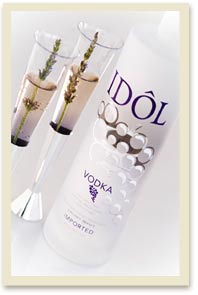
Idol, for example, shouldn't be ignored. Billed as "The vodka for wine lovers," the new release from Boisset America is distilled from Pinot Noir and Chardonnay grapes from Burgundy, France.

The grapes come from France's Cote-de-Nuits and Cote-de-Beaune regions, fermented the same way as for wine, then distilled close to the vineyards, using a seven-column continuous distillation process to extract exceptionally pure alcohol. Local spring water is blended with the distilled alcohol to bring it down to 40% alcohol (80 proof) before being filtered five times. Idol winds up with a very smooth, slightly sweet taste.

The beauty, or sometimes the curse, of vodka is that it can be made from any organic matter, so using grapes is not exactly new. It's merely a matter of quality.

As one example, Ciroc, another French grape-based vodka, actually has sort of a grapey nose even though vodka must, by definition, be essentially neutral in color, taste and nose.

For another, Jorg Rupf, a renowned maker of fruit brandies in his St. George Distillery housed in a former airplane hangar on Alameda Island in San Francisco Bay, makes a premium-priced vodka called Hangar 1.

The bottle is a cross between a sleek, aerodynamic look and the classic Russian style. The handcrafted vodka splits from the pack in its base material: the Viognier grape. My tasting notes say it stands up to any competitor, foreign or domestic, for clarity, smoothness and lightly nuanced reaction on the palate. Giving it the freezer treatment draws out the taste of the neutral grape spirits blended into the vodka.

IN OTHER VODKA NEWS...

Yazi, a ginger-flavored vodka from Hood River Distillers in Oregon, has been released in a French glass bottle that resembles a large perfume decanter.

There is no doubt this offering was created for women, and the distillers make no bones about that. Yazi includes natural ginger along with orange, lemon, cayenne, red pepper extracts and glacier-fed Mt. Hood spring water to create a spicy sweet taste. Suggested retail price is $30 for a 750ml bottle, although it's available for about $25 on line.

The packaging carries red side accents and a shiny red neck wrap, with a spiraling dagon etched on the imported glass.

"Back-lit on a bar shelf, Yazi is sure to stand out among the usual tall thin bottles favored for many other vodkas," said designer Andrew Reed of Leopold Ketel & Partners, Hood River Distillers' marketing firm.

Hood River Distillers is marking its 72nd year in operation as an importer and producer of distilled spirits. Pendleton 10-Year-Old Blended Canadian Whisky, 20-Year-Old Pendleton Director's Reserve Whisky, Broker's London Dry Gin, Cockspur Rum, Knicker’s Irish Cream Whiskey and Spudka Vodka are among its nearly 50 different labels and brands.

To Dowd's Spirits Notebook latest entry.
To Dowd's Wine Notebook latest entry.
To Dowd's Brews Notebook latest entry.
Back to Dowd's Bar Blog home page.
20060313

The Glenlivet's Cellar Collection a '72 this year


One of the most anticipated releases in the Scotch whisky world comes any time The Glenlivet unveils its Cellar Collection. The just-released 1972 case strength single malt doesn't disappoint.

Master distiller Jim Cryle, marking his 40th year in the industry, is personally responsible for selecting the annual release. The 2006 Cellar Collection is a vatting of just 10 cases from a single day's distillation, Aug. 24, 1972.

Just 800 bottles of the 2006 release will be made available to selected U.S. markets this spring, at a per-bottle price of $700, according to The Glenlivet's PR people. However, who knows what each bottle will go for on the competitive open market.

Each bottle is individually numbered and presented in a wooden box, as seen here. Once selected by Cryle, the casks were left to rest in the Cellar Collection Warehouse, one of The Glenlivet's oldest storage structures at the distillery.

"It is truly an exquisite single malt that has responded to patience and dedication with a complexity, quality and heritage that simply cannot be matched," Cryle said.

Of course, that is what one would expect to hear from the man who selected the distillation and is responsible for the distillery's reputation. In this case, though, he's not exaggerating.

In a sampling of the Cellar Collection, I found the whisky slightly sharp at first, but that quickly changed with the introduction of one ice cube in the tasting glass, a method I often use. Dropping the temperature and letting a bit of the melt help open the whisky made it utterly top-notch.

From its clear deep-amber color to its nuanced nose with notes of apricots and prunes giving way to a touch of citrus and heather, the '72 was a pleaser. The traditional Scotch whisky smokiness is subdued, allowing the rich, velvety taste to linger in the mouth and finish long and smooth.

If the $700 price tag seems a bit high for The Glenlivet, it's not. Last year's Cellar Collection, a 1964 distillation, went for $2,000 a bottle with the same 800-bottle limit for U.S. distribution out of a total run of about 1,800.

I sampled that one when Cryle visited Manhattan for a private tasting event. Never having experienced anything in that stratospheric price range before, I expected a socko experience, but it was just the opposite. There is a certain delicate layering and complexity of flavors missing in other Scotches, even those of the expensive sort, that coats the mouth.

The 1964 is a warm, satisfying distillation, wonderfully smooth with a balance of floral and plum notes and a long, spicy finish. It was excellent by itself, sublime with a crumble of Stilton from the nearby cheese board. Each sip revealed another nuance of quality. Worth $2,000? If someone else is buying, sure thing.

To Dowd's Spirits Notebook latest entry.
To Dowd's Wine Notebook latest entry.
To Dowd's Brews Notebook latest entry.
Back to Dowd's Bar Blog home page.
20060311

Only the Best In the World


As Bogie might have put it, out of all the whisky joints in all the towns in the world, what makes The Pot Still the best?

Whisky Magazine has named the Glasgow, Scotland, establishment the best whisk(e)y bar in the world, a title announced at the prestigious magazine's Icons of Whisky awards in London.

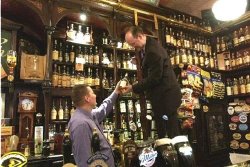
The Pot Still, with a history that dates to the 1870s, features walls of just about every whisky imaginable, such as the one seen here, with 483 bottles and adding. Whisky lovers from around the world have traveled to The Pot Still, some for the pub fare and ales on tap as well.

Of course, calling something the best in the world isn't something Whisky Magazine shys away from. For some examples, click here.

To Dowd's Spirits Notebook latest entry.
To Dowd's Wine Notebook latest entry.
To Dowd's Brews Notebook latest entry.
Back to Dowd's Bar Blog home page.

20060309

In Wyoming, bigger the town, bigger the bar list


Headed for the wilds of Wyoming? If so, and you like a drink with your meals, be aware of the latest legislation and select your destination communities accordingly.

The state's House of Representatives recently passed House Bill 83 to create a new type of liquor license for restaurants. Representatives earlier rejected an amendment that would have required those restaurants to be smoke-free.

Current Wyoming law favors smaller communities by giving them proportionately more liquor licenses than larger ones communities. The number of bar-and-grill licenses allowed to communities under HB 83's formula is:

Up to 7,500 population, one license; 7,501 to 15,000, two licenses; 15,001 to 27,000, three licenses; 27,001 to 40,000, four licenses; 40,001 to 52,500, five licenses; 52,501 to 65,000, six licenses.

To Dowd's Spirits Notebook latest entry.
To Dowd's Wine Notebook latest entry.
To Dowd's Brews Notebook latest entry.
Back to Dowd's Bar Blog home page.

20060304

Cane Festival competition judges unveiled


The first International Sugar Cane Spirits Festival & Tasting Competition will set some benchmarks for sugar-based spirits when an international panel of judges renders it decisions later this month in Tampa's Ybor City.

Spirits will be judged in the following classes:

√ Overproof
√ Flavored / Spiced / Cream
√ White Rum, including those spirits aged less than one year.
√ Dark Rum
√ Premium Rum
√ Rhum Agricole Blanc
√ Rhum Agricole Vieux
√ Cacahça, unaged
√ Cacahça, aged

The judges, in alphabetical order by nation:

UNITED STATES

Paul Artrip, Virginia
Rum collector, food and beverage writer for regional Parrot Head Clubs.

Natalie Brown, Ybor City, FL
Owner, Good Luck Café, Ybor City.

Robert A. Burr, Coral Gables, FL
Host of the "Gifted Rums" seminar in Coral Gables, FL.; editor of The Pedestrian Pocket Guide to Coral Gables and the "Coral Gables Pedestrian Guide" Web site.

Christopher Carlsson, New York
Editor, Spirits Review.

Peter Covino, Kissimmee, FL
Entertainment editor, dining critic and spirit connisseur at the Osceola (FL) News-Gazette.

Gary Crowder, New York
Senior Vice President/Resort Operations at Mohegan Sun Hotel Casino, Uncasville, CT.

Wayne Curtis, Maine
Author, ""And a Bottle of Rum: A History of the New World In 10 Cocktails," scheduled for summer release by Crown; travel writer and contributor to numerous Frommer's guidebooks.

William M. Dowd, Albany, NY
Editor and publisher of Dowd's Bar Blog, a blog-ring of four online sites; associate editor and chief restaurant critic for the Times Union newspaper and its two Web sites; published in literally dozens of U.S. and Canadian newspapers and such national magazines as Sante, and on numerous Web sites.

Catherine Eagles, San Francisco, CA
Rum connoisseur; president, Buzzbar Productions.

Daphne Muse, Oakland, CA
Writer published in The Washington Post, San Francisco Chronicle, San Jose Mercury and Hungry Mind Review; commentaries have aired on WTOP-FM and NPR.

Jack Robertiello, New York
Writer and Web editor for Adams Beverage Group, former editor "Cheers"; author of "Mangia, The Best Italian Food in New York City."

Ed Schiller , Ybor City, FL
Sea captain and master mariner, has traveled the world sampling indigenous spirits in their local environs; owner of Gaspar's Grotto in Ybor City.

ENGLAND

Ian Burrell, London
Owner of Cottons, an award-winning Caribbean restaurant in London with the largest collection of rums in the UK; rum expert for Taste & Flavour School for Spirits.

SWEDEN

Duane Dove, Sweden
Proprietor/sommelier of Sjögräs, restaurant and bar with what reputedly is the largest rum collection in Sweden; roots in Trinidad & Tobago and Guadeloupe; known for his “Rum & Chocolate,” matching aged rums with chocolates made with Caribbean cocoa.

PANAMA

• Francisco Fernandez, Panama
Master distiller at Varela Hermanos, makers of Abuelo and other rums.

Following the March 22-25 festival, results will be distributed to the national alcoholic beverage media, the Caribbean travel media and posted on the Ministry of Rum and Polished Palate Web sites.

To Dowd's Spirits Notebook latest entry.
To Dowd's Wine Notebook latest entry.
To Dowd's Brews Notebook latest entry.
Back to Dowd's Bar Blog home page.

New Zealand consumers have the spirit(s)


Think New Zealand and what adult beverage comes to mind?

Bourbon, of course.

Don't believe me? Just check with the Distilled Spirits Association of New Zealand and they'll tell you that their latest statistics show bourbon is the nation's drink of choice. Total per capita consumption of spirits and spirit-based drinks increased by 1.8% in calendar 2005, continuing the category’s steady growth trend over the last few years.

Other spirits in the top five for New Zealand consumers by volume in 2005 were (2.) Scotch, (3.) gin, (4.) vodka and (5.) dark rum.

Spirits' share of per capita volume has risen to 23% from 22% in 2000, while wine was 33% up from 30%. Beer, as is the case globally, dropped precipitously, from 48% to 44%.

Speaking of Kiwi land spirits, the country's only whiskey distillery is broadening its production and adding two lines.

Southern Distilling Co. is best known for its Hokonui Whiskey, a refinement of a basic moonshine recipe. It now will begin producing The Southerner, a whiskey liqueur sweetened with manuka honey, and a legal version of the irish moonshine known as Poitin (pronounced poteen or posheen), to which they may add a bit of sweetner

Owners Malcolm Willmott and Peter Wheeler say they expect to ramp up production to 50,000 litres a year. Willmott said Poitin would be released for St. Patrick's Day, March 17.

To Dowd's Spirits Notebook latest entry.
To Dowd's Wine Notebook latest entry.
To Dowd's Brews Notebook latest entry.
Back to Dowd's Bar Blog home page.