20070731

Liquor/cabinets keep Fortune Brands riding high

It's rarely a good idea to mix hard liquor and home renovation work. For Fortune Brands Inc., however, consumer demand for one helped overcome declining sales for the other.

Fortune Brands makes bathroom fixtures and Jim Beam bourbon, among other spirits. One guess which product continued posting robust sales over the past year.

The company announced that second-quarter profit fell less than analysts estimated after demand for its bourbon offset a slump in home renovation.

Profit fell 6.4 % to $232 million, or $1.48 a share, from $247.8 million, or $1.63, a year earlier. Sales rose 4.3%, more than analysts projected, to $2.35 billion.

CEO Norm Wesley had expanded Fortune's wine and liquor unit to reduce dependence on the U.S. housing market. Revenue at the home and hardware division increased less than 1% during the biggest U.S. housing slump in 16 years, while spirit and wine sales climbed 6.3%, led by Sauza tequila.

The company, based in Deerfield, IL, produces Moen, Aristokraft, Therma-Tru hardware, doors and cabinet brands.

In the past two years it has added such spirits brands as Sauza and Maker's Mark bourbon to take advantage of the growing market of consumers willing to spend higher prices for quality level liquor. The liquor unit accounts for just 29% of sales, but provided 44% of operating income in the quarter.

To Dowd's Spirits Notebook latest entry.
To Dowd's Wine Notebook latest entry.
To Dowd's Brews Notebook latest entry.
To Dowd's Non-Alcohol Drinks Notebook latest entry.
To Dowd's Tasting Notes latest entry.
Back to Dowd On Drinks home page.

20070726

'Energized' cocktail mixers for the Jetset

Cocktail mixers -- whether ready to drink or part of a process -- are on the rise.

As always, when any product niche tries to curry favor with consumers its manufacturers look for a new angle. A San Francisco company called Jetset Beverages Inc. has come up with a line of "energized" cocktail mixers: Energy Club Soda, Energy Tonic Water, Energy Ginger Ale and Original Energy Flavor.

“We like to think that Jetset lifts consumers’ spirits by giving them the opportunity to enjoy their favorite cocktail with an energy kick,” said Jeff Silver, Jetset president and CEO. “We offer a premium product designed to mix with your favorite spirit or enjoy on its own as a great tasting and energizing drink.”

Jetset Energy Mixers are enhanced with a blend of guarana, ginseng, taurine and caffeine. The company also plans to introduce a line of diet options.

As Silver notes, "The multi-billion dollar energy drink market has experienced explosive growth over the last several years, growing in excess of 47% in 2006. In contrast, the mixers market has been characterized by slower growth and relatively little innovation. Jetset Energy Mixers combines the best of both of categories to create an exciting new energy mixer market."

To Dowd's Spirits Notebook latest entry.
To Dowd's Wine Notebook latest entry.
To Dowd's Brews Notebook latest entry.
To Dowd's Non-Alcohol Drinks Notebook latest entry.
To Dowd's Tasting Notes latest entry.
Back to Dowd On Drinks home page.

20070723

Best whiskies selected

The overall winners in this year's World Whiskies Awards, as announced by Whisky magazine:

• Single Malt Whisky: Talisker 18 Year Old

• Blended Malt Whisky: Taketsuru Pure Malt 21 Year Old

• Blended Whisky: Suntory Whisky Hibiki 30 Year Old

• American Whiskey: Baker's 7 Year Old

• New Release: The Balvenie Vintage 1972

• Whisky Liqueur: Arran Gold

To Dowd's Spirits Notebook latest entry.
To Dowd's Wine Notebook latest entry.
To Dowd's Brews Notebook latest entry.
To Dowd's Non-Alcohol Drinks Notebook latest entry.
To Dowd's Tasting Notes latest entry.
Back to Dowd On Drinks home page.

X marks spot for Campari expansion

Gruppo Campari is adding X-Rated, a U.S. spirits company, to its corporate portfolio at a price of $40 million.

The Milan, Italy, company is acquiring X-Rated Fusion Liqueur, Jean-Marc XO luxury vodka and X-Rated ultra premium vodka, formerly owned by Jean-Marc Daucourt and Todd Martin. Martin is a former president of Allied Domecq North America.

The deal is expected to close next month and be paid in cash.

Campari already owns such brands as Campari, Cinzano, Skyy Vodka, Old Smuggler, Gran Cinzano, Cinzano Asti and Glen Grant. And, it recently bought an 80% stake in Sammy Hager's Cabo Wabo Tequila, a deal expected to close in January.

To Dowd's Spirits Notebook latest entry.
To Dowd's Wine Notebook latest entry.
To Dowd's Brews Notebook latest entry.
To Dowd's Non-Alcohol Drinks Notebook latest entry.
To Dowd's Tasting Notes latest entry.
Back to Dowd On Drinks home page.

Absolut offers taste of Big Easy, plus money

What does New Orleans taste like?

The folks at Absolut hope you think their new flavored vodka, called Absolut New Orleans, will hit the spot. It was introduced in the Big Easy at the Tales of the Cocktail, the annual culinary and cocktail festival.

Absolut accompanied the launch with a pledge of a minimum charitable donation of $2 million to organizations benefiting New Orleans and cities along the Gulf Coast still struggling in the aftermath of hurricane and flood damage.

The new vodka flavor offers a taste of mango and black pepper, and is made from all natural ingredients with no added sugar or sweetener. It will go on sale nationwide on Aug. 1.

To Dowd's Spirits Notebook latest entry.
To Dowd's Wine Notebook latest entry.
To Dowd's Brews Notebook latest entry.
To Dowd's Non-Alcohol Drinks Notebook latest entry.
To Dowd's Tasting Notes latest entry.
Back to Dowd On Drinks home page.

20070718

Oh Captain, my captain

If you're traveling in the United Kingdom and have a thirst for a little Captain Morgan spiced rum, don't think they're trying to put one over on you by pouring from a bottle without the iconic 17th-century Caribbean privateer from Wales on the label.

Diageo has updated the look of Captain Morgan Original Spiced Rum with a shapely bottle and a label emphasizing the words "Morgan Spiced" for products it distributes in the UK.

Stateside, Diageo has relabeled the Puerto Rican rum -- infused with vanilla and cassia -- by embossing the glass front and back, and changed the label to portray the captain against a watermarked ocean scene.

To Dowd's Spirits Notebook latest entry.
To Dowd's Wine Notebook latest entry.
To Dowd's Brews Notebook latest entry.
To Dowd's Non-Alcohol Drinks Notebook latest entry.
To Dowd's Tasting Notes latest entry.
Back to Dowd On Drinks home page.

Jack Daniel's denies any water woes

The story has been making the rounds for more than a month: Jack Daniel's water supply is endangered because of an ongoing drought, so whiskey production may be adversely affected.

Not so, says Phil Lynch, director of corporate communications for parent Brown-Forman, headquartered in Louisville, KY.

"We've been trying to get the correct information out ever since that story popped up," Lynch told me today.

He said a Nashville television station, seeking to report on the impact on businesses of an ongoing drought, visited B-F's Jack Daniel's distillery in Lynchburg, TN, to check out Cave Spring (seen here).

"Our people there explained that Cave Spring, which is our water source, was running as strong as ever and that we really weren't being affected by the drought," Lynch said. "The TV reporter then asked what would happen if the spring ran dry.

"Our man there made the mistake of answering a 'What if' question. He answered the hypothetical by saying that if Cave Spring ever did run dry, we'd probably not make any whiskey. He should have simply explained that we've never had a problem with the spring, that geologists will tell you the water has been running beautifully for thousands of years, and that we foresaw no problems."

Lynch said the Jack Daniel's facility often uses Cave Spring water in winter and spring for everything, including cleaning rather than buying water from the city of Lynchburg. However, he said, the company does buy city water for non-whiskey purposes in autumn and summer.

To Dowd's Spirits Notebook latest entry.
To Dowd's Wine Notebook latest entry.
To Dowd's Brews Notebook latest entry.
To Dowd's Non-Alcohol Drinks Notebook latest entry.
To Dowd's Tasting Notes latest entry.
Back to Dowd On Drinks home page.

20070717

When is a tequila no longer a tequila?

PHOTO BY WILLIAM M. DOWD

OK, let's get right down to it. At what point does lengthy aging in used barrels turn tequila into something that, while perhaps still an excellent product, no longer is tequila?

I've been posing that question to various people in the tequila field for the past year as more and more tequila makers introduce aged spirits that have been matured in anything from used bourbon barrels to cognac casks to wine barrels. The latest discussion was with Carlos Camarena (above), third-generation head of Tequila Tapatia which manufactures the El Tesoro line.

So far, the preponderance of opinion has been that we're seeing something that, while called tequila, really isn't since tequila is almost by definition a young spirit with the nose and palate punch of youth. When you see people sampling a tequila in a brandy snifter instead of a traditional 2-ounce caballito (left), you know they aren't regarding it as run-of-the-mill tequila, be it 100% blue agave or mixto.

Even Riedel, the iconic Austrian glassware manufacturer, has come up with a tasting glass (right) designed especially for añejo tequilas. Or, as is becoming a more common niche title, extra añejos.

The Riedel design comes in sets of four for a $35-$45 suggested retail price. In a real marketing coup, Riedel had its glass designated by the Consejo Regulador del Tequila (Regulating Council of the Tequila), the industry sanctioning body, as the first official tequila tasting glass ever made.

I asked Camarena if he agreed with the idea that extra-aged añejos are becoming a new spirit until themselves.

"To some extent, yes," he said during a celebratory dinner at his Arandas, Jalisco, facility marking its 70th anniversary. "It certainly has changed the way you have to create and market your line since everyone is coming up with barrel-aged versions of their drinks. Now, we're paying a lot of attention to color and nose, things that didn't matter quite as much with blanco or reposada tequilas."

Is there, then, a specific point at which you should question whether the spirit still is tequila?

"If it has too much oak in it," Camarena quickly decreed.

Camarena and his staff came up with an añejo called Aniversario to mark its 70th birthday. It's a seven-year-old copper-colored tequila that was aged in charred American oak barrels, and the final product is a blend of the best of the small batch.

"This is a one-shot. After this, there is no more," Camarena said.

Does that mean we'll see no more new additions to the El Tesoro line once the Aniversario is gone?

"Not at all," Camarena said. "We have some ideas we're working on, and we'll continue to come up with new limited edition aged tequilas as long as we can find a market for them."

Given that El Tesoro is part of the Beam Global Spirits & Wine organization, it's a safe bet finding markets to serve will continue. In addition to its public relations and marketing efforts, Beam's influence is seen in something as basic as the design of the Aniversario bottle.

Asked if the design was created by a local artist, Camarena said he didn't even know who did it except that it was a project handled at the corporate level. (Click here for my tasting notes on the El Tesoro line and a closeup look of the Aniversario bottle.)

In a visit to Tequila town several months earlier I spoke with Javier Orendain Lopez about the aging trend. The brand manager of Tequila Orendain de Jalisco told me, "It's a topic that is being discussed and debated more all the time.

"As distillers try to separate themselves from the competition they want to keep turning out new and different tequilas. So, many of them age them in different wooden barrels for different amounts of time. A lot of people are saying the taste is so different after long aging that even though the results can be wonderful they may not truly be tequila anymore."

To Dowd's Spirits Notebook latest entry.
To Dowd's Wine Notebook latest entry.
To Dowd's Brews Notebook latest entry.
To Dowd's Non-Alcohol Drinks Notebook latest entry.
To Dowd's Tasting Notes latest entry.
Back to Dowd On Drinks home page.

Gently passing from garden to glass

From our Spirits Notebook archives:

As I aimed the spray of water at the sprawling herb garden, just emerging from a prolonged period of heavy rain but already threatening to wilt under the hot early summer sun, I mentally ticked off everything I was going to do when the crop reached its peak.

Creating herb blends to perfume the smoke of the barbecue grill. Brightening the routine tossed salads in need of some new tastes. Finding just the right chopped leaves to blend into artisanal chevre cheeses from the local farm stands.

And, of course, infusing vodka.

Not that there is any shortage of flavored vodkas on the market. Infusions are arguably the biggest thing in the world of alcoholic beverages these days. The major money is found in handling infusions at the mass-production level in factories or distilleries, not at the local bar no matter how much of a signature gimmick is created. Virtually every commercial brand of vodka, for example, offers versions infused with various fruit flavorings. Likewise with some gins, rums and even whiskies.

It is just that I prefer my own infusions, free of chemicals and trickery. Buying such concoctions may be fine for ease of use but, just as a home cooked meal can be more enjoyable than a takeout spread, doing your own infusing is a lot more fun. It certainly can lead to a more enjoyable cocktail party conversation than simply opening a bottle.

For example, a friend insists the only way to drink sambuca is with three -- not two, not four, but three -- coffee beans submerged in the glass. That is known as serving the anise-flavored Italian liqueur con mosche, literally "with flies." I have always been tempted to slip a few
brown-coated M&Ms into his drink to see if he really knows the difference.

Of course, I could simply buy a bottle of negra sambuca, already infused with coffee essence. But that would kill the conversation.

Infusions have been around for nearly as long as alcohol has been part of the human experience. Liqueurs concocted on farms, in monasteries and in laboratories give testament to the boundless imagination of amateur and professional chemists. Mead makers of the Middle Ages infused their honey liquor with herbs and spices. And, the strength of alcohol was long believed to counteract the toxic parts of certain substances favored as medicines throughout the centuries.

Alcohol can be infused with botanicals, marinated with macerated fruits, or stirred together with other potions. It can be dotted with flecks of pure gold, cloves, grains of pepper, sprinklings of cinnamon. The mixtures can be festive, imaginative, wonderful introductions to grown-up spirits. They can be used as dessert toppings, as baking ingredients or -- as many tavern owners and restaurants know -- excellent appetite-boosters and after-meal relaxers.

They can be flavored with nuts, fruits, exotic plant extracts. They can be orange, blue, black, white, red, pink, yellow, green or any other color.

Benedictine is generally regarded as our oldest multi-infusion alcohol, invented in A.D. 1510 at the Benedictine Abbey in the Caux district of Normandy, France. The sweet, aromatic liqueur is flavored with more than 20 plants and herbs from a closely-guarded secret recipe. (A popular modern variant is B&B, a combination of Benedictine and brandy.)

If you're interested in doing some of your own infusing, the best strategy is to begin with the simplest recipes.

Get a trio of small (half-pint or so) sealable jars and run them through the dishwasher to sterilize them. Pour each about two-thirds full of a decent grade of vodka and begin the infusing process.

Use small amounts of liquid to get a better handle on the proportions of infusing material that suit your taste.

Like a particular chili pepper, such as those hot little Asian numbers? Bruise one ever-so-slightly to allow some of the oil to seep out and let it steep in a sealed jar of vodka for about 10 days. Shake it occasionally during that time, but don't unseal the jar.

Want to try a citrus style? Juices of lemons, oranges and limes are the most acidic and share their essence very well. Feel free to mix them if you're a "limon" sort of person.

If you want to try a complicated cocktail in a bottle, raise the number of ingredients to four or five, such as I do when I create my Summer Salad Vodka

Begin with cubes of peeled, seeded fresh cucumber, add a quarter teaspoon of dried dill or a sprig of fresh thyme, a grind of fresh cracked black pepper and a squeeze of fresh lemon juice to create a
refreshing infusion reminiscent of a summer salad. (For an extra kick, add two drops of Tabasco hot sauce or Tabasco green pepper sauce when you serve the drink.)

If your tastes run toward the sweeter side of the scale, your vodka can be infused with virtually any fruit. Simply bruise the fruit so its sugars and acids will leach out during the incubation period. You can speed the process by pouring the liquor over fresh-cut strawberries, kiwis, mixed fruit salad or melons.

Remember to run your infused liquors through a small-screen sieve before serving. Many a nice drink has been spoiled by the residue left from stems, seeds, leaves and skins.

One last tip: The infusing materials don't always have to be tossed away. Think of how nice some of those pieces of fruit will taste after sitting in a vodka or gin bath for a few weeks.

To Dowd's Spirits Notebook latest entry.
To Dowd's Wine Notebook latest entry.
To Dowd's Brews Notebook latest entry.
To Dowd's Non-Alcohol Drinks Notebook latest entry.
To Dowd's Tasting Notes latest entry.
Back to Dowd On Drinks home page.

20070710

Letters: Let's talk about 10 Cane

Dear Mr. Dowd

I recently purchase a bottle of 10 Cane rum from the distinguished Moet Hennessey distillers. Its pedigree is impressive, its distillation method and ingredients are as well.

Why would they put such a well-made product out on the market with such a short age time? I read somewhere it was only aged for about six months. Judging from its color I'd say that was close to accurate. Do you suppose the gentlemen at Hennessey are preparing us for an exorbitantly priced rum after it has a few years in some wood?

I like the rum. It has a bright, clean taste that doesn't cloy that would certainly benefit from from some aging. At around $40 a bottle now (here) I'm wondering what it would go for after aging and if the market would support such a price point.

Personally I like 8-year-old Rhum Barbancourt. The gentlemen here say it holds up better with their cigars (yes, they do sometimes drink something other than bourbon with their smokes!).

Any thoughts?

-- Carla Griffin, Louisville, KY

Dear Carla:

I love it when consumers don't take everything at face value. (Speaking of which, 10 Cane retails for about $35 in most markets, so put the whammy on your local guys to get in line with the market.)

As to the aging aspect, since 10 Cane is made from first-press Trinidad sugar cane rather than from molasses, which is a processed byprodut. Thus, it wouldn't benefit as much from a bit of aging: i.e., you often have to age rum longer if it's made from sugar, so a few months or even a year more wouldn't make a huge difference.

Plus, the current market demand is for light-colord, light-bodied rums, and 10 Cane was created for that growing niche. It is made in small-batch French pot stills and aged a bit in French oak.

To each his/her own, of course -- thus, your preference for the Haitian sugar cane rum Babancourt. While Moet Hennessey very well might extend its 10 Cane line with a more aged product in the future, its current offering is so popular I don't see it disappearing.

To Dowd's Spirits Notebook latest entry.
To Dowd's Wine Notebook latest entry.
To Dowd's Brews Notebook latest entry.
To Dowd's Non-Alcohol Drinks Notebook latest entry.
To Dowd's Tasting Notes latest entry.
Back to Dowd On Drinks home page.

20070705

What will they think of next? (July edition)

PHOTO BY WILLIAM M. DOWD

On a recent trip to Windsor, Ontario, to visit the Canadian Club whisky facilities, I toured a local LCBO store -- Liquor Control Board of Ontario. It was an eye-opening experience even though I've lived in or visited U.S. states that have "state stores," as they call their heavily regulated wine and spirits shops.

In Ontario, the provincial government rules the roost, not only deciding how many LCBO stores are allowed, but what they can stock (there are several grades of stores, based on local population, sales volume, etc.), how many products each company can have displayed, which shelves they go on, and so forth.

That, combined with Canada's extremely high taxes on alcoholic beverages, might make one think Canada is trying to regulate the industry out of business. But, on the contrary, it's more about restraint -- of trade, in the minds of some, but in consumption in the minds of others.

Along with plenty of print information on alcoholism treatment and warning messages, the LCBO actually encourages intelligent use of alcoholic beverages. Its current glossy publication, "Hot City Cocktails," is available at no charge from LCBO stores. It contains information on how to make cocktails, what tools to have, and some very nice recipes collected from around the world. The latter prompted me to use them for this month's "What Will They ... " feature. Each recipe is for one drink. If you want to find entertaining-size batch recipes, check the LCBO Web site.


• Apple Crush, Cruise Bar, Sydney, Australia:

1 1/2 ounces Bacardi Big Apple Rum
1/2 ounce fresh lemon juice
4 ounces fresh apple juice
1/8 teaspoon ground cinnamon
apple slice

In a cocktail shaker filled with ice, combine all ingredients except the apple slice. Shake and strain into a goblet filled with ice. Garnish with the apple slice.


• Pear & Cardamom, K Bar, Copenhagen, Denmark:

1 1/2 ounces Grant's Finest Scotch Whisky
1/2 ounce fresh lemon juice
1/4 ounce simple syrup
4 ounces pear juice
3 cardamom seeds
lemon twist

In a cocktail shaker filled with ice, combine all ingredients except the twist. Shake and strain into a rocks glass with ice. Garnish with the twist.


• The Madonna, Ravintola Teatteri, Helsinki, Finland:

1 ounce Beefeater London Dry Gin
4 ounces cranberry juice
1/2 ounce Soho Lychee Liqueur
1/3 ounce lime cordial
fresh lychee

To a highball glass, add all ingredients and stir to mix. Serve garnished with a fresh lychee.


• Pomnediere, NoMi Restaurant, Chicago:

1 ounce Iceberg Vodka
1 ounce Pama Pomegranate Liqueur
1/2 ounce fresh lime juice
1/2 ounce simple syrup
1 ounce mandarin orange or tangerine juice

In a cocktail shaker filled with ice, combine all ingredients. Shake and strain into a martini glass.


• White Russian, Organza Bar, Warsaw, Poland:

1 ounce Polar Ice Vodka
1/2 ounce Kahlua
1 ounce whole milk or cream
maraschino cherry

Fill a rocks glass with ice. Add all ingredients and serve garnished with the cherry.

To Dowd's Spirits Notebook latest entry.
To Dowd's Wine Notebook latest entry.
To Dowd's Brews Notebook latest entry.
To Dowd's Non-Alcohol Drinks Notebook latest entry.
To Dowd's Tasting Notes latest entry.
Back to Dowd On Drinks home page.

What's in a new label? Read on

I was perusing a heavily-advertised superstore in upstate New York the other day, a wine and spirits emporium near fabled Saratoga Springs -- a great business location when the historic thoroughbred horse racing season runs in August through Labor Day and lots of money comes to town.

The establishment's ads trumpet the claim that it has the best selection, the best prices and the newest offerings. In my experience, none of the three claims can be verified. Particularly the latter.

When the only stock on the shelves for certain brands is at least a year out of date, all other claims are suspect. One that particularly struck me was Plymouth gin, the iconic English distillation that some months ago came out with a sleek, modern gorgeous bottle to replace its stodgy old one. The stodgies were the only thing representing the brand at this superstore.

That's why I like to call to your attention to any significant changes in various liquors' labels, bottles or branding efforts.

One of the most recent is the change by Whaler's Rum. Heaven Hill Distilleries Inc., the Bardstown, KY, company that produces the line of Whaler's Hawaiian-style Rums, wanted to differentiate its flavored rums from its classics. Thus, the new labels use higher-impact graphics for Vanille (seen above), Killer Coconut, Pineapple Paradise and Big Island Banana, but a more traditional style is used for the Spiced, Original Dark, Great White and Rare Reserve Dark rums.

The latter rums' packaging features the ships of the Hawaiian seafarers for which the rum is named. The new labels for the four flavored rums utilize colorful label designs to more effectively communicate the names and flavors while maintaining the package equity of the previous version. The Flavored Rums are among the most popular rums within the Whaler's franchise.

Reid M. Hafer, brand manager, said, "The legendary Hawaiian recipe of Whaler's was discovered when seafarers rattled vanilla beans in empty rum bottles at sunset as a way to entice migrating whales to their ships. The friendly whales guided them to the tropical haven known as Hawaii. There the sailors discovered the old rum makers of Maui and were so impressed by the exotic taste of their rum that they called it Whaler's."

Heaven Hill, founded in 1934, also includes among its holdings The Christian Brothers Brandies, Evan Williams Kentucky Straight Bourbon Whiskey, HPNOTIQ Liqueur, Burnett's Gin and Vodka, Dubonnet Aperitif, PAMA Pomegranate Liqueur, Água Luca Brazilian Rum Cachaça, and various Scotch and Canadian whiskies.

To Dowd's Spirits Notebook latest entry.
To Dowd's Wine Notebook latest entry.
To Dowd's Brews Notebook latest entry.
To Dowd's Non-Alcohol Drinks Notebook latest entry.
To Dowd's Tasting Notes latest entry.
Back to Dowd On Drinks home page.

Smirnoff debuts ready-to-drink cocktails

If you're not particularly adept at mixing cocktails, especially for company, Smirnoff is looking for you.

The company has introduced the Smirnoff Cocktails ready-to-drink collection -- well, two of them anyway. That's a rather small collection, but it's a start and it also is a fairly good bet the line will be extended.

The starters are the Grand Cosmopolitan and Vodka Mojito. The first blends vodka, Grand Marnier liqueur, cranberry juice and lime juice. The second is made with Smirnoff No. 21 vodka, lime and mint flavors for a takeoff on the traditional rum mojito.

The Smirnoff Grand Cosmopolitan is being made available nationally in liquor retail outlets. Smirnoff Vodka Mojito is available only in the Northeast but will be available nationally in the fall. Both products will be available in 750mL and 1.75L bottles, with suggested retail prices of $12.99 and $19.99.

Smirnoff made a big push in a Manhattan tasting session last week, with TV chef Tyler Florence -- who of late has been pushing a rather simplistic set of recipes for Applebee's on the small screen -- as the "celebrity" draw for its new ready-mades.

To Dowd's Spirits Notebook latest entry.
To Dowd's Wine Notebook latest entry.
To Dowd's Brews Notebook latest entry.
To Dowd's Non-Alcohol Drinks Notebook latest entry.
To Dowd's Tasting Notes latest entry.
Back to Dowd On Drinks home page.

20070703

Heaven Hill creating new collection

If the name Parker's Heritage Collection doesn't ring any bells for you, wait until September.

That's when Heaven Hill Distilleries will introduce a limited-edition, 12-year-old bourbon as the first product in a series named for co-master distiller Parker Beam, right.

The special whiskey was aged in barrels given an extra-heavy char, which brings out greater hints of caramel and vanilla flavors.

HH spokesman Larry Kass, who said the series is aimed at whiskey connoisseurs, noted, "It is an opportunity for us to regularly release limited quantities of extra special, unique styles of American whiskeys that people are very excited about right now."

To Dowd's Spirits Notebook latest entry.
To Dowd's Wine Notebook latest entry.
To Dowd's Brews Notebook latest entry.
To Dowd's Non-Alcohol Drinks Notebook latest entry.
To Dowd's Tasting Notes latest entry.
Back to Dowd On Drinks home page.

Woodford tempering bourbon in wine barrels

William M. Dowd photo

It's not uncommon for winemakers to season their products in used whiskey barrels, but Woodford Reserve has put a twist -- for American distillers -- on that practice with its new Sonoma-Cutrer Finish.

The experiment, which will go for $90 a bottle when released later this month, involves tempering the equivalent of 900 cases of Woodford Reserve bourbon for several months with used California chardonnay barrels from Sonoma-Cutrer Vineyards in Sonoma County, CA. Both the distiller and the winemaker are owned by Brown-Forman Corp. of Louisville, KY.

The new product is the second in Woodford Reserve's new Master's Collection which began with its Four Grain Bourbon, a 92.4 proof product retailing for about $80. It incorporated wheat into its rye/barley/corn mash bill for that undertaking.

The Master's Collection line will be augmented from time to time, always with triple distillation in copper pot stills at the Woodford Reserve Distillery, a National Historic Landmark in Woodford County, KY. Even the whiskies’ bottle will mimic the shape of a copper pot still.

"The Master's Collection honors the pioneering work of our forefathers by applying their handcrafted methods to unique grain recipes, maturation techniques and distillation styles,” said master distiller Chris Morris (above).

Some Scotch and Canadian whisky distillers regularly employ used wine barrels for some of their products.

Morris said he settled on a five-year-old bourbon for the new product, rather than the usual seven-plus which her termed "too robust to get the nuances of the contribution of the Sonoma-Cutrer to shine through."

Brown-Forman says the new Sonoma-Cutrer Finish will be sold in New York, California, Colorado, Florida, Georgia, Illinois, Indiana, Kentucky, Massachusetts, Michigan, Missouri, New Jersey, Ohio, Tennessee, Texas, Virginia, Wisconsin and Washington, D.C.

To Dowd's Spirits Notebook latest entry.
To Dowd's Wine Notebook latest entry.
To Dowd's Brews Notebook latest entry.
To Dowd's Non-Alcohol Drinks Notebook latest entry.
To Dowd's Tasting Notes latest entry.
Back to Dowd On Drinks home page.

20070628

Leblon cachaça hits 50-state market

As cachaça, the Brazilian sugar cane liquor, gradually ramps up its U.S. presence, more consumers are demanding specific brands rather than making a generic request.

Leblon, introduced to the U.S. 16 months ago, has been grabbing an increasing share of the niche market and now is available in all 50 states.

Among other brands available in various U.S. markets are Pitú, Fazenda MÃE de Ouro, Volúpia , Seleta and Maria Izabel.

Leblon's distribution is an impressive benchmark for such a small segment. Steve Kuttmann, founder and CEO of Leblon, claims suc cess because "Leblon spearheaded the way for the cachaça category in the U.S. by first targeting the major metropolitan markets of Miami, New York and Los Angeles. By the end of 2006, as the words cachaça and caipirinha had spread into every major metropolitan area from coast to coast, we set about taking the brand national and have finally achieved our goal."

Leblon is an ultra-premium white cachaça named for its place of origin, Leblon Beach in Rio de Janeiro, Brazil. The rum-like spirit is made from fresh-pressed Brazilian sugar cane that is then rested in cognac casks and blended.

Cachaça is the main ingredient in the caipirinha, the national drink of Brazil, but works just as well in place of vodka, rum and tequila in other cocktails.

To Dowd's Spirits Notebook latest entry.
To Dowd's Wine Notebook latest entry.
To Dowd's Brews Notebook latest entry.
To Dowd's Non-Alcohol Drinks Notebook latest entry.
To Dowd's Tasting Notes latest entry.
Back to Dowd On Drinks home page.

A batch of better bitters

Bitters are the Rodney Dangerfield of the cocktail world.

Most old cocktail recipes will specify use of one type of bitters or other -- orange, angostura, etc. Modern recipes tend to neglect this intriguing ingredient. More's the pity. They add depth and nuance to virtually any sort of alcoholic drink, as well as to soups and stews.

The New York Times has an excellent update on bitters and their small resurgence across the country. Recommended reading.

To Dowd's Spirits Notebook latest entry.
To Dowd's Wine Notebook latest entry.
To Dowd's Brews Notebook latest entry.
To Dowd's Non-Alcohol Drinks Notebook latest entry.
To Dowd's Tasting Notes latest entry.
Back to Dowd On Drinks home page.

Two Mexican icons joined at the bottle

Celebrity labels are not uncommon on wine and spirits bottles in the U.S. In Mexico? Not so much.

However, that is being addressed with a new super-premium niche tequila to be introduced in the fall: Frida Kahlo Tequila, named for the late iconic Mexican artist and political activist.

The creation is a joint venture of the Frida Kahlo family estate and Dorado, Pizzorni & Sons, LLC, Importers. U.S. distribution of the brand will be handled by Southern Wines & Spirits, with initial introduction to the New York, Miami and Los Angedles markets. The 100% pure blue agave tequila will be available in several styles.

• Blanco: Fermented for up to four days, double-distilled in antique copper stills and bottled un-aged. Suggested retail price: $50.

• Reposado: Aged after fermentation in American Oak casks for six to nine months before bottling. SRP is $65.

• Añejo: Aged after fermentation in American Oak casks for at least three years before bottling. SRP is $90.

The tequilas are being made in Jesus Maria, in the highlands of Mexico's Jalisco state, center of the tequila industry.

To Dowd's Spirits Notebook latest entry.
To Dowd's Wine Notebook latest entry.
To Dowd's Brews Notebook latest entry.
To Dowd's Non-Alcohol Drinks Notebook latest entry.
To Dowd's Tasting Notes latest entry.
Back to Dowd On Drinks home page.

Storms interrupt postings

To Our Readers:

A series of vicious thunderstorms that killed one person on Wednesday and left tens of thousands of homes and businesses without power affected this site as well.

Postings we planned for Wednesday and Thursday have been delayed while we rebuild part of the database.

We'll get back online with new material as quickly as possible.

Thanks for your patience.

20070624

Costa Rica's guaro remains an elusive star

A reader in Florida e-mailed me for help in locating guaro, a sugar cane-based liquor from Costa Rica.

"I saw a posting you made regarding ... guaro, originally from Costa Rica. After a trip there I have been trying to locate it. I live in Florida, but travel to California frequently. Please let me know if there is anywhere I can purchase guaro. Thank you."

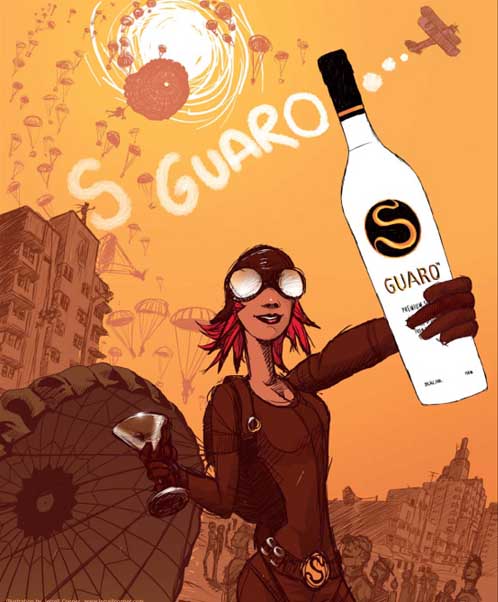
Guaro is an elusive liquor to purchase in the States. A year ago, I introduced my readers to S Guaro, a 70-proof liquor that was the first American branding for the pure cane sugar liquor that usually sells for under $20 for a 750ml bottle. Like vodka in Poland and Russia and tequila in Mexico, the clear, odorless spirit once was the province of the poor drinker. However, fancier bottling and additional filtering have raised both its image and its popularity among tourists.

Guaro tastes more like a vodka than it does anything else, and its distributors recommend it as part of a mixed drink rather than straight.

It began in the U.S. as essentially a California drink, with a marketing campaign by distributor S Spirits of Malibu that began by creating a word-of-mouth buzz from serving guaro at parties orbiting the Golden Globes, Grammy and Academy Awards shows.

The thought was that such a campaign worked a year earlier for Hpnotiq, a pale-blue French concoction of cognac, vodka and fruit juices.

"We're trying that grass-roots thing, too, before we try to go nationwide," Shari F. Levanthal, marketing director for S Spirits, told me at the time.

The campaign was aimed at a hip, club-hopping market. The images of the ads were to be in that vein, such as the poster shown here by graphic artist Jerrel Conner, the first commissioned by S Guaro.

So, how has S Guaro, or any other type of guaro such as the 60-proof Cacique fared since them?

Results are mixed. For example, last year when I judged an international cane spirits competition in Tampa, FL, I was surprised to note that there wasn't a single example of guaro among all the rums and cachaças. On the other end of the spectrum, the Four Seasons hotel chain recently embraced guaro by adding a drink made with it to its cocktail lists -- the guaro sour.

Richard Lovrich, art director of the historic Proctor's Theater complex in Schenectady, is a friend and former colleague who visited Costa Rica and brought me a bottle of the liquor, a product he quickly came to enjoy with regularity during several weeks cavorting in Central America.

"I like the fact it blends so well with fruit juices, or just a little ice and lime," Lovrich said, "and, the fact that it's only 70 proof makes it much easier to take. It's almost as common as Coke or Pepsi in Costa Rica."

If you're fortunate enough to find guaro, here's the recipe for the Four Seasons cocktail:

FOUR SEASONS GUARO SOUR
2 ounces guaro
2 ounces simple syrup or 2 teaspoons raw sugar
5 to 6 lime wedges
Ice cubes
Sugar cane stick for garnish

Put guaro, sugar and lime wedges in a rocks glass. Muddle all the ingredients until you get lime juice. Add ice cubes. Yield: one drink.

To Dowd's Spirits Notebook latest entry.
To Dowd's Wine Notebook latest entry.
To Dowd's Brews Notebook latest entry.
To Dowd's Non-Alcohol Drinks Notebook latest entry.
To Dowd's Tasting Notes latest entry.
Back to Dowd On Drinks home page.

20070620

A new whiskey from an unlikely place

Think whiskey, or whisky, and you're likely to be thinking Scotland, U.S., Ireland or Canada. But Alsace?

Uberach Alsace Whisky is produced by Distillerie Bertrand in the village of Uberach, located in the French province west of the Rhine River. It was launched in France earlier this year and its maker already is looking to markets abroad. Attention from American buyers attending Vinexpo in Bordeaux helped raise such hopes.

The spirit is aged at least three years in barrels that once held Banyuls fortified wine. It then is sold as two different products: a single malt, blended from a range of casks, and the Single Cask, the product of one selected barrel.

Pascal Dubois, managing director of the parent company Wolfberger, told Drinks International: "We have a lot of experience in fruit distillation, and we think we can bring that experience to the world of whisky. We are looking for a fruity expression, with a very rounded character."

To Dowd's Spirits Notebook latest entry.
To Dowd's Wine Notebook latest entry.
To Dowd's Brews Notebook latest entry.
To Dowd's Non-Alcohol Drinks Notebook latest entry.
To Dowd's Tasting Notes latest entry.
Back to Dowd On Drinks home page.

England's first distillery has Scottish flavor

England is getting its first distillery.

Scotland is losing one of its top distillers.

Coincidence? I think not.

Iain Henderson, 69, who has created malts for Laphroaig and Chivas, has been overseeing establishment and startup of the St. George's Distillery in Norfolk, UK. Under his guidance, St. George's already has produced 250 casks, which equals 100,000 bottles. It has been put into oak casks for a three-year maturation before being put on the market.

Henderson (seen here), the holder of an industry lifetime achievement award for services to whisky, had been working at Edradour, a distillery in Perthshire, before taking the new post. Before that, he had been manager of Glenlivet, Ardbeg and Bladnoch.

"I must admit I took up the invitation to come south with some trepidation," Henderson told The Scotsman newspaper, "but I was completely intrigued by what they are doing down here and decided to give it a shot. It's been a lot of hard work to get a distillery up and running from scratch, but the results have been well worth it."

He added, "Lots of people have told me I've been disloyal in heading south of the border to make the first English whisky. It doesn't bother me one jot."

The new spirits has not yet been named, but we do know it cannot be called Scotch despite using traditional Scottish methods. Henderson, to mark the fact the new whisky is English, used East Anglian malt barley and yeast in his recipe.

The usually prickly Scotch Whisky Association hasn't objected to the newcomer, saying, "The fact that countries outside Scotland, including England, are keen to produce whisky is testament to Scotch whisky's success around the globe."

To Dowd's Spirits Notebook latest entry.
To Dowd's Wine Notebook latest entry.
To Dowd's Brews Notebook latest entry.
To Dowd's Non-Alcohol Drinks Notebook latest entry.
To Dowd's Tasting Notes latest entry.
Back to Dowd On Drinks home page.

Milwaukee distiller releases new-recipe gin

A little more proof that the gin revival is for real: Rehorst Premium Milwaukee Gin.

It's a new product from Great Lakes Distillery, maker of Rehorst Premium Milwaukee Vodka. The little Milwaukee company, which has all of three employees, has delivered the first bottles of the new gin to liquor stores in the area.

It's an 88-proof, nine-botanical recipe, with sweet basil and ginseng the two most prominent. As the company notes, "We use Wisconsin ginseng. Long recognized as the worlds finest quality ginseng, the majority of this crop is exported to Asia where it is revered by herbalists. We use it to add an earthiness to our gin that gives it a uniquely Wisconsin flavor."

Why gin? Says Doug MacKenzie, distiller and production manager, "Good vodka is good vodka, but you can differentiate yourself with a gin. It gives us a clean slate to work with."

Rehorst gin is priced at $29.99 for a 750 ml bottle. Plans are for one or more flavored vodkas-- probably cranberry as an initial offering -- to be added to the Rehorst line in the fall, with a whisky product to follow later on.

To Dowd's Spirits Notebook latest entry.
To Dowd's Wine Notebook latest entry.
To Dowd's Brews Notebook latest entry.
To Dowd's Non-Alcohol Drinks Notebook latest entry.
To Dowd's Tasting Notes latest entry.
Back to Dowd On Drinks home page.

20070617

Vodka Belt vs. the world in labeling flap

That clanging sound you hear way off to the east is the crossing of swords being wielded as the European Parliament battles over what, precisely, constitutes a vodka.

Since the potent distillation has been with us for centuries, you might think a squabble over a definition is a little late in coming. But that's only if you ignore the matter of money.

As more and more distillers, from major comglomerates to one-person operations, bring their vodka to market, what they've made it from has been at issue.

Traditionally, grains or potatoes have been the base of vodka, sometimes a mix of the two. But in recent years makers have been trying to separate themselves from the pack in the race for success in the world's largest-selling spirits category. I'm not speaking about flavored vodkas --the fruits, spices, peppers, herbs, etc. -- but of the so-called colorless, odorless, tasteless neutral spirit that is the base of it all.

The styles veering away from grains or potatoes certainly are imaginative. Grapes have come into vogue, particularly in France where Ciroc is the leader. Maple syrup is the base of the new Vermont Gold vodka. Sweet potatoes are used in Korean soju vodka. Rice is used in some other Asian styles.

In Florida, Touch vodka is made from local, natural wildflower honey. Elsewhere, distillers following the rum mold use sugar cane or molasses. If it is organic matter, it can be transmuted into vodka of some sort.

The "Vodka Belt'' countries such as Poland, Lithuania, Russian, Finland and Sweden feeling the heat of increasing competition, have been campaigning to prohibt any vodka not made from grain or potatoes from being labeled as vodka. Other EP members, particularly from the south where grapes and apples are often used, oppose such a sweeping change. Likewise,
our own U.S. industry wants to protect its non-traditional vodka makers, so lobbying pressure has been exerted even though we're not in the EP.

The most recent bump in the negotations was reported by the indignant Polish media when a representative of the German government sent a letter to 24 countries asking for their support for defining vodka to include products made of different ingredients. However, the letter was not sent to the Polish delegations.

But, looking past all the competition for dollars, it eventually comes down to what we consumers will buy and enjoy.

We each have our own favorites. Mine is Chopin, an elegant, traditional Polish potato vodka. I tend toward potato vodkas because I find them more full-bodied, less harsh than many grain-based distillations and that they hold their character either well chilled straight or in a simple martini.

However, a word of advice. If you're using vodka in a Cosmo or some other multi-ingredient cocktail, drop down a few price grades. No sense wasting an ultra-premium.

To Dowd's Spirits Notebook latest entry.
To Dowd's Wine Notebook latest entry.
To Dowd's Brews Notebook latest entry.
To Dowd's Non-Alcohol Drinks Notebook latest entry.
To Dowd's Tasting Notes latest entry.
Back to Dowd On Drinks home page.

20070614

There's always another contender

Right after I had submitted a story on the rye whisky rebound to the English magazine Whisky, something happened that totally changed my mind on which was the best. I had a birthday.

Not a remarkable occurrence in itself, since it seems to happen about once a year or so. The difference this year was that my wife surprised me with a bottle of an elusive distillation, Black Maple Hill 23-year-old Straight Rye Whiskey.

It is, without doubt, the finest rye I've ever experienced. From a Bardstown, KY, distiller, owned by CVI Brands of San Rafael, CA, this hand-barreled gem comes in at 95 proof. It is like the perfect woman: stunning at first, then surprising in depth and allure. My gift-giving wife didn't even object to this sexist description, that's how good the rye is.

I immediately dashed off a "Stop the presses!" e-mail to the magazine editor, along with an insert for the story and an addition for the tasting notes accompanying it. For an advance look at those tastings notes, go here.

To Dowd's Spirits Notebook latest entry.
To Dowd's Wine Notebook latest entry.
To Dowd's Brews Notebook latest entry.
To Dowd's Non-Alcohol Drinks Notebook latest entry.
To Dowd's Tasting Notes latest entry.
Back to Dowd On Drinks home page.

20070612

Drought may threaten Jack Daniel's water supply

PHOTO BY WILLIAM M. DOWD
(Double-click to enlarge image)


The main distillery at the Jack Daniel's Distillery.

The last time I stood next to Cave Spring, the gurgling water supply for the Jack Daniel's Distillery in Lynchburg, TN, was running strong.

The coolness coming off the water and the wetness of the rock outcropping were refreshing on what was an unseasonably warm day.

That was in February. Today, the ongoing Tennessee drought may, in the views of some, be threatening the distillery's sole water supply.

Jerry Hamilton, plant manager, is quoted in the Louisville (NY) Courier-Journal as saying the issue is threatening whiskey production since Cave Spring has been supplying all the water for the facility for more than a century. Company officials have always credited the iron-free spring for the unique taste of the Tennessee sipping whiskey, the world's largest-selling distillation.

"The water flow is down substantially," Hamilton said. "I would say at least a third to a half of what we normally see. ... If we can’t use what it takes to make Jack Daniel’s, I suspect we won’t make Jack Daniel’s until we get all the ingredients we need.”

To Dowd's Spirits Notebook latest entry.
To Dowd's Wine Notebook latest entry.
To Dowd's Brews Notebook latest entry.
To Dowd's Non-Alcohol Drinks Notebook latest entry.
To Dowd's Tasting Notes latest entry.
Back to Dowd On Drinks home page.

20070606

Hot new tequila has more going than just a bottle

In a little cafe just the other side of the border ...

Wait. That's the opening line to the Jay & The Americans classic "Come a Little Bit Closer." But, it's true.

I was spending a few relaxed hours with a group of people in an old cantina in dusty downtown Tequila, Mexico, discussing the explosion in the town's namesake liquor among U.S. consumers and others and the merits of the various brands and styles.

It was the perfect setting for the topic. A few tiny tables for two. Long, dark wooden tables. Plum-colored walls. Faded posters that had been pasted to them long ago. A dark bar with a pleasant, weather-beaten bartender presiding, pausing from time to time in his chats with other customers to deliver little tapas plates of soft, fresh cheese, crisp nuts and salted pineapple chunks to go along with our glasses of cerveza and tequila.

As the tapas and drinks were downed, the opinions ranged far and wide: Tequila is by nature a raw drink, so the younger stuff is truer; like food right from the microwave, tequila needs to settle down a bit before it is consumed; tequila tastes smoother and classier after at least a few months in wooden aging barrels. And on it went. Ultimately, only three things were unanimously agreed upon:

1. The industry standard that the liquor must be made 100% from the blue agave plant to be called pure tequila is an excellent rule, particularly when one drinks it straight.

2. The mixto version that combines agave juice with other sugars is OK for mixed drinks, but only a few labels are good for straight imbibing.

3. When tequila is aged beyond a certain point, the possibility arises that it turns into something other than tequila.

In my view, the first two points are givens. The third is perhaps most pertinent to the expanding tequila field. Javier Orendain Lopez agreed. The brand manager of Tequila Orendain de Jalisco told me, "It's a topic that is being discussed and debated more all the time.

"As distillers try to separate themselves from the competition they want to keep turning out new and different tequilas. So, many of them age them in different wooden barrels for different amounts of time. A lot of people are saying the taste is so different after long aging that even though the results can be wonderful they may not truly be tequila anymore."

By law and industry decree, tequilas fall into one of five categories:

• Blanco (white, or silver) is unaged and bottled immediately after distillation.
• Joven (gold) is a blend of unaged tequila with aged.
• Reposado (rested, or aged) has been aged in oak containers for at least two months.
• Añejo (extra aged, or vintage) has been matured in oak containers of a maximum capacity of 600 litres, for at least a year.
• Extra Añejo (ultra-aged), the emerging category and the one in which prices are skyrocketing, aged for at least three years in direct contact with oak.

The tinkering is all over the place. For example, Jose Cuervo, the industry's top seller, ages its Black Medallion in new charred oak barrels just as bourbon distillers do. It's done for about 12 months or so, years less than bourbons but enough time to pull out a bit of the oak flavor and color.

Elsewhere, aging generally runs from 90 days to a year or two. In my experience, the longer the barrel aging the more floral and fruit notes begin to emerge along with the caramel coloring and flavoring that naturally come from oak. Sauza Tres Generaciones, as just one example, is a super-premium aged a full year in wood and winds up with a gold coloring and notes of pineapple and citrus although I find it lighter on the nose and with a comparatively short finish.

It's getting difficult to distance products from each other, so any nuance is trumpeted.

Vida ultra premium tequila, for example, has just launched in the New York, Chicago and Miami markets. The company notes that while other distillers toss away either the "head" or the "tail" of the blue agave heart, Vida tosses both and uses only the heart of the heart. This, it claims, gets rid of "the unpleasant tasting compound similar to the metallic taste found in many other tequilas."

But the hot number tequila aficionadoes are keeping a special eye on is a line of fine tequilas from a California-owned company called AsomBroso.

Owner Ricardo (Rick) Gamarra makes his tequilas in Tala, Jalisco state, near Tequila. He unabashedly refers to them as "the world's finest," and packages them in hand-blown Italian lead crystal decanters. Although there are variously decorated bottles, the basic design is patterned after an 18th century design.

And, what a design. One lady of my acquaintance took one look at what can only be described as phallic-shaped bottles and remarked, "Wouldn't these be better displayed in the bedroom than the kitchen?"

That first impression aside, the remaining impressions are, virtually without exception, high quality.

"I wasn’t your typical tequila drinker,” Gamarra says. “I don’t mean that I was a spirits snob, but I have always felt that many of the tequilas already on the market were too harsh and missing a level of sophistication to attract a broader market. With that first sip of AsomBroso, I knew I was tasting something truly special, something reminiscent of a fine brandy; certainly not a tequila I had seen in the market before.

"Ultimately, I was able to learn from the older, experienced artisans how to make the fine sipping style tequila, and to further refine the ultra premium tequila-making process.”

AsomBroso relies on multiple distillation and special filtration of the juice of the baked, aged agave. Its newest product is AsomBroso LaRosa Reposado (seen above), named for its reddish hue provided by aging in French oak wine barrels used in maturation of red Bordeaux wines. It's available in either 3-month or 11-month aged versions Gamarra describes as "like our El Platino (silver) gone off to a fine finishing school.”

A pair of 5-year-old tequilas are included in the line. AsomBroso del Porto, a five-year-old aged in vintage port wine barrels, was released to the market last November. El Carbonazado, extra aged in Tennessee whiskey barrels, will join the product line this year in limited quantities.

Go here for my AsomBroso tasting notes.

To Dowd's Spirits Notebook latest entry.
To Dowd's Wine Notebook latest entry.
To Dowd's Brews Notebook latest entry.
To Dowd's Non-Alcohol Drinks Notebook latest entry.
To Dowd's Tasting Notes latest entry.
Back to Dowd On Drinks home page.

Letters: Is my 54-year-old akvavit OK?

Dear Mr. Dowd

My husband found a bottle in the bar cupboard that he received in 1953 -- Taffel Akvavit, Dedanske Spritfabrikker Aalborg D.D.S.F. Is this still any good for drinking? Does it have any great value?

-- Linda Cully-Pines

Dear Linda:

That's a tricky question. There's only one way to know if it's drinkable since you probably don't know how many temperature changes the Danish liquor has undergone in its 54 years of existence, or how much direct light it's been subjected to. Both go a long way toward the condition, even if it has remained sealed.

As to value, I simply don't know. The recipe for Taffel Akvavit has remained unchanged since it was created in 1846. If it's a standard 84-proof, clear liquid, it's probably just an old bottle of liquor. If it's anything else, you may want to contact Danish Distillers, the maker, to see if there's anything special about your bottle.

To Dowd's Spirits Notebook latest entry.
To Dowd's Wine Notebook latest entry.
To Dowd's Brews Notebook latest entry.
To Dowd's Non-Alcohol Drinks Notebook latest entry.
To Dowd's Tasting Notes latest entry.
Back to Dowd On Drinks home page.

Ethanol demand will affect tequila supply

PHOTO BY WILLIAM M. DOWD
(Double-click to enlarge image.)

The blue haze is acre after acre of agave fields stretching for miles near Tequila town.


The tequila industry has made a tremendous comeback from an insect infestation that threatened the agave crop several years ago. Now, a shifting economy is presenting as great a threat.

Mexican farmers are burning fields of blue agave, the plant used to make tequila, and resowing the land with corn to take advantage of a sudden demand for corn for United States ethanol plants.

"Those growers are going after what pays best now," said Ismael Vicente Ramirez, head of agriculture at Mexico's Tequila Regulatory Council. Officials there estimate a 25-35% drop in agave growing over the next few years.

Agave plants take 8 to 10 years to mature to usable size, so even a sudden reversion to agave won't avoid a shortage in the near-term.

To Dowd's Spirits Notebook latest entry.
To Dowd's Wine Notebook latest entry.
To Dowd's Brews Notebook latest entry.
To Dowd's Non-Alcohol Drinks Notebook latest entry.
To Dowd's Tasting Notes latest entry.
Back to Dowd On Drinks home page.

Heaven Hill expands line

Heaven Hill Distilleries has added to its brand lineup, buying the Mohawk domestic distilled spirits portfolio from Boisset America, the U.S. branch of the French winemaker.

The company will acquire the Mohawk and Newport franchises, the Basilica Imported Liqueur line and Rosita Tequila. It already produces such brands as Evan Williams Kentucky Straight Bourbon Whiskey, Whaler's Rum and Burnett's gin and vodkas.

Neither company would comment on the purchase price.

To Dowd's Spirits Notebook latest entry.
To Dowd's Wine Notebook latest entry.
To Dowd's Brews Notebook latest entry.
To Dowd's Non-Alcohol Drinks Notebook latest entry.
To Dowd's Tasting Notes latest entry.
Back to Dowd On Drinks home page.

20070530

Kiddie cocktails a Japanese trend

Sangaria, a Japanese beverage company, is doing what in most countries would be unthinkable: manufacturing pretend beer and other such beverage products for children.

Japan's drinking culture, which includes educating young people in the practices, is well known and the company says using such products allows children to more fully participate in family celebrations.

"Kodomo no nomimono," for example, comes in cans, bottles and six-packs. It looks like beer, tastes like apple juice and foams in a glass. The product line also includes fake champagne, wine and cocktails.

There's even a TV ad you can watch featuring kids downing these drinks.

Ridiculous stuff.

To Dowd's Spirits Notebook latest entry.
To Dowd's Wine Notebook latest entry.
To Dowd's Brews Notebook latest entry.
To Dowd's Non-Alcohol Drinks Notebook latest entry.
To Dowd's Tasting Notes latest entry.
Back to Dowd On Drinks home page.

Oil shortage stops Islay whisky making

What's happening on the water has halted the making of whisky at the Bruichladdich distillery on the Scottish island of Islay.

Other distillers on Islay also face the possibility of a stoppage -- ironically in the midst of the island's annual music and whiskey festival -- due to a shortage of oil.

A pier extension was built on Loch Indaal to allow an oil tanker to dock, but low tides and silting have prevented it from visiting regularly and the company that supplies the oil said it could not guarantee deliveries.

In addition, bad weather prevented the tanker from unloading on Sunday,

With the tanker only only holding one-tenth of its possible load to keep it from going aground, the oil will last only until Wednesday.

To Dowd's Spirits Notebook latest entry.
To Dowd's Wine Notebook latest entry.
To Dowd's Brews Notebook latest entry.
To Dowd's Non-Alcohol Drinks Notebook latest entry.
To Dowd's Tasting Notes latest entry.
Back to Dowd On Drinks home page.

20070525

Irish spirits choices lighten up

If you think of Ireland as a brown spirits and beer sort of place, think again.

Despite the worldwide reputation of some fine Irish whiskies, a new study says 56% percent of all spirits sales in the Republic of Ireland are of the white variety -- gin, vodka and white rum.

Research and Markets says in its “White Spirits in Ireland 2007” study that Smirnoff is the top-selling vodka in Ireland, Gordon's the top gin and Bacardi the top white rum.

Also, say sthe study, "alcohol consumption as a whole is declining in per capita terms with average spirits consumption just below their 1998 levels."

To Dowd's Spirits Notebook latest entry.
To Dowd's Wine Notebook latest entry.
To Dowd's Brews Notebook latest entry.
To Dowd's Non-Alcohol Drinks Notebook latest entry.
To Dowd's Tasting Notes latest entry.
Back to Dowd On Drinks home page.

20070524

A Porch Swing in Manhattan

The great majority of cocktail "competitions" I come across usually are restricted to one establishment or one brand. New York, however, came up with a much more interesting one, its Sidewalks Cafe Cocktail Competition.

The city's Department of Consumer Affairs and the New York State Restaurant Association selected one winner each in the alcoholic and non-alcoholic categories in a competition at the Institute of Culinary Education.

The contest was for bartenders representing restaurants with sidewalk cafés, as licensed by the city. Fourteen of 25 competitors made it to the finals.

The winners, both from Manhattan:

• Alcoholic Cocktail: The Porch Swing, from the Blue Smoke barbeque restaurant on East 27th Street.

1 1/2 ounces of Hendrick's gin
1 1/2 ounces of Pimm's No. 1
4 ounces of fresh lemonade

Pour into a tall Collins glass. Add a splash of 7-Up. Finish with 10 finely sliced half-moon cucumbers.

• Non-Alcoholic Cocktail: Watermelon Lemonade, from Bubby's in TriBeCa.

2 ounces of fresh-squeezed lemon juice
4 ounces of fresh watermelon puree, strained through a course strainer to remove seeds
1 1/2 ounces of simple syrup
6 ounces of water

Shake and serve over ice with a big wedge of fresh watermelon garnish.

To Dowd's Spirits Notebook latest entry.
To Dowd's Wine Notebook latest entry.
To Dowd's Brews Notebook latest entry.
To Dowd's Non-Alcohol Drinks Notebook latest entry.
To Dowd's Tasting Notes latest entry.
Back to Dowd On Drinks home page.

20070522

Hpnotiq creator is back in the pink

Blue is for boys, pink is for girls. Unless you're Raphael Yakoby. Then, both will do just fine, thank you.

When he was 25, the Long Island, NY, native came up with a blend of cognac, fruit juices and vodka, made sure it was colored light blue, and slapped the name Hpnotiq on it. Through some deft marketing at hip hop clubs, awards shows after-parties and the like, it became a big hit. Yakoby went on to sell the brand for tens of millions of dollars.

Now, at 32, he's hawking a pink sparkling vodka liqueur he calls Nuvo, contained in a tapered square bottle that resembles a perfume bottle.

He makes no bones about it: Nuvo is aimed at the female market niche. Like Hpnotiq, the packaging was inspired by the perfume industry.

Why so long between products?

As Yakoby said in an interview with the New York Post: "In this business, you have to be so perfection-oriented in not settling for what you don't want. I must have tried at least 175 different blends and seen 75 different packaging concepts before deciding this is the right fit, the right look, the right feel. It takes incredible patience to get a product exactly right."

To Dowd's Spirits Notebook latest entry.
To Dowd's Wine Notebook latest entry.
To Dowd's Brews Notebook latest entry.
To Dowd's Non-Alcohol Drinks Notebook latest entry.
To Dowd's Tasting Notes latest entry.
Back to Dowd On Drinks home page.